best children's books 2025
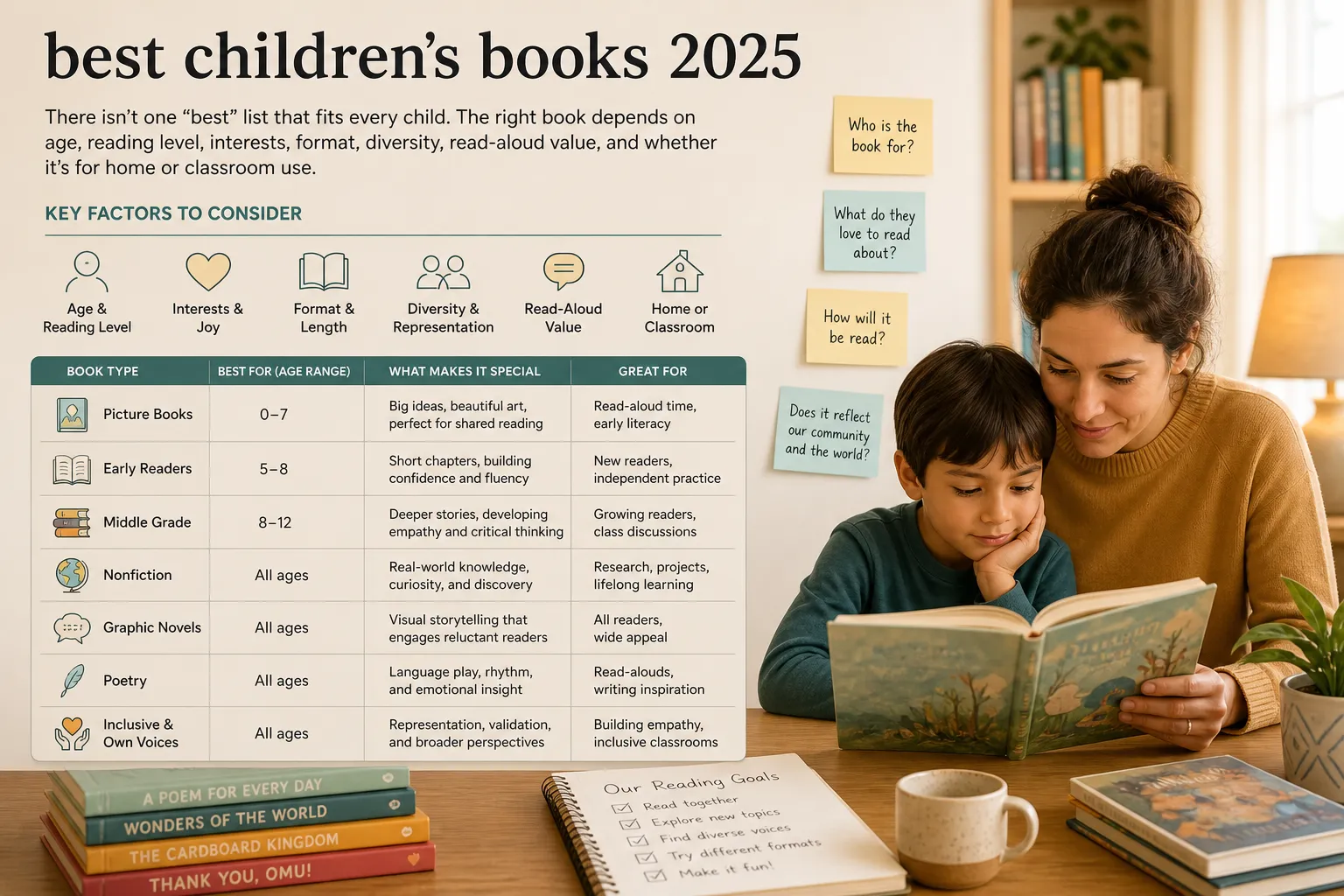
The best children's books 2025 are easier to choose when you start with the reader, not just the award list. A bedtime read-aloud, a classroom book, a first independent reader, and a middle grade novel all need different things.
This guide brings together award-recognized titles, librarian picks, read-aloud favorites, early readers, middle grade books, nonfiction, graphic novels, poetry, and inclusive stories. It is not a single “perfect” ranking. It is a practical way for parents, teachers, librarians, and gift buyers to compare books by age, format, reading confidence, and purpose.
For trusted context, the 2025 Youth Media Award winners from the American Library Association and librarian-selected lists like NYPL’s Best Books for Kids 2025 are useful starting points. Awards can help narrow the field, but the right choice still depends on the child and the reading moment.
Best Children's Books 2025: Quick Picks
| Reading Need | Good Starting Point | Why It Helps |
|---|---|---|
| Read-aloud picture book | Chooch Helped, Home in a Lunchbox | Strong illustration, emotion, and discussion value |
| Beginning reader | Vacation | Funny, clear, and confidence-building |
| Middle grade fiction | The First State of Being, Magnolia Wu Unfolds It All | Strong voice, character, and literary quality |
| Nonfiction | Life After Whale, The Black Mambas | Facts with story and real-world meaning |
| Classroom or library shelf | A mix of formats and perspectives | Gives different readers more ways in |
This shortlist is not meant to replace browsing. It gives you a cleaner starting point before choosing for a specific age, mood, or reading level.
Picture Books And Read-Aloud Favorites
Picture books are often the first books adults reach for, but they are not only for very young children. A strong picture book can build vocabulary, visual attention, memory, empathy, and conversation.
For 2025 award context, Chooch Helped is a major title because it won the Caldecott Medal. Home in a Lunchbox and My Daddy Is a Cowboy were also recognized as Caldecott Honor Books. These books are useful examples of picture books where the illustrations do real storytelling work. They help carry tone, pacing, emotion, and meaning.
A good read-aloud should sound natural when spoken. It should give children moments to notice, respond, laugh, ask questions, or ask for the story again. For families and teachers, reading aloud remains one of the simplest ways to support language, comprehension, and a lasting interest in books.
Early Readers That Build Confidence
Early readers should help children feel capable. The best choices are not always the easiest books. They are books with enough support to reduce frustration and enough story to keep the child interested.
Vacation by Ame Dyckman and Mark Teague is a strong 2025 example because it won the Theodor Seuss Geisel Award, which recognizes distinguished books for beginning readers. That matters because early reading is a delicate stage. A book that is too simple may feel boring, while a book that is too hard may make reading feel like a test.
Look for short sentences, supportive illustrations, repetition, humor, clear page design, and a subject the child already likes. Interest can carry a new reader through a slightly harder book.
Middle Grade Books With Staying Power
Middle grade is where many children become more independent readers. These books can hold bigger plots, richer friendships, harder emotions, and more layered questions.
The First State of Being by Erin Entrada Kelly is one of the most important 2025 picks because it won the Newbery Medal. Other strong middle grade titles include Magnolia Wu Unfolds It All, One Big Open Sky, and Popcorn. Together, they show how wide middle grade can be: funny, historical, emotional, character-driven, realistic, or imaginative.
For a classroom shelf or home reading list, do not choose only serious books. A funny book can keep a reluctant reader turning pages. A historical novel can build empathy. A warm friendship story can help children recognize feelings they have not yet learned to explain.
Nonfiction, Graphic Novels, And Poetry
A balanced list of the best children's books 2025 should not be only fiction. Many children become stronger readers when they can move between formats.
Nonfiction is ideal for curious readers who love animals, science, history, inventions, space, sports, or real people. Life After Whale is a strong example because it won the 2025 Sibert Medal and connects science with visual storytelling.
Graphic novels also count as reading. Children follow words, panels, facial expressions, sequence, setting, and pacing at the same time. For visual learners or reluctant readers, that format can make reading feel more natural.
Poetry belongs in the mix too. It can be short, musical, funny, emotional, and easy to revisit. For children who feel intimidated by dense pages, poetry can make language feel playful again.
Inclusive Books Belong In The Main List
Inclusive children’s books should not feel like a separate category added at the end. They should appear throughout a good reading list.
Children need books that reflect their own lives and books that open other lives to them. The “mirrors, windows, and sliding glass doors” idea is often used in children’s literature and diversity discussions because it explains why representation matters. Resources like Reading Rockets’ diverse bookshelf can help adults think more carefully about variety and access.
The key is complexity. A child can be disabled and funny. A bilingual character can have a story that is about more than language. A culturally specific family can feel ordinary, joyful, messy, and real. Good representation gives children people, not labels.
How To Choose The Right Book
A best-books list is useful, but it should not make the decision for you. Start with the child.
Think about age, reading confidence, emotional maturity, format preference, and purpose. Is this a bedtime read-aloud, a classroom discussion book, a holiday gift, a summer reading pick, or a book for a child who needs a reason to start?
A practical shortlist might include one read-aloud, one independent read, one nonfiction title, one visual format, and one story that introduces a new perspective. That mix is usually stronger than one universal “best” book. The Library of Congress reading resources for kids can also help families and educators connect reading with curiosity, creativity, and discovery.
The Verdict
The best children's books 2025 are not only the most awarded books. They are the books that fit the child, the setting, and the reading moment.
Start with trusted sources such as ALA, NYPL, librarians, teachers, and literacy organizations. Then choose by age, interest, format, confidence, and purpose. A varied, child-centered shortlist will always be more useful than one universal ranking.
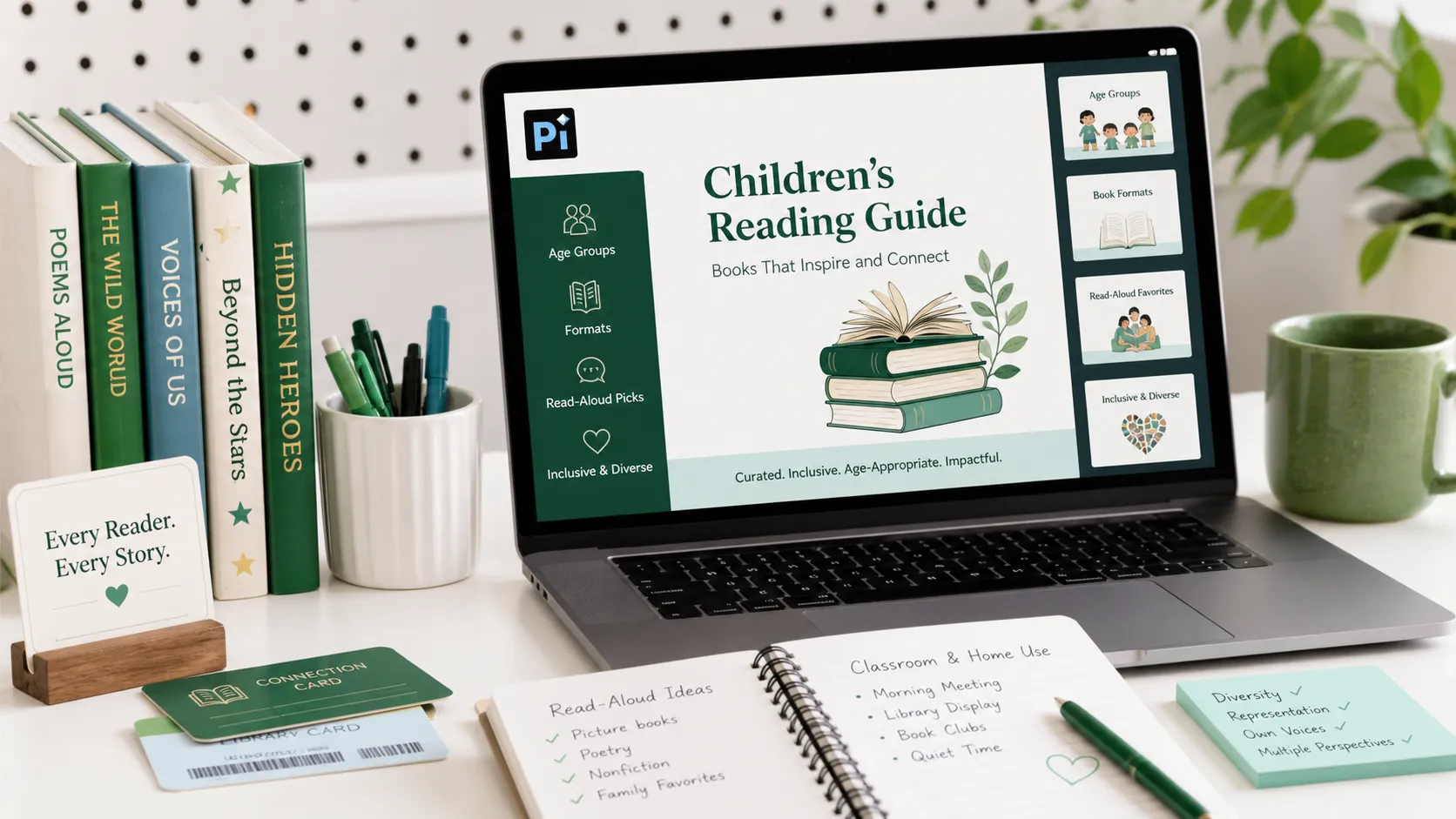
If you are building a classroom list, library display, or parent handout,
you can also turn the book list into a simple reading presentation with Pi ↗.
FAQ
What are the best children's books 2025?
The best children's books 2025 include award-recognized titles, librarian-selected books, strong picture books, beginning readers, middle grade novels, nonfiction, graphic novels, and inclusive stories. Good starting points include ALA Youth Media Award winners and NYPL Best Books for Kids selections.
How do I choose children's books by age?
Age is a helpful starting point, but it should not be the only rule. Consider the child’s reading confidence, emotional maturity, favorite topics, and preferred format. A child may be ready for harder vocabulary but still enjoy funny, visual, or read-aloud books.
Are award-winning children's books always the best choice?
No. Awards such as the Newbery Medal, Caldecott Medal, Geisel Award, and Sibert Medal are useful quality signals, but children still need books that match their interests, reading level, and purpose. The “best” book is the one that fits the reader and the moment.
Do graphic novels and picture books count as real reading?
Yes.Graphic novels and picture books require readers to understand words, images, sequence, emotion, pacing, and visual context. They can support comprehension, vocabulary, confidence, and discussion, especially for visual learners, early readers, and reluctant readers.