15 Best Places to Work Remotely in 2026 (Top Hubs)

The best places to work remotely in 2026 are not just beautiful cities with good coffee. They are destinations where remote workers can rely on stable internet, practical workspaces, reasonable living costs, safe neighborhoods, and visa rules that make longer stays realistic.
For digital nomads, founders, consultants, designers, engineers, marketers, and distributed teams, the right destination can improve both lifestyle and productivity. The wrong one can create problems: unreliable Wi-Fi, expensive short-term housing, difficult time zones, unclear visa requirements, or limited professional infrastructure.
This guide compares 15 of the top remote work destinations 2026 by cost, connectivity, coworking access, lifestyle fit, and digital nomad visa availability. Costs and visa rules can change quickly, so treat the figures as practical estimates and always check current requirements before relocating.
Quick Comparison: Top Remote Work Destinations for 2026
| Location | Estimated Monthly Cost | Wi-Fi and Infrastructure | Coworking Availability | Visa or Stay Option |
|---|---|---|---|---|
| Lisbon, Portugal | $2,400–$3,800 | Strong urban connectivity | Excellent | Portugal digital nomad visa options |
| Bali, Indonesia | $1,500–$2,800 | Good in major nomad areas | Strong in Canggu and Ubud | Remote worker and long-stay options vary |
| Chiang Mai, Thailand | $1,100–$2,000 | Reliable in central areas | Strong | Long-stay and destination visa options vary |
| Mexico City, Mexico | $1,800–$3,200 | Strong in major neighborhoods | Excellent | Temporary resident options may apply |
| Tokyo, Japan | $3,000–$5,000 | Excellent | Strong | Digital nomad and work-status rules vary |
| Buenos Aires, Argentina | $1,200–$2,300 | Good in central areas | Growing | Digital nomad and temporary stay options |
| Cape Town, South Africa | $1,800–$3,200 | Good but variable | Good | Remote work visa rules may apply |
| Medellín, Colombia | $1,300–$2,400 | Good in popular districts | Strong | Digital nomad visa options |
| Barcelona, Spain | $2,700–$4,500 | Strong | Excellent | Spain digital nomad visa options |
| Tbilisi, Georgia | $1,200–$2,200 | Good in urban areas | Moderate to good | Long-stay access for some nationalities |
| Ho Chi Minh City, Vietnam | $1,100–$2,100 | Good in central districts | Growing | Visa rules vary by nationality |
| Tallinn, Estonia | $2,200–$3,500 | Excellent digital infrastructure | Good | Estonia digital nomad visa options |
| Madeira, Portugal | $1,900–$3,200 | Good in remote work hubs | Moderate | Portugal visa options may apply |
| Prague, Czech Republic | $2,100–$3,500 | Reliable | Strong | Freelance and long-stay options vary |
| Seoul, South Korea | $2,600–$4,500 | Excellent | Strong | Digital nomad-style options vary |
How to Choose the Best Place to Work Remotely
Choosing among the best cities for remote workers is less about finding a perfect destination and more about matching a location to your work reality. A city that works well for a solo designer may not work for a sales leader who needs North American business hours. A low-cost destination may still be a poor fit if internet reliability is inconsistent or the visa path is unclear.
Before you choose, evaluate each destination against practical remote work criteria:
- Internet reliability: Look beyond headline speed and consider backup options, mobile data, and power stability.
- Cost of living: Rent, coworking, food, transport, insurance, and flights matter more than café prices alone.
- Visa practicality: A digital nomad visa can help, but rules, income thresholds, tax implications, and processing times vary.
- Coworking ecosystem: Reliable coworking spaces can solve problems with calls, focus, networking, and routine.
- Safety and healthcare: Neighborhood choice, medical access, and travel insurance should be part of the decision.
- Time zone fit: The best destination is often the one that lets you collaborate without destroying your sleep schedule.
- Professional community: Remote work is easier when there are meetups, founder groups, freelancers, and other nomads nearby.
The following destinations all offer a compelling balance of lifestyle and work infrastructure, but each has different tradeoffs.
1. Lisbon, Portugal
Why Lisbon Is Great for Remote Work
Lisbon remains one of Europe’s strongest remote work hubs because it combines quality of life, international access, a mature digital nomad community, and strong professional infrastructure. It is especially appealing for remote workers who want European time zones, walkable neighborhoods, good weather, and a business-friendly environment.
The city is no longer a hidden bargain, and housing costs have risen significantly. Still, compared with major financial capitals such as London, Zurich, or Paris, Lisbon can offer a more flexible lifestyle for freelancers, startup teams, and remote employees.
Internet Speed and Coworking Infrastructure
Lisbon has strong internet access in most central neighborhoods, and coworking spaces are easy to find. Areas such as Cais do Sodré, Saldanha, Príncipe Real, and Santos offer good access to cafés, workspaces, and business services. For remote professionals who need frequent video calls, Lisbon is one of the safer European choices.
Cost of Living Index
Expect a moderate-to-high European cost profile. A comfortable monthly budget often falls between $2,400 and $3,800, depending heavily on rent and neighborhood. Short-term apartments can be expensive during peak seasons.
Digital Nomad Visa Availability
Portugal has visa pathways that may suit remote workers, including digital nomad-style options. Income requirements, documentation, taxes, and residency rules should be checked carefully before applying.
2. Bali, Indonesia
Why Bali Is Great for Remote Work
Bali is one of the most recognizable digital nomad destinations in the world. Its appeal comes from lifestyle: beaches, wellness culture, cafés, creative communities, and a large international remote work scene. Canggu, Ubud, and parts of Seminyak are especially popular among entrepreneurs, creators, coaches, designers, and independent consultants.
Bali is best for remote workers who can manage asynchronous schedules and do not need constant access to corporate offices. The lifestyle can be inspiring, but traffic, rainy season conditions, and crowded nomad zones can affect productivity.
Internet Speed and Coworking Infrastructure
Coworking infrastructure is strong in major nomad areas, with spaces designed for calls, events, and community. Wi-Fi is generally workable in popular districts, but reliability can vary by accommodation. A mobile data backup is recommended.
Cost of Living Index
Bali can be affordable or surprisingly expensive depending on your lifestyle. A realistic monthly range is $1,500 to $2,800, with villas, scooters, coworking, and imported goods influencing the total.
Digital Nomad Visa Availability
Indonesia’s long-stay and remote work options continue to evolve. Remote workers should confirm the latest visa category, permitted activities, and tax considerations before planning a long stay.
3. Chiang Mai, Thailand
Why Chiang Mai Is Great for Remote Work
Chiang Mai is a classic choice for people searching for cheap places to work remotely without sacrificing community. It offers affordable accommodation, excellent cafés, a relaxed pace, and a long-established digital nomad network.
The city is particularly attractive for solo remote workers, bootstrapped founders, writers, developers, and online service providers. It is less intense than Bangkok and often easier to navigate for focused work.
Internet Speed and Coworking Infrastructure
Central Chiang Mai has reliable internet, strong café culture, and a good selection of coworking spaces. Nimman is a popular area for remote workers because it combines apartments, food, gyms, cafés, and workspaces within a compact district.
Cost of Living Index
Chiang Mai remains one of the best-value destinations on this list. Many remote workers can live comfortably from $1,100 to $2,000 per month, though lifestyle choices and short-term housing quality can change the budget.
Digital Nomad Visa Availability
Thailand has several visa categories that may be relevant depending on nationality, income, and stay length. Rules can change, so remote workers should verify the latest requirements before committing.

4. Mexico City, Mexico
Why Mexico City Is Great for Remote Work
Mexico City is one of the best places to work remotely for people who want a major urban environment, rich culture, strong food scenes, and convenient time zones for North American clients. It has become especially popular with startup employees, creatives, product teams, marketers, and consultants.
The city is large, diverse, and neighborhood-dependent. Roma Norte, Condesa, Polanco, Juárez, and Coyoacán offer very different experiences and budgets. Choosing the right area is essential.
Internet Speed and Coworking Infrastructure
Mexico City has strong connectivity in central business and residential zones. Coworking spaces are widely available, and many cafés are remote-work friendly. For remote professionals serving U.S. or Canadian clients, the time zone alignment is a major productivity advantage.
Cost of Living Index
Estimated monthly costs range from $1,800 to $3,200. Prices have increased in popular neighborhoods, but the city still offers strong value compared with many large North American cities.
Digital Nomad Visa Availability
Mexico does not always market itself in the same way as formal digital nomad visa destinations, but temporary resident options may work for some remote workers. Requirements should be reviewed carefully.
5. Tokyo, Japan
Why Tokyo Is Great for Remote Work
Tokyo is a premium destination for remote workers who value safety, world-class public transport, exceptional food, urban efficiency, and advanced infrastructure. It is not the cheapest option, but it is one of the most reliable.
Tokyo works best for remote professionals with stable income, frequent client calls, or a need for dependable systems. It is also excellent for people who want a highly organized city with endless cultural depth.
Internet Speed and Coworking Infrastructure
Connectivity is excellent. Coworking spaces, business lounges, cafés, and serviced offices are available across major districts such as Shibuya, Shinjuku, Roppongi, Marunouchi, and Ginza. The challenge is less about infrastructure and more about cost and language comfort.
Cost of Living Index
A comfortable monthly budget often ranges from $3,000 to $5,000, depending on rent and lifestyle. Smaller apartments and careful neighborhood selection can reduce costs.
Digital Nomad Visa Availability
Japan has introduced remote-work-friendly pathways in recent years, but conditions may be specific. Always confirm eligibility, stay duration, income thresholds, and permitted activities.
6. Buenos Aires, Argentina
Why Buenos Aires Is Great for Remote Work
Buenos Aires is a strong option for remote workers who want culture, nightlife, architecture, cafés, and affordability. It is especially attractive for writers, designers, entrepreneurs, and independent professionals who enjoy a large city with creative energy.
The main caution is economic volatility. Exchange rates, payment methods, and prices can shift quickly, so remote workers should plan finances carefully.
Internet Speed and Coworking Infrastructure
Central neighborhoods such as Palermo, Recoleta, Belgrano, and San Telmo generally offer good connectivity and access to coworking spaces. The café scene is strong, although not every café is ideal for long calls.
Cost of Living Index
Buenos Aires can be very good value, with estimated monthly costs from $1,200 to $2,300. However, inflation and currency changes can make budgeting unpredictable.
Digital Nomad Visa Availability
Argentina has offered digital nomad-style options, but remote workers should verify current rules, stay duration, and documentation requirements before relying on them.
7. Cape Town, South Africa
Why Cape Town Is Great for Remote Work
Cape Town offers a rare combination of natural beauty, strong lifestyle appeal, and growing remote work infrastructure. Mountains, beaches, wine regions, and a creative business scene make it attractive for remote professionals who want more than a laptop-in-a-café experience.
It is also time-zone friendly for many European teams, which makes it useful for consultants, agencies, and distributed employees serving European clients.
Internet Speed and Coworking Infrastructure
Coworking spaces are available in central and lifestyle-focused areas, and many accommodations offer solid internet. However, infrastructure can vary, and power disruptions may affect productivity. Remote workers should choose housing with backup power and reliable connectivity.
Cost of Living Index
Estimated monthly costs often range from $1,800 to $3,200. Neighborhood, transport, security, and housing quality can significantly affect the budget.
Digital Nomad Visa Availability
South Africa has been developing remote work visa options, but rules may be subject to change. Check official requirements before relocating.
8. Medellín, Colombia
Why Medellín Is Great for Remote Work
Medellín has become one of Latin America’s most popular digital nomad hubs. Its mild climate, mountain views, social energy, and affordability make it appealing for remote workers who want a practical base in the Americas.
It is especially suitable for freelancers, startup operators, marketers, and remote employees who need manageable costs and access to a growing international community.
Internet Speed and Coworking Infrastructure
Popular neighborhoods such as El Poblado and Laureles offer good internet, coworking spaces, cafés, and furnished apartments. As with any major city, neighborhood choice matters for safety and convenience.
Cost of Living Index
Many remote workers can live comfortably from $1,300 to $2,400 per month. Costs rise quickly in the most popular foreigner-heavy areas.
Digital Nomad Visa Availability
Colombia has digital nomad visa options for eligible applicants. Requirements, income thresholds, and documentation should be checked before applying.
9. Barcelona, Spain
Why Barcelona Is Great for Remote Work
Barcelona is one of Europe’s strongest lifestyle-business hybrids. It offers beaches, architecture, food, startup activity, international talent, and excellent transport. For remote workers who want a large European city with Mediterranean energy, it remains highly attractive.
The tradeoff is cost. Barcelona is more expensive than many alternatives, and housing pressure is a serious consideration.
Internet Speed and Coworking Infrastructure
Barcelona has excellent coworking depth, from startup-focused spaces to premium business centers. Internet reliability is strong, and the city is well suited for video-heavy work, client calls, and professional networking.
Cost of Living Index
A realistic monthly budget is often $2,700 to $4,500, especially for private accommodation in desirable areas.
Digital Nomad Visa Availability
Spain offers digital nomad visa options that may suit remote workers and self-employed professionals. Tax implications and eligibility rules require careful review.
10. Tbilisi, Georgia
Why Tbilisi Is Great for Remote Work
Tbilisi is a distinctive option for remote workers seeking affordability, character, food culture, and flexible long-stay possibilities. It is less polished than some Western European hubs but offers strong value and an increasingly international community.
It fits remote workers who are comfortable with a more adventurous environment and want access to the Caucasus region.
Internet Speed and Coworking Infrastructure
Urban internet is generally workable, and coworking options have improved. The ecosystem is smaller than Lisbon or Barcelona, but adequate for many freelancers and founders.
Cost of Living Index
Estimated monthly costs range from $1,200 to $2,200. Imported goods and premium apartments can increase the budget, but daily living remains relatively affordable.
Digital Nomad Visa Availability
Georgia has historically offered favorable entry and stay conditions for some nationalities. Always confirm the latest stay limits, tax rules, and legal requirements.
11. Ho Chi Minh City, Vietnam
Why Ho Chi Minh City Is Great for Remote Work
Ho Chi Minh City is fast-moving, energetic, and cost-effective. It appeals to remote workers who want urban intensity, great food, affordable services, and a strong café culture.
It is especially suitable for solo workers, developers, marketers, e-commerce operators, and entrepreneurs who prefer dynamic Asian cities.
Internet Speed and Coworking Infrastructure
Connectivity is good in central districts, and coworking spaces are increasingly common. District 1, District 2, District 3, and Binh Thanh are popular areas for remote workers.
Cost of Living Index
Ho Chi Minh City is one of the more affordable major cities on this list, with estimated monthly costs from $1,100 to $2,100.
Digital Nomad Visa Availability
Vietnam’s visa rules can be complex and may not always align neatly with remote work. Confirm current options before planning a long stay.
12. Tallinn, Estonia
Why Tallinn Is Great for Remote Work
Tallinn is one of the most digitally advanced destinations in Europe. It is known for e-government, startup culture, cybersecurity, and a remote-work-friendly business environment.
It is a strong fit for tech workers, founders, consultants, and professionals who value efficient systems over tropical lifestyle.
Internet Speed and Coworking Infrastructure
Tallinn offers excellent digital infrastructure, reliable internet, and a solid coworking scene. It is smaller than many capitals, which can make daily life efficient and manageable.
Cost of Living Index
Estimated monthly costs range from $2,200 to $3,500. It is not as cheap as some Eastern European options, but it offers high infrastructure quality.
Digital Nomad Visa Availability
Estonia is known for digital nomad visa options and e-residency-related business infrastructure. Remote workers should distinguish between residency, business administration, tax status, and legal permission to stay.
13. Madeira, Portugal
Why Madeira Is Great for Remote Work
Madeira is a calmer alternative to large city remote work. It offers nature, ocean views, hiking, a slower pace, and an established remote work community in specific areas. It is ideal for people who want focus and lifestyle without the intensity of Lisbon or Barcelona.
Madeira is best for remote workers who do not need constant big-city networking but still want European access and a supportive community.
Internet Speed and Coworking Infrastructure
Internet is generally good in remote-work-friendly zones, and coworking is available, though less extensive than in major cities. Accommodation choice is important because some rural areas may have weaker connectivity.
Cost of Living Index
Estimated monthly costs range from $1,900 to $3,200. Seasonal demand and car rental needs can affect the total.
Digital Nomad Visa Availability
As part of Portugal, Madeira may fall under relevant Portuguese visa pathways. Check current national requirements before making plans.
14. Prague, Czech Republic
Why Prague Is Great for Remote Work
Prague is a balanced Central European base with reliable infrastructure, beautiful architecture, strong public transport, and access to other European markets. It has a professional atmosphere without the highest Western European costs.
It is a good fit for consultants, remote employees, SaaS workers, and freelancers who want culture, efficiency, and European connectivity.
Internet Speed and Coworking Infrastructure
Prague has reliable internet and many coworking spaces. It is suitable for client-facing work, focused production, and regular video meetings.
Cost of Living Index
Estimated monthly costs typically range from $2,100 to $3,500. Costs are lower than many Western European capitals but have risen in recent years.
Digital Nomad Visa Availability
Freelance and long-stay options may be available depending on nationality and work status. Requirements can be detailed, so professional advice may be useful.
15. Seoul, South Korea
Why Seoul Is Great for Remote Work
Seoul is a high-speed, high-energy destination with exceptional connectivity, safety, transit, food, and professional infrastructure. It is best for remote workers who enjoy major cities and can handle a fast pace.
For professionals in technology, media, gaming, design, and international business, Seoul offers a sophisticated environment with deep cultural appeal.
Internet Speed and Coworking Infrastructure
Seoul has some of the strongest connectivity in the world, with excellent public infrastructure and many coworking options. It is highly suitable for remote workers who need dependable video calls, cloud tools, and fast file transfers.
Cost of Living Index
Estimated monthly costs range from $2,600 to $4,500, depending on housing, district, and lifestyle.
Digital Nomad Visa Availability
South Korea has explored remote-worker-friendly visa options, but eligibility and stay rules should be verified before travel.
Turn Your Remote Work Updates Into Decks with Pi
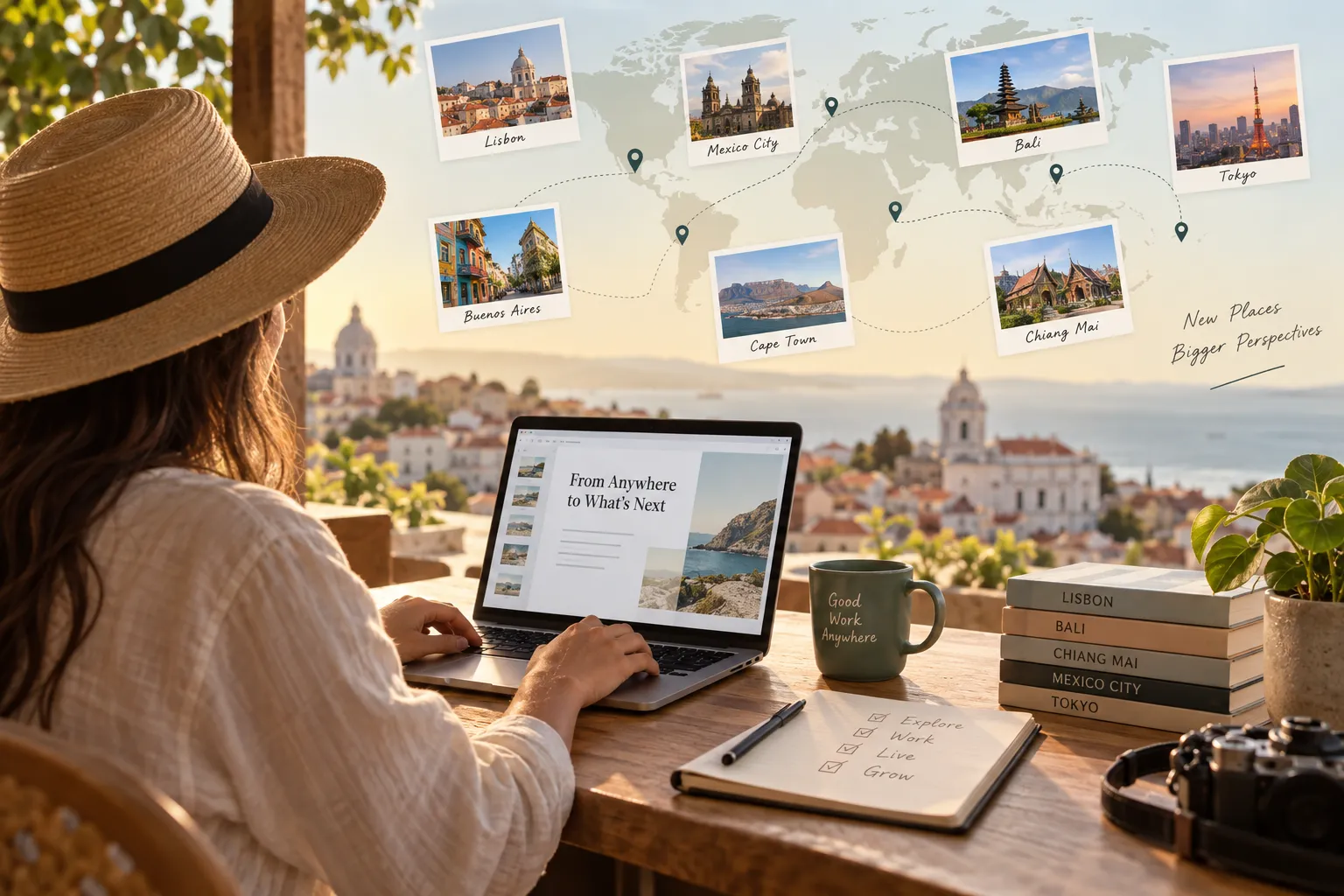
Best Places to Work Remotely by Priority
If your main goal is affordability, Chiang Mai, Ho Chi Minh City, Tbilisi, Medellín, and Buenos Aires are among the strongest choices. They offer lower monthly costs while still supporting serious remote work, though each requires careful attention to visa rules, neighborhood choice, and infrastructure.
If your priority is fast internet and professional reliability, Tokyo, Seoul, Tallinn, Lisbon, Barcelona, and Prague are strong options. They may cost more, but they reduce risk for remote workers who depend on video calls, cloud-based workflows, and client-facing work.
For North American time zones, Mexico City, Medellín, and Buenos Aires are practical choices. They allow remote professionals to work with U.S. and Canadian teams without extreme schedule shifts.
For European access, Lisbon, Barcelona, Tallinn, Prague, Madeira, and Cape Town offer useful time-zone alignment. Cape Town is especially attractive for teams working with Europe while seeking a warmer lifestyle base.
For community and coworking, Lisbon, Bali, Chiang Mai, Mexico City, Medellín, Barcelona, and Seoul stand out. These destinations make it easier to meet other remote professionals, join events, and maintain a productive routine outside an apartment.
How Remote Teams Can Stay Productive Across Destinations
Working remotely from a great city does not automatically create great work. Distributed teams need clear systems, especially when people are spread across time zones and using different environments.
The most productive remote teams usually define communication norms before problems appear. They decide which updates belong in meetings, which belong in documents, and which require immediate response. They also protect focused work time, set expectations for availability, and avoid turning every small issue into a video call.
Documentation matters even more when teammates are in different cities. Project notes, client feedback, research findings, product decisions, and weekly progress updates should be easy to find and easy to understand. This is especially important for teams producing client deliverables, investor updates, consulting reports, or internal executive summaries.
Remote work also benefits from repeatable presentation workflows. When teams move quickly, valuable information often stays scattered across chat threads, notes, spreadsheets, and call recordings. Turning that information into a clear business narrative is what helps clients and leaders make decisions.
Using Pi to Turn Remote Work Updates Into Client-Ready Presentations
Pi, short for Presentation Intelligence, is an AI presentation maker and AI PPT generator built for professional business presentations. It is not a travel planning tool, and it should not decide where your team works from. Its value appears after the work is done: when distributed teams need to turn research, updates, and analysis into polished presentations.
1. Business Logic Comes Before Slide Styling
Remote teams often collect useful information from many places: customer interviews, market notes, weekly reports, sales updates, product metrics, and strategy discussions. The challenge is turning that material into a coherent presentation.
Pi helps by focusing on business-ready structure, not just slide decoration. For a remote team, that means a client update can become a clear narrative with context, findings, implications, and next steps. A market research document can become an executive-ready deck. A project status update can become a presentation that explains progress, risks, and decisions needed.
2. Multi-Agent AI Supports More Complete Thinking
Pi’s Multi-Agent AI approach is designed to support deeper presentation workflows. Instead of simply generating a few slides from a prompt, Pi can help shape the logic of a professional deck, improve the structure, and support the kind of clarity expected in high-stakes business communication.
That matters for remote teams because collaboration is often asynchronous. A teammate in Lisbon may gather customer insights, another in Mexico City may analyze metrics, and another in Seoul may prepare the client story. Pi helps teams move from fragmented inputs to a presentation that feels coordinated and business-ready.
3. Premium Visual Quality Saves Remote Teams Time
Remote professionals often need to deliver polished work without access to an in-office design team. Pi helps create presentations with premium, business-grade aesthetics, making it useful for pitch decks, consulting reports, executive presentations, sales decks, brand proposals, and product launch decks.
The goal is not to replace strategic thinking. The goal is to reduce formatting friction so teams can spend more time on the message, recommendation, and decision.
Which Remote Work Destination Should You Choose in 2026?
There is no single best destination for every remote worker. The right choice depends on your budget, work schedule, visa eligibility, risk tolerance, and preferred lifestyle.
Choose Lisbon, Barcelona, Prague, Tallinn, or Madeira if you want European access and mature infrastructure. Choose Mexico City, Medellín, or Buenos Aires if you need Americas-friendly time zones and strong culture at a lower cost than many U.S. cities. Choose Chiang Mai, Bali, or Ho Chi Minh City if affordability and lifestyle flexibility matter most. Choose Tokyo, Seoul, or Cape Town if you want a distinctive premium experience with strong professional upside.
The best countries for digital nomads are not always the cheapest countries. They are the places where you can work consistently, stay legally, build a routine, and maintain the professional quality your clients, employer, or business requires. Start Building Better Presentations with AI
Frequently Asked Questions (FAQ)
Which country is easiest to work remotely from?
The easiest country to work remotely from depends on your passport, income, tax situation, and desired length of stay. Portugal, Spain, Estonia, Colombia, and some other countries have digital nomad visa options, but requirements vary. For practical ease, many remote workers choose destinations with clear visa rules, reliable internet, strong coworking spaces, and an established international community.
What is the cheapest place for remote work in 2026?
Chiang Mai, Ho Chi Minh City, Tbilisi, Medellín, and Buenos Aires are among the more affordable remote work destinations in 2026. Costs vary by rent, neighborhood, lifestyle, exchange rates, and season. The cheapest destination is not always the best choice if internet, safety, healthcare, or visa reliability is weak.
Which city has the best internet for digital nomads?
Seoul, Tokyo, Tallinn, Lisbon, Barcelona, and Prague are strong choices for internet reliability and professional infrastructure. However, the actual experience depends on your apartment, coworking space, mobile data plan, and backup options. Remote workers who rely on video calls should always test connectivity before committing to a long stay.
Do I need a digital nomad visa to work remotely abroad?
Not always, but you should not assume tourist status allows remote work. Some countries offer digital nomad visas, while others use temporary residence, freelance, or long-stay categories. Rules can change and may include income thresholds, insurance, tax obligations, and restrictions on local employment. Always check current requirements before relocating.