best public universities in the us
The best public universities in the us are not “best” in only one way. One student may care most about engineering research, another about in-state tuition, another about medical school preparation, and another about a campus where they can actually feel at home. Rankings can help, but they should be the beginning of your research, not the final answer.
Public universities matter because they often combine strong academics, large alumni networks, major research activity, and lower in-state costs than many private universities. The right choice depends on your major, budget, career goals, location, and how well the school supports students like you.
How To Think About The Best Public Universities In The US
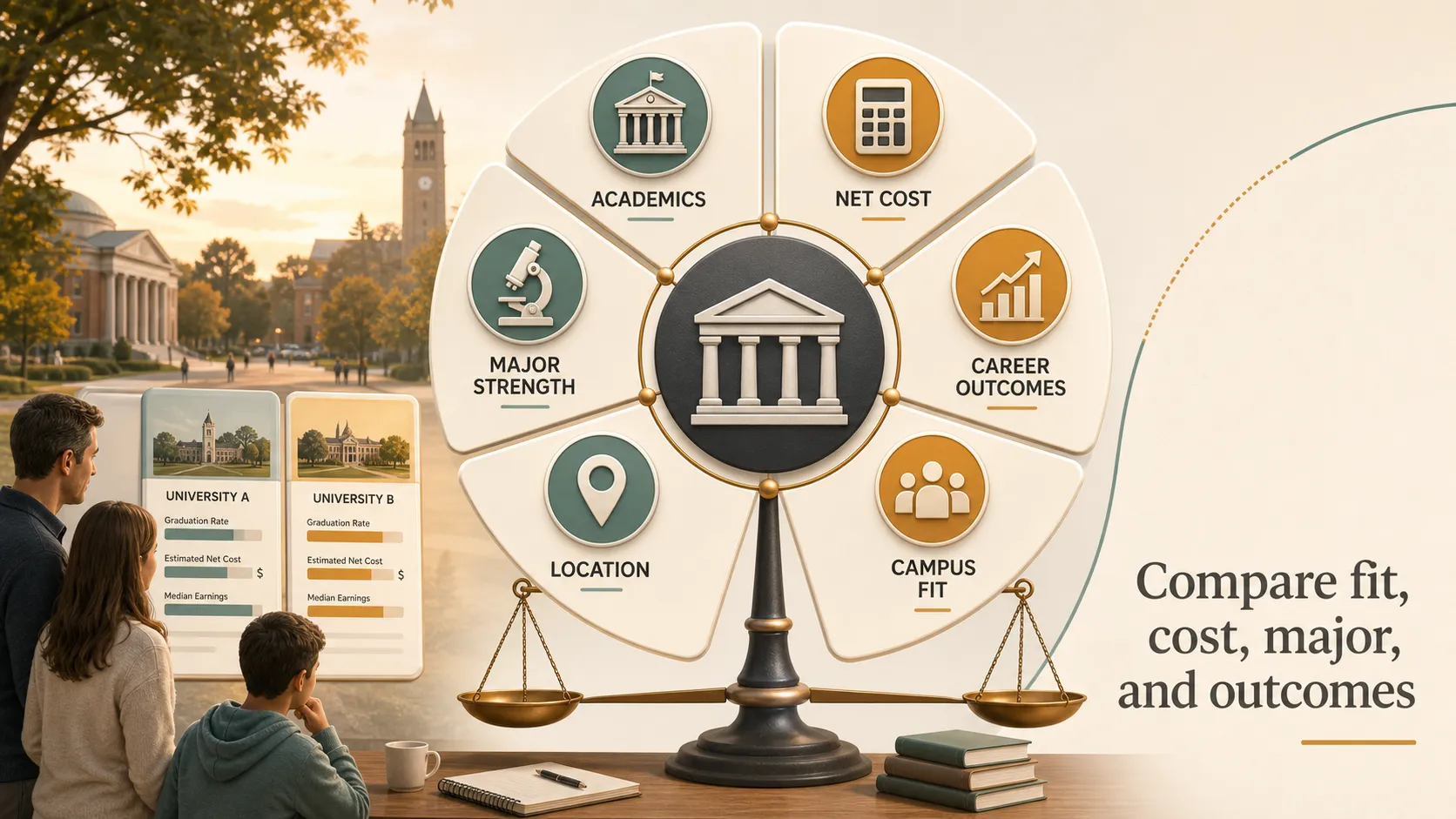
A good public university is not just a famous name. Look at academic strength, graduation rates, cost after aid, student debt, career outcomes, research opportunities, advising, campus culture, and whether your intended major is actually strong there.
The U.S. Department of Education ↗ recommends using official tools such as College Scorecard to compare costs, outcomes, and programs. That is important because a school that looks impressive in a ranking may not be the best financial or academic fit for you.
Rankings are still useful. The 2026 U.S. News Best Colleges release lists UC Berkeley, UCLA, and the University of Michigan as the top three public national universities in its Top Public Schools category . Forbes also highlights public colleges with strong outcomes, salaries, and lower debt, while Niche blends federal data with student and alumni reviews.
Public Universities Worth Comparing
This table is not a universal ranking. It is a practical shortlist of public universities that frequently appear in national conversations about academic quality, research strength, value, and career outcomes.
| University | State | Why Students Compare It | Strong Areas To Check |
|---|---|---|---|
| UC Berkeley | California | Often ranked among the top public universities nationally | Engineering, computer science, economics, public policy, research |
| UCLA | California | Strong academics with a major urban location | Life sciences, arts, business economics, pre-med, film |
| University of Michigan | Michigan | Large research university with a powerful alumni network | Engineering, business, public policy, medicine, social sciences |
| UNC Chapel Hill | North Carolina | Historic public university with strong value for in-state students | Public health, journalism, business, biology, liberal arts |
| University of Virginia | Virginia | Known for academics, campus tradition, and strong professional pathways | Business, politics, economics, engineering, humanities |
| University of Florida | Florida | Large public university with strong value and broad programs | Business, engineering, health sciences, agriculture, online programs |
| Georgia Tech | Georgia | Especially strong for STEM and technology careers | Engineering, computer science, analytics, industrial design |
| UT Austin | Texas | Major research campus with strong industry connections | Business, engineering, computer science, communications |
| UC San Diego | California | Research-heavy public university with strong science programs | Biology, data science, engineering, oceanography, medicine |
| University of Washington | Washington | Strong research profile and location near major tech employers | Computer science, medicine, public health, engineering |
| UIUC | Illinois | Known nationally for engineering and computing | Computer science, engineering, business, agriculture |
| Purdue University | Indiana | Strong reputation for engineering and applied STEM | Engineering, aviation, computer science, pharmacy, technology |
Cost And Value Matter More Than Sticker Price
For many families, the smartest public university choice is not the highest-ranked one. It is the school that offers the strongest fit at a cost you can manage.
In-state tuition can make a huge difference. A student from Michigan may get a better deal at the University of Michigan than at an out-of-state UC campus. A Florida resident may find the University of Florida much more affordable than another public university across the country.
Use the official College Scorecard ↗ to compare average annual cost, graduation rate, median earnings, debt, and fields of study. You can also use College Navigator ↗ from NCES to compare tuition, enrollment, admissions, programs, and campus characteristics.
For broader context, the NCES Digest of Education Statistics ↗ provides national education data, while the BLS “Education pays” chart shows how education level relates to earnings and unemployment in its latest career outlook data ↗.
Match The School To Your Major
A famous public university is not automatically strong in every subject. Before applying, check your specific department.
If you want computer science, compare course access, internship pipelines, research labs, and whether students can actually declare the major. If you want nursing, check clinical placement and licensing outcomes. If you want business, look at recruiting, alumni networks, and admitted student profiles. If you want the arts, review portfolios, faculty, facilities, and local creative opportunities.
Also look beyond rankings. Read department pages, course catalogs, student forums, career outcome reports, and internship data. A lower-ranked university with a strong program in your major may be a better choice than a famous school where your field is crowded or underfunded.
In-State Vs Out-Of-State Admissions
Public universities often have a mission to serve residents of their state. That can affect both cost and admissions.
At some highly selective public universities, out-of-state admission can be more competitive. Out-of-state tuition may also be much higher. Before building your list, check each school’s admissions data, residency rules, scholarship options, and net price calculator.
Do not assume you will pay the advertised tuition number. Your real cost depends on residency, aid, scholarships, housing, fees, and family finances. Federal Student Aid’s overview of types of financial aid ↗ can help you understand grants, scholarships, work-study, and loans.
Campus Fit Still Counts
The best public universities in the us can feel very different from one another. UCLA and Berkeley are both in California, but the campus culture, city environment, housing market, and academic feel are not the same. Georgia Tech feels different from UNC. UT Austin feels different from Purdue. University of Washington feels different from UVA.
Ask practical questions:
- Do you want a large campus or a smaller community?
- Do you want a city, college town, or suburban setting?
- Are classes in your major easy to access?
- Can you afford housing near campus?
- Is advising strong?
- Do students seem collaborative, competitive, or both?
- Are internships reachable during the school year?
If possible, visit campus, attend virtual sessions, and talk to current students in your major.
The Verdict
The best public universities in the us include schools such as UC Berkeley, UCLA, Michigan, UNC, UVA, Florida, Georgia Tech, UT Austin, UC San Diego, Washington, UIUC, and Purdue. But the “best” choice is personal.
Use rankings for a starting list, then check official data, department strength, real cost, career outcomes, location, and student support. The right public university should make academic, financial, and personal sense.
Turn this public university comparison into a presentation with Pi. ↗
Frequently Asked Questions (FAQ)
Q: What are the best public universities in the us?
UC Berkeley, UCLA, University of Michigan, UNC Chapel Hill, UVA, University of Florida, Georgia Tech, UT Austin, UC San Diego, University of Washington, UIUC, and Purdue are all strong public universities to compare.
Q: Are public universities cheaper than private universities?
Often, yes, especially for in-state students. But out-of-state tuition at public universities can be high, so always compare net price after aid.
Q: Should I trust college rankings?
Use rankings as a starting point, not a final decision. Compare official data, major strength, cost, graduation rates, outcomes, and campus fit.
Q: Is it better to attend a top public university or a cheaper in-state school?
It depends on your goals and finances. A cheaper in-state school with a strong program in your major may be a better choice than a higher-ranked school that creates too much debt.