business proposal
A business proposal is a document or presentation used to persuade a client, partner, investor, or internal stakeholder to approve a project, service, partnership, or solution. It is not just a description of your company. A good proposal shows that you understand the other side’s problem, have a practical solution, can deliver it, and have made the next step easy to approve.
Most weak proposals are too company-focused. They spend too much space saying “we are experienced” and not enough space showing “we understand what you need.” A strong business proposal starts with the client’s situation, then connects your offer to that situation clearly.
HubSpot’s guide to writing a business proposal explains the basic idea well: a business proposal is used to secure a business agreement, usually by showing the problem, solution, and pricing.
What A Business Proposal Is
A business proposal is a structured offer. It explains what you recommend, why it matters, what it includes, how long it will take, how much it costs, and what the client should do next.
You might use a business proposal when you are:
- Selling a service to a client
- Responding to a request for proposal
- Proposing a partnership
- Pitching a project to a company
- Offering a solution after a discovery call
- Trying to win approval from a stakeholder
- Turning a sales conversation into a written offer
PandaDoc’s guide on how to write a business proposal also breaks proposals into practical parts such as summary, problem, solution, scope, timeline, pricing, proof, terms, and call to action.
Business Proposal Vs Business Plan Vs Pitch Deck
These three are easy to mix up, but they serve different purposes.
A business proposal is usually written for a specific client, customer, or partner. It says: here is the problem, here is our solution, here is the scope, here is the price, and here is what happens next.
A business plan is more about the business itself. It explains the company, market, model, operations, finances, and growth plan. The SBA’s guide to writing a business plan is a better fit for that kind of document.
A pitch deck is a presentation used to tell a business story quickly. It may be used for investors, clients, leadership, or partners. It is more visual and usually shorter than a full proposal document.
In simple terms:
- Business proposal: win a specific deal or approval.
- Business plan: explain how the business works.
- Pitch deck: present the story quickly.
Solicited And Unsolicited Proposals
A solicited proposal is requested. The client may send an RFP, ask for a quote, or invite vendors to submit a solution. In this case, your job is to answer the request clearly and show why your approach fits.
An unsolicited proposal is not requested. You reach out because you see an opportunity or problem the client may not have formally asked about yet. This kind of proposal needs a stronger opening because the reader may not already be expecting it.
Both types need the same basic discipline: be specific, stay client-focused, and make the value easy to understand.
Business Proposal Sections At A Glance
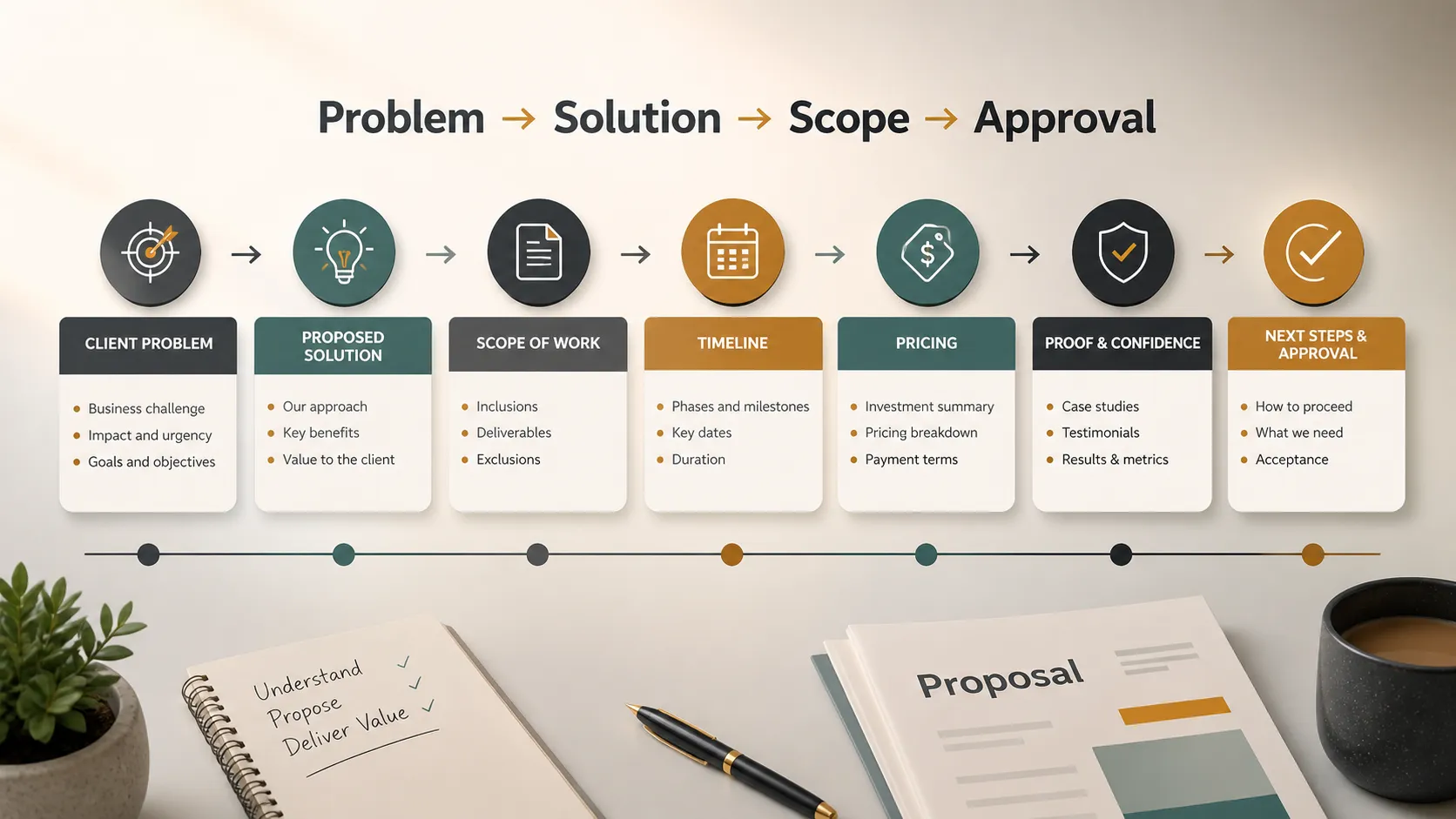
Use this table as a simple proposal template before writing the full version.
| Section | Purpose | Include |
|---|---|---|
| Summary | Set the context | Problem, solution, value |
| Client problem | Show understanding | Pain, goal, impact |
| Proposed solution | Explain the offer | Approach, deliverables |
| Scope | Define boundaries | Included, excluded |
| Timeline | Show the plan | Phases, dates, milestones |
| Pricing | Explain cost | Packages, fees, terms |
| Proof | Build trust | Case studies, results |
| Terms | Reduce confusion | Payment, approvals |
| Next steps | Move forward | Sign, meet, approve |
Keep the table simple. A real proposal can include more detail, but this structure keeps the document from wandering.
Start With The Client Problem
The client problem is the center of the proposal. If this section is weak, the rest of the proposal will feel generic.
Do not start by listing everything your company can do. Start by showing what the client is dealing with. Mention the business goal, challenge, cost of inaction, or opportunity they want to capture.
For example, instead of writing:
“We provide digital marketing services for growing companies.”
Write something closer to:
“Your team is getting traffic from paid ads, but the landing pages are not converting enough visitors into booked calls.”
The second version shows that the proposal is about their situation, not your service list.
Present A Clear Solution
After the problem is clear, explain your recommended solution. This is where you describe the work, but avoid dumping every feature into the page.
A good solution section should answer:
- What will you do?
- Why is this the right approach?
- What will the client receive?
- How does it solve the problem?
- What makes this approach practical?
If there are multiple options, make the difference between them easy to compare. Clients should not have to guess which option fits their needs.
Define Scope, Timeline, And Pricing
Scope protects both sides. It explains what is included and what is not included. This matters because many business relationships become tense when expectations are vague.
The scope section should include deliverables, responsibilities, assumptions, revision limits, dependencies, and anything the client must provide.
The timeline should show the project flow. Keep it simple: discovery, planning, production, review, launch, reporting, or whatever phases fit the work.
Pricing should be clear. If you offer packages, explain the difference. If pricing depends on variables, explain what those variables are. Hidden or confusing pricing slows down approval.
Microsoft’s business proposal templates can be useful if you need a basic document structure for proposals, reports, and business-facing files.
Add Proof Without Overloading The Proposal
A proposal should build confidence. That does not mean adding ten pages about your company history.
Use proof that supports the decision:
- Short case studies
- Client results
- Testimonials
- Relevant experience
- Portfolio examples
- Certifications
- Process snapshots
Choose proof that matches the client’s problem. If the proposal is for a sales enablement project, show sales-related results. If it is for a website redesign, show similar website work.
Proof works best when it reduces risk. The client is asking: can this team actually do what they say?
Make The Proposal Client-Focused
A client-focused proposal uses the client’s language. It talks about their goals, constraints, audience, timeline, and decision criteria.
Before sending the proposal, check how many sections begin with “we” versus how many begin with the client’s situation. Some “we” language is fine, but the proposal should not read like a company brochure.
A useful test is this: could the same proposal be sent to five different clients with only the name changed? If yes, it is probably too generic.
Business Proposal Document Vs Proposal Presentation
A business proposal document is useful when the reader needs detail. It can include scope, pricing, terms, assumptions, background, and legal language.
A proposal presentation is better when the proposal needs to be explained live. It works well for client meetings, stakeholder approvals, project pitches, and partnership discussions. The presentation should not copy the full document slide by slide. It should turn the proposal into a clear story.
A simple proposal presentation might include:
- Client situation
- Main problem
- Recommended solution
- Scope of work
- Timeline
- Pricing summary
- Proof
- Decision needed
- Next step
The document gives people details. The presentation helps them understand and decide.
From Business Proposal To Template
Once you know the structure, a business proposal template saves time. You should not rewrite the same sections from scratch every time.
A good template can include:
- Cover page
- Summary page
- Problem section
- Solution section
- Scope section
- Timeline block
- Pricing table
- Case study page
- Terms page
- Approval or next-step page
PandaDoc’s template library and HubSpot’s business proposal template show how common proposal sections can be reused and customized for different clients.
The key is to customize the template enough that it still feels specific. A template should speed up the work, not make every proposal sound the same.
Where Pi Fits Into Business Proposals
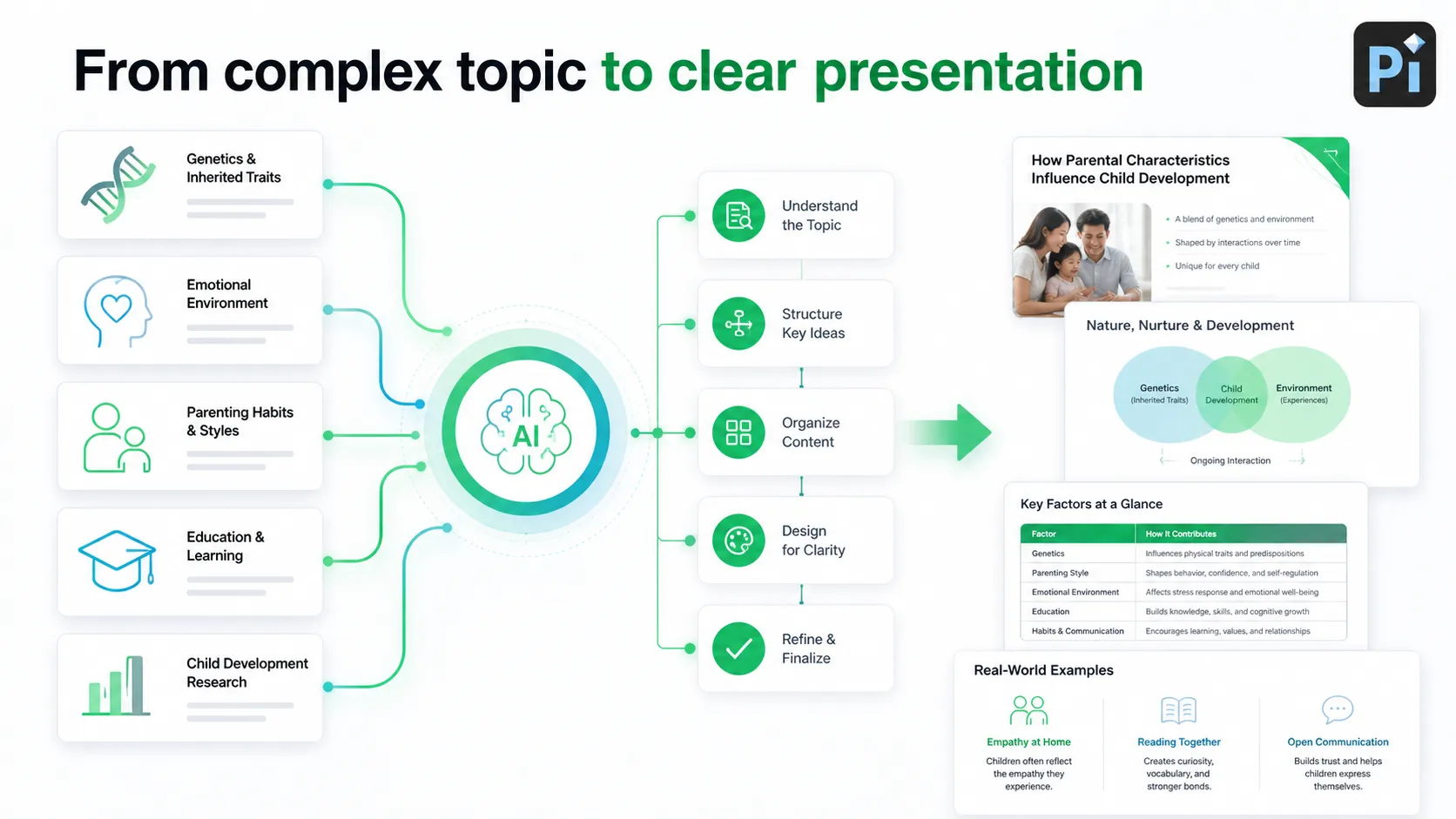
This is where Pi can fit naturally. You may already have client notes, a discovery call summary, a scope document, pricing details, website references, or a rough proposal draft. Instead of turning all of that into slides manually, you can use Pi to shape the material into a clearer proposal presentation.
Pi has editable presentation templates and styles you can use directly. You can customize theme colors, layout style, visual direction, and tone so the proposal fits the client and your brand.
Pi also provides ready-made components for proposal sections such as problem summaries, solution pages, timelines, comparison blocks, pricing overviews, proof slides, process diagrams, and next-step pages. Automatic layout helps keep spacing and hierarchy clean as the content changes. The icon library makes sections easier to scan, while image effects and AI-generated visuals can support slides that need a stronger visual direction.
When the proposal presentation is ready, you can export it as a PPT file and continue editing or presenting it in PowerPoint or other compatible tools.
The Verdict
A business proposal is not just a formal document. It is a decision tool. It should show the client that you understand the problem, have a clear solution, can deliver the work, and know what should happen next.
Start with the client’s problem. Keep the solution specific. Define the scope. Make pricing clear. Add proof where it matters. Then use a business proposal template to make the process faster without making the proposal generic.
When the proposal needs to become a polished presentation, Pi can help turn notes, research, scope details, and rough drafts into a clear proposal deck with editable templates, custom themes, components, automatic layout, icons, image effects, AI visuals, and PPT export.
Frequently Asked Questions (FAQ)
What is a business proposal?
A business proposal is a document or presentation used to persuade a client, partner, investor, or stakeholder to approve a solution, service, project, or partnership.
What should a business proposal include?
A strong proposal usually includes a summary, client problem, proposed solution, scope, timeline, pricing, proof, terms, and next steps.
What is the difference between a business proposal and a business plan?
A business proposal is usually written to win a specific client, project, or approval. A business plan explains how a business operates, grows, and makes money.
Can Pi help create a business proposal presentation?
Yes. Pi can turn client notes, scope documents, research, website content, or proposal drafts into a polished presentation with editable templates, custom themes, components, automatic layout, icons, image effects, AI visuals, and PPT export.