examples of goals for work
Examples of goals for work are most useful when they are specific enough to copy, edit, and discuss with a manager. A good work goal should not only sound positive. It should show what will improve, how success will be measured, and why the goal matters to the role.
This guide gives practical work goals examples for performance reviews, career growth, communication, leadership, teamwork, project management, and measurable business outcomes. You can use them as written or adjust the metric, deadline, and scope for your own job.
If you are not sure how to structure a goal, the SMART goals framework ↗ is a simple starting point: specific, measurable, achievable, relevant, and time-bound.

Before You Choose a Work Goal
Before picking from a list of examples, decide what type of goal you actually need. Work goals usually fall into a few common situations.
| Situation | examples of goals for work | Best use |
|---|---|---|
| Performance review | Increase monthly qualified leads by 15% by the end of Q2 | Measurable performance goal |
| Career planning | Complete one professional certification by the end of Q3 | Development goal |
| Team planning | Support two cross-functional projects this quarter | Collaboration goal |
| Manager check-in | Send a weekly update every Friday | Short-term execution goal |
| Project update | Deliver the timeline, owners, and risk log by week 2 | Project goal |
MIT Human Resources recommends that workplace goals be aligned with job responsibilities, organizational needs, and employee development. Their guide to goal setting at work ↗ is a useful reference if you need to make goals more measurable and action-oriented.
Examples of Goals for Work by Category
The best examples of goals for work depend on your role and current priorities. Use the table below as a quick starting point.
| Category | Work goal example | How to measure it |
|---|---|---|
| Productivity | Complete the top three weekly priorities by Friday afternoon for the next 8 weeks | Weekly completion rate |
| Communication | Send a clear project update every Friday with progress, risks, and next steps | Fewer follow-up questions |
| Career growth | Complete one professional certification by the end of Q3 | Certification completion |
| Leadership | Hold one monthly 1:1 with each direct report and document next steps | Completed coaching sessions |
| Teamwork | Support two cross-functional projects this quarter | Project participation and feedback |
| Project management | Deliver the project plan, timeline, and risk log by the end of week 2 | Approved project documents |
| Customer service | Improve customer satisfaction from 82% to 88% by the end of Q2 | CSAT score |
| Presentation skills | Deliver three internal presentations this quarter and collect feedback | Completed presentations |
Performance Review Goals
Performance review goals should connect daily work to visible results. They are strongest when they include a metric, a deadline, and a clear business purpose.
Examples:
- Increase monthly qualified leads by 15% by the end of Q2.
- Reduce customer response time from 12 hours to 6 hours within 90 days.
- Complete 95% of assigned tickets within SLA for the next quarter.
- Reduce project delivery delays by 20% this quarter.
- Improve monthly content publishing from 4 articles to 8 articles.
- Submit monthly reports two business days before each deadline.
- Improve customer satisfaction from 82% to 88% by the end of Q2.
SHRM’s guide to performance management ↗ explains that planning, goal setting, monitoring, and feedback all support stronger employee performance. That is why performance goals should not be written once and ignored until the next review.
Career Development Goals
Career development goals help employees build skills for the current role or prepare for future responsibilities. These goals work best when they connect learning to real work.
Examples:
- Complete one industry certification by the end of the quarter.
- Take one data analysis, communication, design, or leadership course within 60 days.
- Shadow a senior teammate on two client calls this month.
- Build a portfolio of three completed projects by the end of the year.
- Identify two skills needed for the next role and create a development plan with a manager.
- Attend one professional development session and apply one learning to a current project.
- Ask for feedback from two senior colleagues before the next review cycle.
MIT also notes that managers can support employee growth through career conversations, stretch assignments, mentoring, and development planning. Their page on employee career development ↗ is useful if you are writing goals for long-term growth.
Communication Goals
Communication goals are useful because many workplace problems come from unclear expectations. A good communication goal should make updates, decisions, or handoffs easier.
Examples:
- Send a weekly project update every Friday with progress, risks, and next steps.
- Use action items, owners, and deadlines in every project email.
- Ask at least one clarifying question in each project kickoff meeting.
- Reduce recurring meeting length from 60 minutes to 45 minutes by using a clear agenda.
- Present one project summary to the team each month.
- Confirm next steps in writing after every client meeting.
- Create a shared handoff checklist for recurring team tasks.
Gallup’s workplace research highlights that knowing what is expected at work ↗ is a basic employee need. Clear communication goals help make those expectations easier to understand.
Leadership and Manager Goals
Leadership goals should be observable. “Be a better leader” is too vague. A stronger goal describes the behavior that will improve team performance.
Examples:
- Hold monthly 1:1 meetings with each direct report and document follow-up actions.
- Give specific feedback within 48 hours after major project milestones.
- Delegate one recurring task this month and create a simple process guide.
- Create a team priorities document at the start of each month.
- Lead one team retrospective after each major project.
- Recognize one strong contribution from each team member every month.
- Improve team meeting structure by ending every meeting with owners and next steps.
Good leadership goals are not only about the manager’s activity. They should improve clarity, trust, execution, or team development.
Teamwork and Project Goals
Teamwork and project goals help people work across functions, stay aligned, and reduce delays. These goals are especially useful for marketing, product, sales, operations, HR, and client-facing teams.
Examples:
- Participate in two cross-functional projects this quarter.
- Share project learnings with the team after each major milestone.
- Respond to internal collaboration requests within one business day.
- Reduce project handoff errors by creating a checklist by the end of the month.
- Complete the project timeline, owners, and risk log by the end of week 2.
- Review project blockers every Friday and escalate unresolved issues within 24 hours.
- Collect feedback from two partner teams after project completion.
Harvard Business Review’s article on small wins ↗ explains why visible progress can support motivation. In project work, small milestones help teams see movement before the final deadline.
How to Customize These Examples
Do not copy every goal word for word. A strong work goal should match your role, your team’s priorities, and your manager’s expectations.
Use this simple formula:
Action + metric + deadline + business purpose
Example:
“Improve onboarding completion from 70% to 90% by the end of Q3 so new hires can become productive faster.”
Before finalizing a goal, check:
1. Is the goal connected to real work?
2. Can I measure it without creating extra busywork?
3. Is the deadline realistic?
4. Do I have enough control over the result?
5. Would this goal make sense in a performance review?
The University of Colorado Boulder’s guide to goal setting and performance planning ↗ also recommends goals that are clear, actionable, measurable, and aligned to priorities.
How to Present Work Goals Clearly
Work goals are often shared in performance reviews, quarterly planning meetings, team updates, or project presentations. When presenting them, keep the format simple:
- Goal: what you want to achieve.
- Why it matters: the business or team reason.
- Metric: how progress will be tracked.
- Deadline: when it will be reviewed.
- Next step: what will happen first.
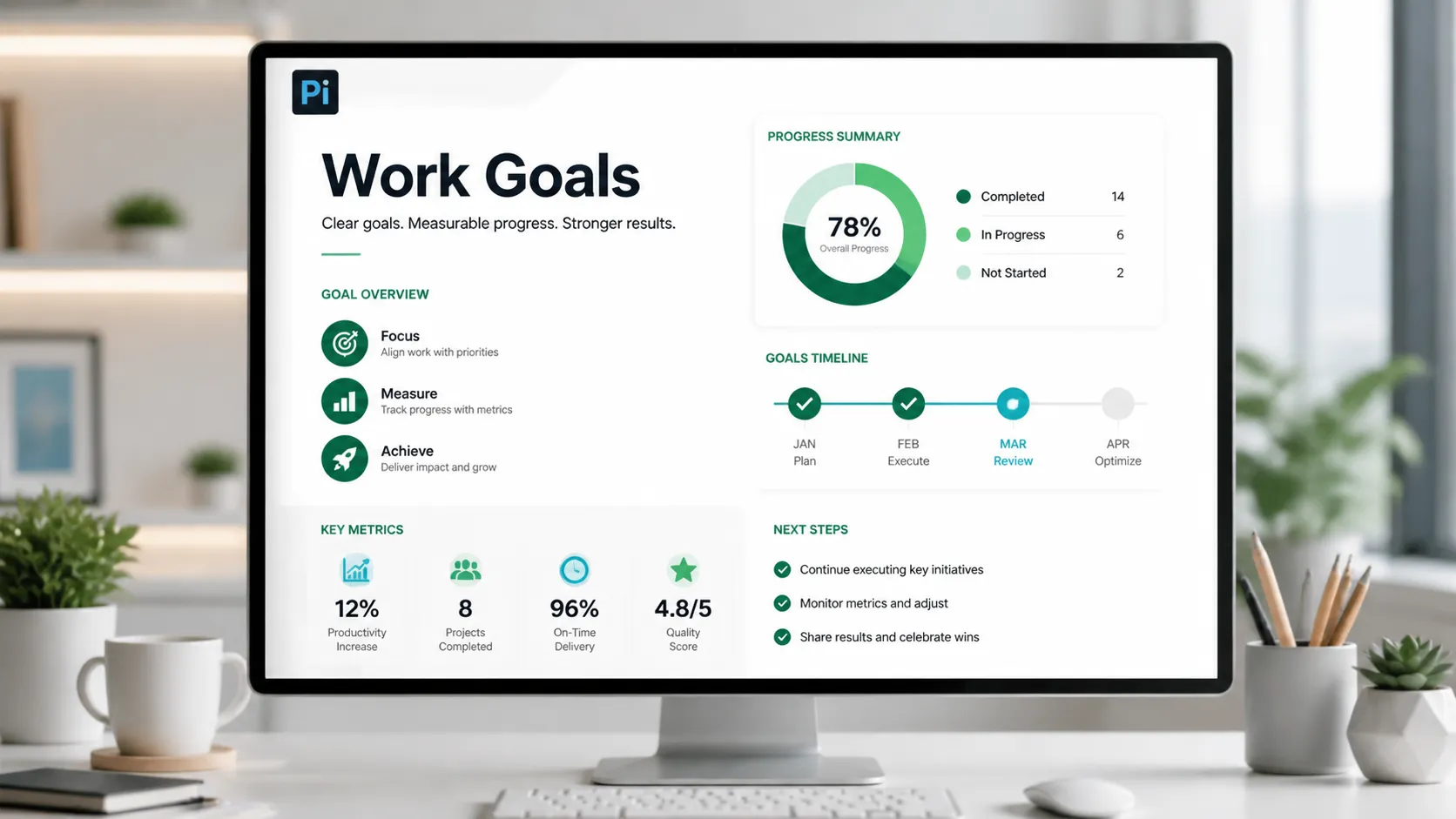
If you need to share goals with a manager, client, or team, you can turn work goals into a manager-ready presentation with Pi ↗. It helps organize goals, metrics, timelines, and next steps into an editable slide draft.
The Verdict
The strongest examples of goals for work are clear, practical, and connected to real outcomes. They help employees focus, managers give better feedback, and teams track progress without guessing.
A good work goal does not need to be long. It needs to explain what will improve, how success will be measured, and when progress will be reviewed.
Frequently Asked Questions
What are the best examples of goals for work?
The best examples of goals for work are specific, measurable, and connected to real workplace outcomes. They can include improving customer satisfaction, completing a certification, sending weekly project updates, reducing response time, leading monthly team meetings, or finishing priority tasks by a specific deadline.
What are examples of SMART goals for work?
Examples of SMART goals for work include “Increase monthly demo bookings by 20% by the end of Q2” and “Deliver three internal presentations this quarter and collect feedback from five colleagues.” Both include a clear result, measurement, and time frame.
What are good performance goals for employees?
Good performance goals for employees may include improving productivity, increasing sales, reducing errors, completing projects on time, improving communication, strengthening customer satisfaction, or building a new skill that supports the role.
How do I write measurable goals for work?
To write measurable goals for work, start with the result you want, add a number or observable outcome, include a deadline, and define the action that will support progress. A simple structure is: action + metric + deadline + purpose.