GPT-6 Astra: A new generation of intelligence
OpenAI’s GPT-6 Astra announcement reads less like a normal model release and more like a statement about where AI is going next. GPT-6 Astra is presented as a new generation of intelligence: a model built not only to answer questions, but to reason, browse, use computers, write code, analyze data, work with documents, and stay within clearer safety boundaries.
The important shift is simple. Earlier AI models were mostly judged by how well they responded in chat. Astra is being judged by how well it performs across real workflows: solving hard tasks, using tools, handling long context, creating professional outputs, and knowing when not to act.
What OpenAI Is Really Announcing
OpenAI describes GPT-6 Astra as its most capable and aligned model so far. The official release highlights state-of-the-art performance in reasoning, computer use, browsing, software engineering, cybersecurity, science, and professional work.
That matters because “intelligence” is no longer just about producing fluent text. A truly useful model needs to understand goals, inspect evidence, operate tools, remember context, adapt to constraints, and produce something a human can actually review.
For readers who want a broader definition, NASA’s artificial intelligence explainer and the Stanford Encyclopedia of Philosophy entry on AI are good neutral background sources.
The Hard Numbers Behind GPT-6 Astra
OpenAI’s release leans heavily on benchmarks, and for this article we should show more of them. These charts help readers understand that Astra is being positioned across several difficult capability areas at once.
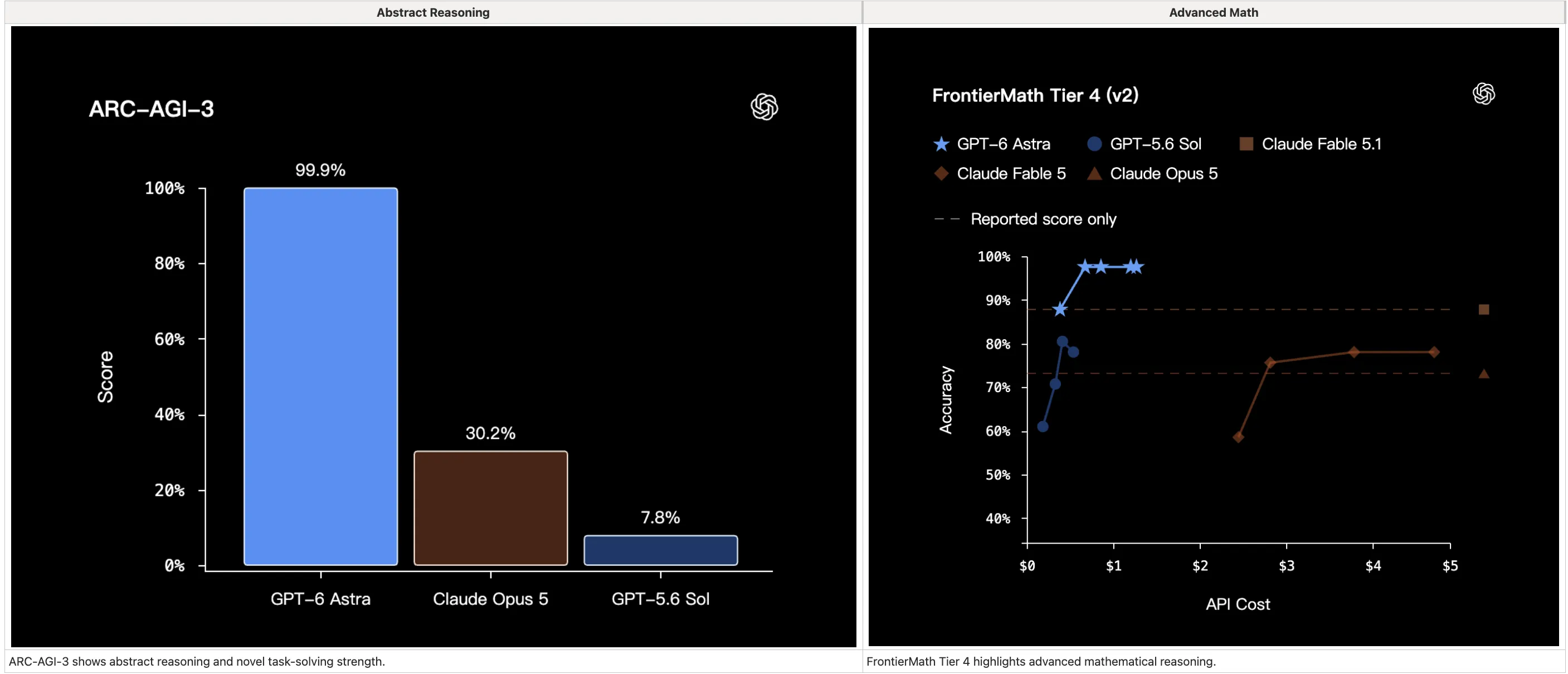
ARC-AGI-3 measures how well a model handles novel reasoning tasks rather than familiar web text. OpenAI reports Astra at 99.9%, suggesting a major jump in flexible problem-solving.FrontierMath Tier 4 focuses on difficult mathematical reasoning. OpenAI reports Astra at about 98%, which supports the claim that the model is stronger in formal, multi-step reasoning.
OpenAI’s release is unusually benchmark-heavy because Astra is being positioned across several difficult capability areas at once. The first two charts show why the phrase “new generation of intelligence” is not only marketing language: Astra is being tested on abstract reasoning and advanced mathematics, two areas where surface-level pattern matching is not enough.
Computer Use Is The Center Of The Story
One of the most important parts of GPT-6 Astra is computer use. OpenAI says Astra can help with tasks like filling forms, updating CRM records, organizing calendars, researching online, analyzing data, generating plots, creating websites, and running frontend QA checks.
This is where Astra starts to feel different from a chatbot. Real work does not live in one prompt box. It happens across browsers, documents, dashboards, calendars, code editors, spreadsheets, and internal tools.
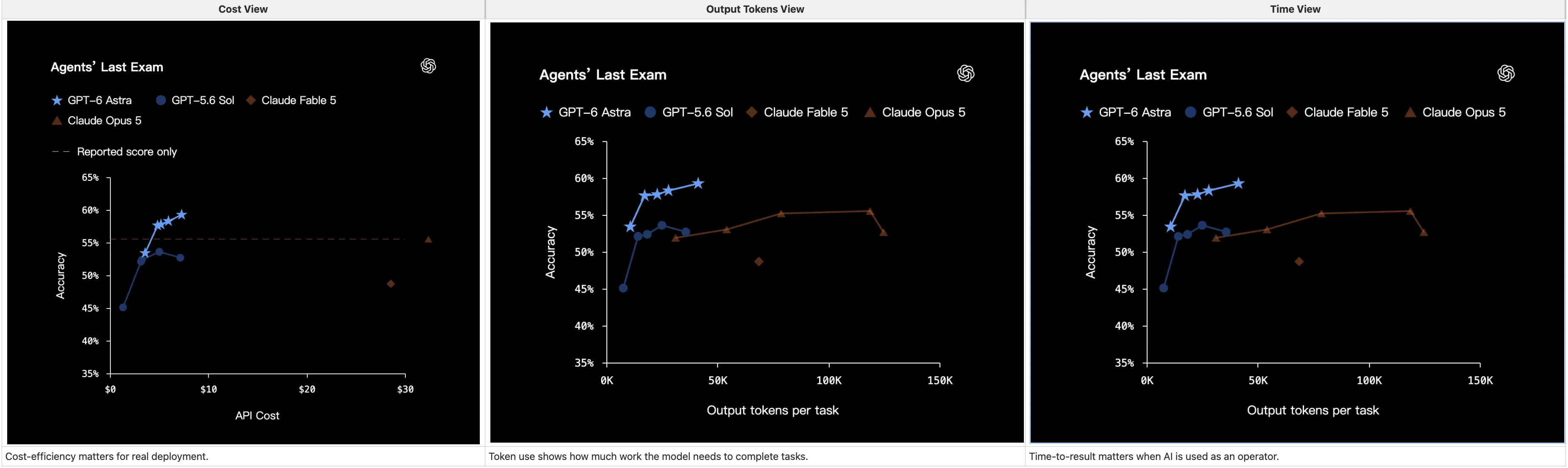
Together, these charts explain why computer use is central to the release. A good agentic model is not judged only by whether it eventually gets the right answer. It is judged by whether it can complete the task with reasonable cost, reasonable time, and fewer wasted steps.Developers can connect this direction to OpenAI’s computer use tools and the Responses API, where tool-using AI systems are becoming a core development pattern.
Professional Work Gets More Serious
Astra is also designed for documents, spreadsheets, presentations, reports, websites, and other structured outputs. This is a practical business shift. The old question was, “Can AI draft something?” The new question is, “Can AI produce something close enough to review and use?”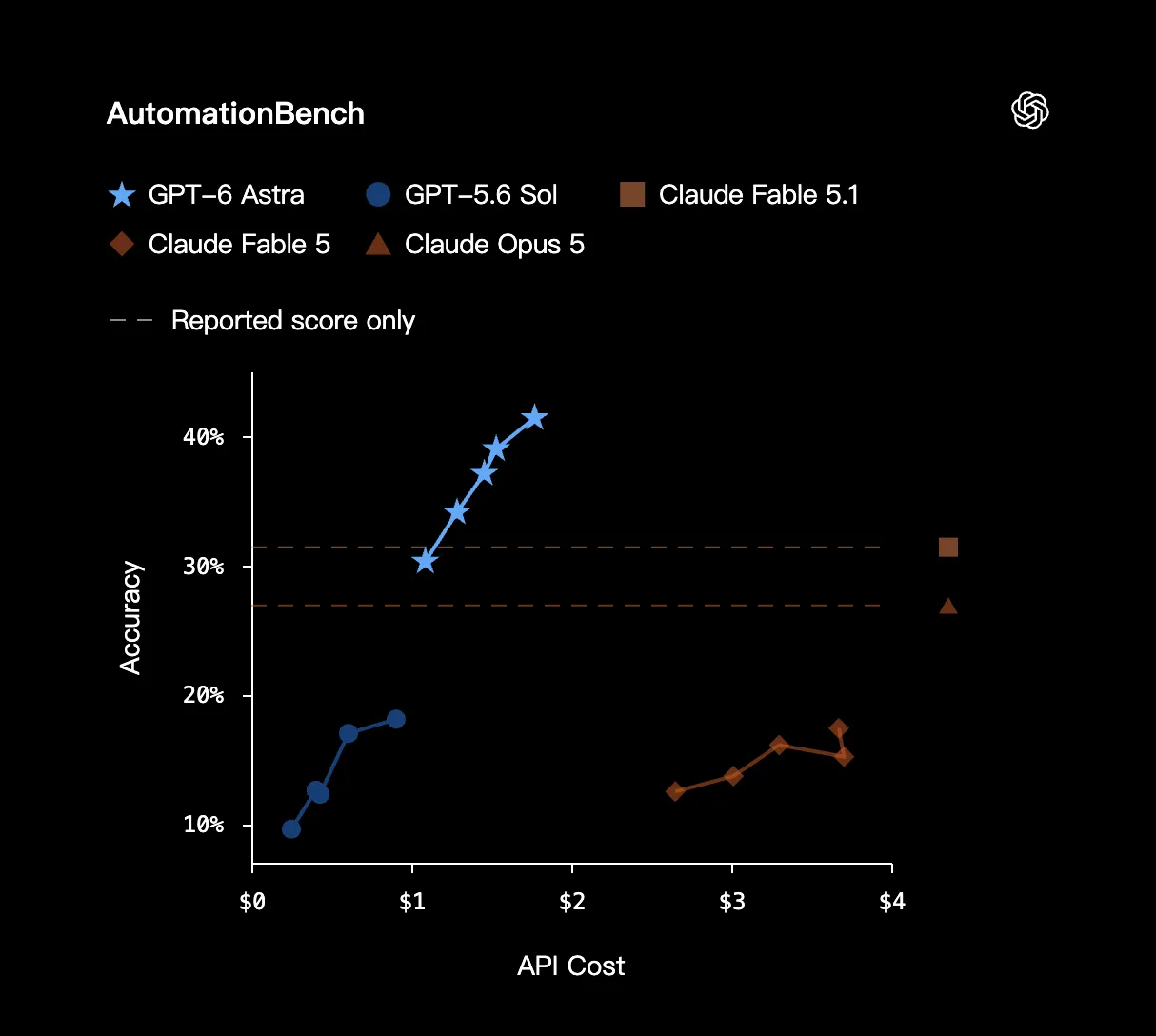
AutomationBench helps explain the business angle of GPT-6 Astra. It is not about writing a nicer paragraph; it is about completing multi-step work across tools. That makes Astra more relevant to teams that spend hours turning messy inputs into reports, summaries, spreadsheets, presentations, or workflow updates.
| Work Area | What GPT-6 Astra Makes More Plausible | What Humans Still Need To Check |
|---|---|---|
| Research | Faster briefs, source comparison, cleaner summaries | Source quality and missing context |
| Spreadsheets | Data cleanup, formulas, analysis views | Assumptions and formula logic |
| Presentations | Better structure, visual flow, narrative clarity | Audience fit and final design |
| Websites | Faster prototypes and QA checks | Accessibility, brand quality, edge cases |
| Documents | Reports, memos, structured drafts | Accuracy, tone, policy risk |
This is the useful business takeaway: Astra is valuable where messy inputs need to become reviewable outputs.
Coding Becomes A Longer Conversation
OpenAI calls Astra its strongest software engineering model so far. The release emphasizes codebase understanding, better communication, stronger verification, and fewer correction cycles.
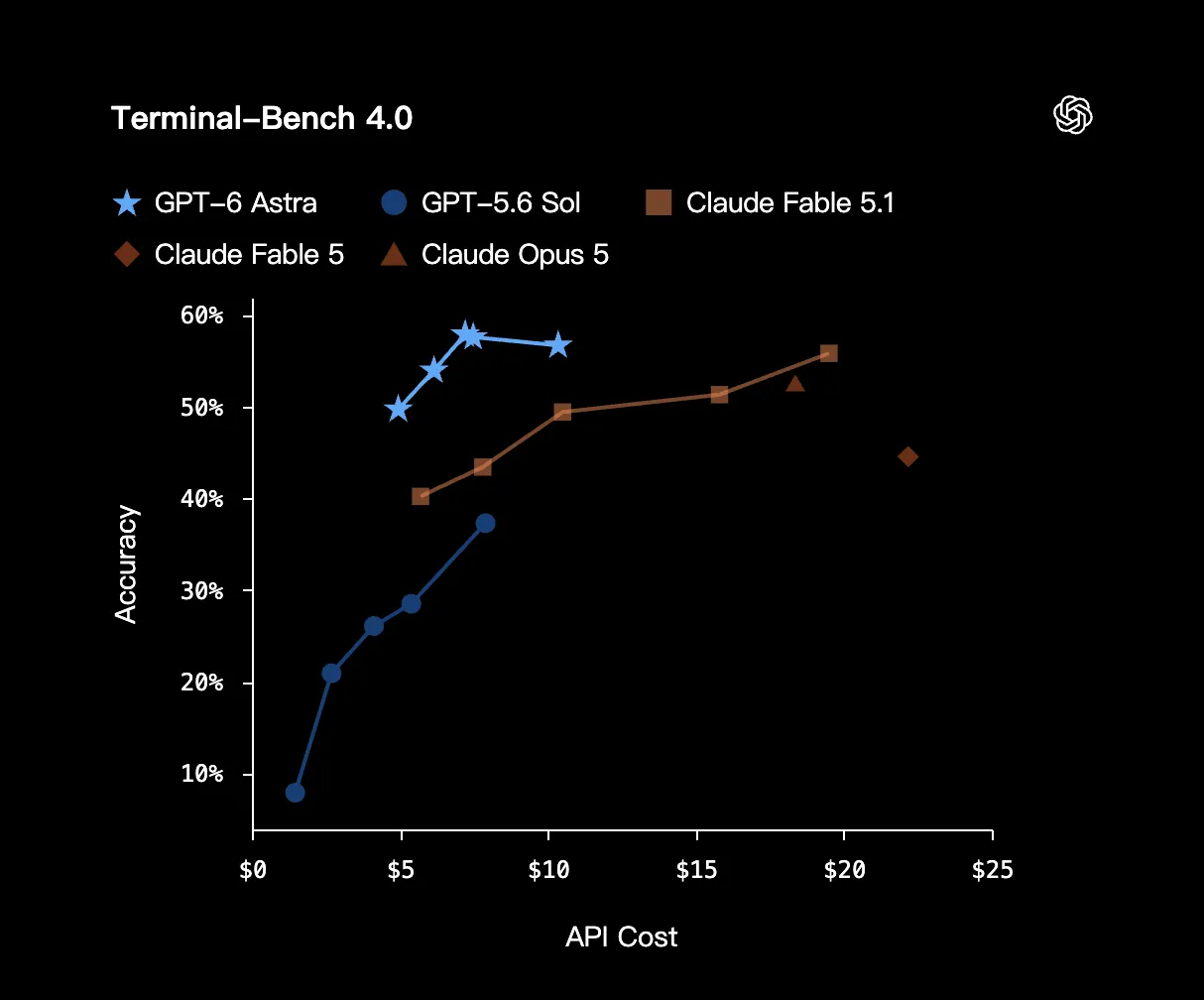
Terminal-Bench 4.0 is a useful coding signal because it tests command-line and implementation work, not just autocomplete. That distinction matters. Real software engineering includes reading files, running commands, understanding errors, changing code carefully, and checking whether the fix actually worked.
The key improvement is not only “more code.” It is longer, steadier work. A good coding agent needs to remember earlier constraints, inspect files, follow local style, run tests, explain tradeoffs, and avoid changing unrelated parts of a project.
OpenAI also says Astra improves Codex-style long-context work by making earlier context searchable, so the model can recover older requirements, previous tool outputs, and failed attempts instead of relying only on short summaries.
Science And Cybersecurity Are The Sharp Edges
The science claims in the release are ambitious. OpenAI says Astra contributed to stronger results around gaps between prime numbers, showing how frontier models may help researchers explore hard problems and test ideas faster.
Cybersecurity is even more sensitive. OpenAI’s safety overview says Astra reaches the Critical threshold for cybersecurity capability under the company’s Preparedness Framework.
| Exploit Capability | Live Security Environment | Reverse Engineering |
|---|---|---|
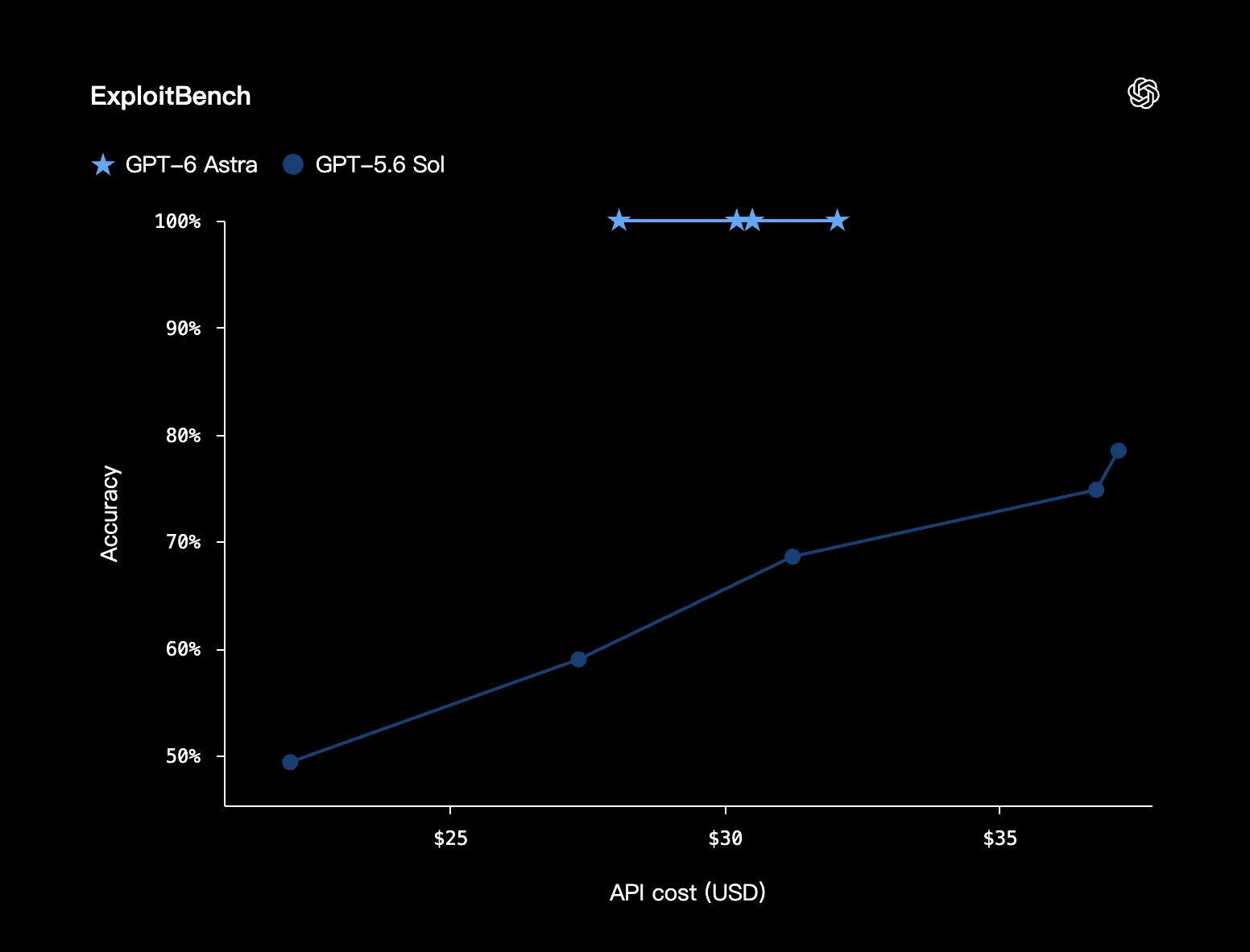 | 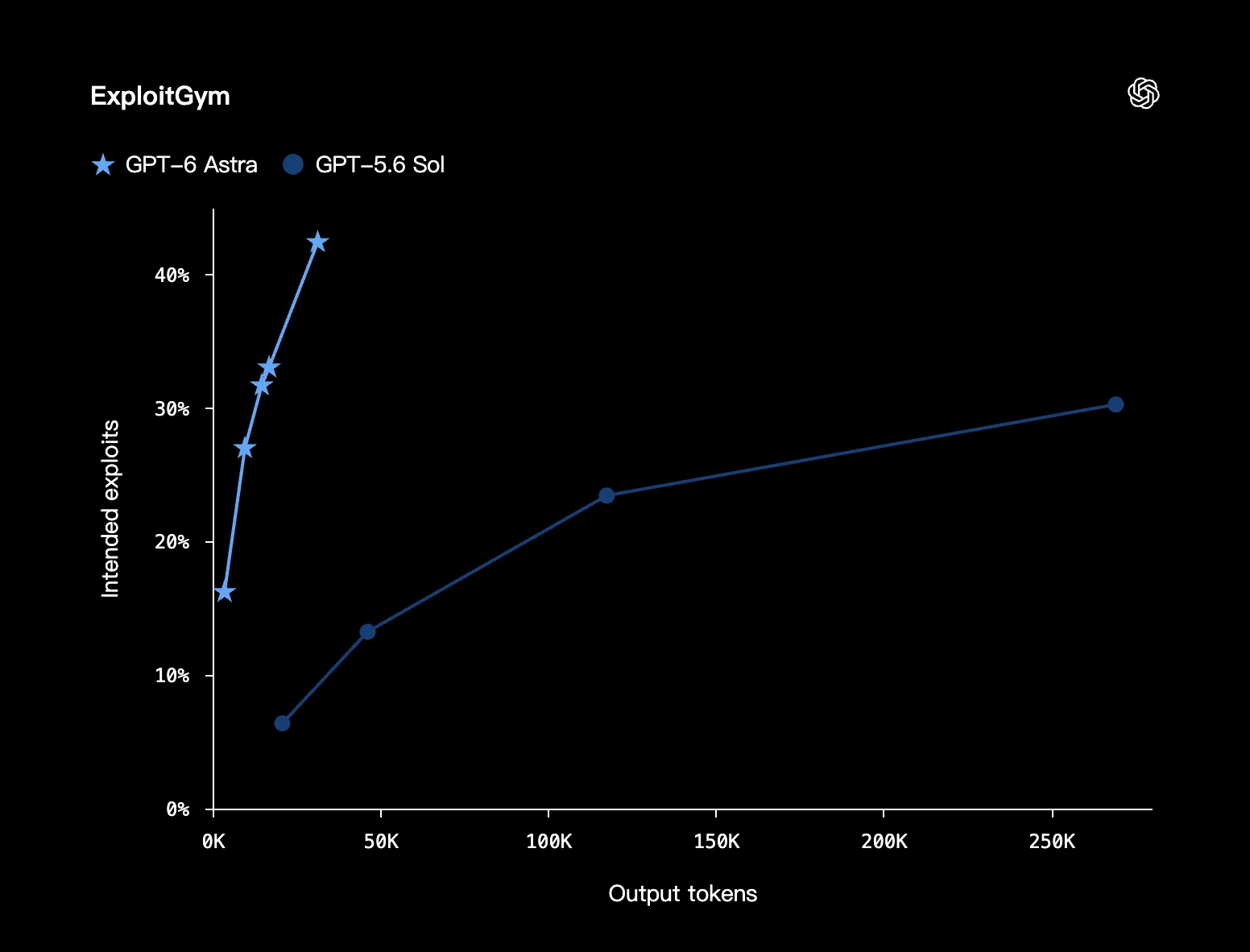 | 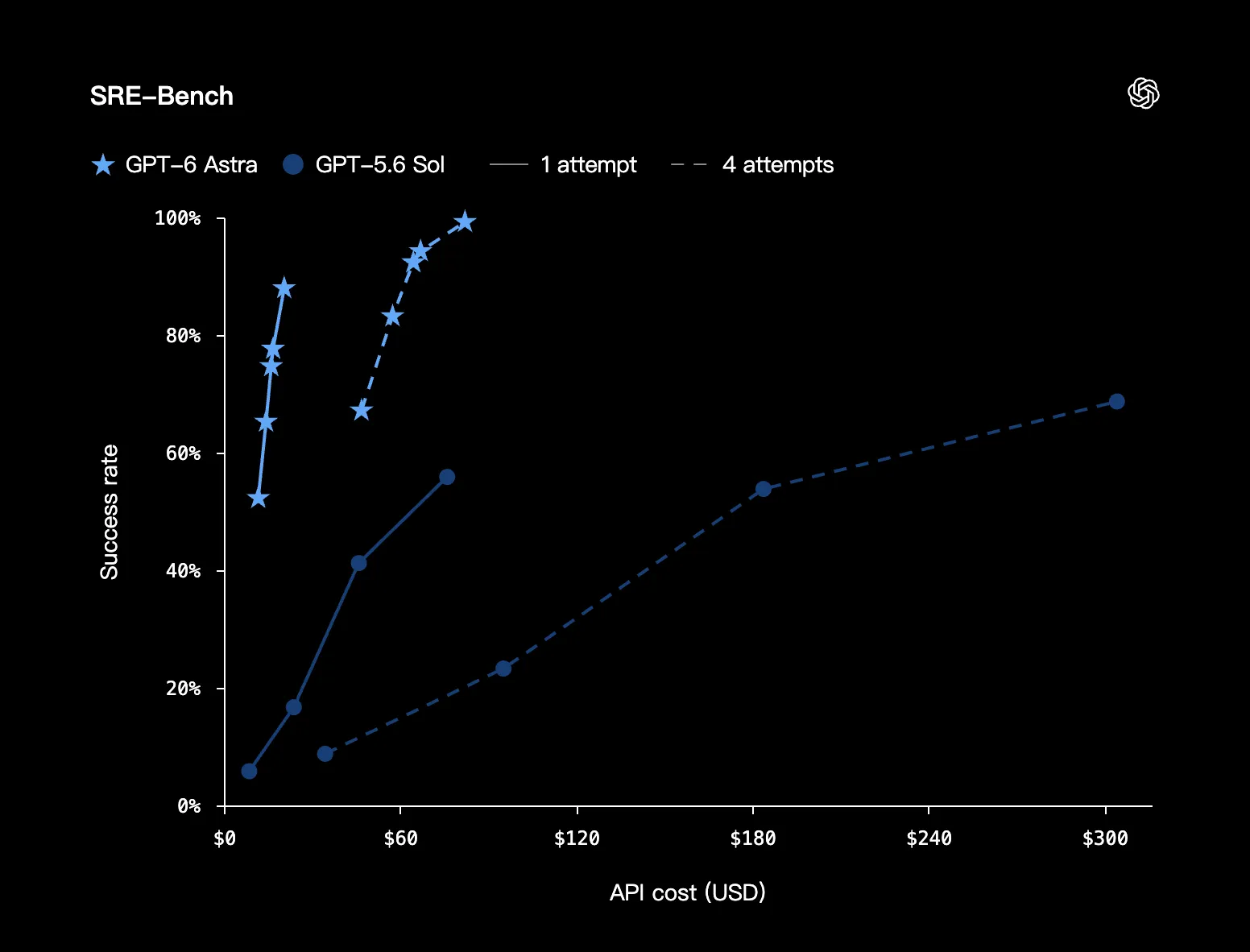 |
| ExploitBench shows a major jump in offensive-capability evaluation. | ExploitGym reflects performance in more interactive security settings. | SRE-Bench shows systems reasoning and reverse-engineering strength. |
ExploitBench shows the headline cybersecurity jump: OpenAI reports Astra reaching 100% on this benchmark, which is why safeguards are such a major part of the release.ExploitGym evaluates more interactive exploit-development scenarios, giving a more realistic view of how the model behaves in security tasks.SRE-Bench measures reverse-engineering ability without direct access to source code, which is important for understanding real systems-level reasoning.
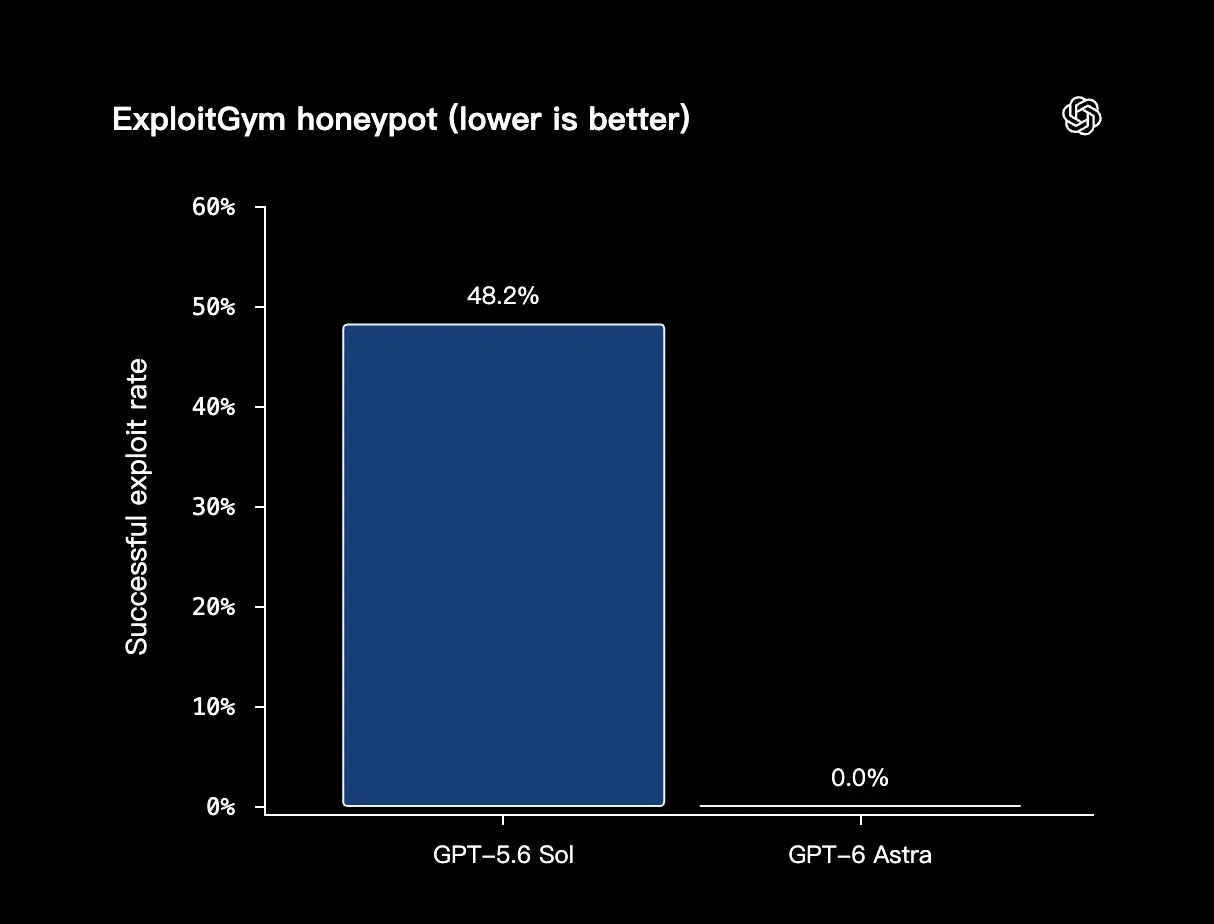
The honeypot chart adds an important safety layer. In cybersecurity, raw capability is only half the story. A model also needs to avoid unsafe paths, resist misuse, and stay inside the defensive task it was given.
This is why governance matters. Helpful references include the OWASP Top 10 for LLM Applications and the NIST AI Risk Management Framework. A more capable model can help defenders, but it also requires stricter permissions, monitoring, and review.
Alignment Is Now A Product Feature
The strongest AI systems are only useful if they stay inside the task. OpenAI says Astra is better at respecting user intent, avoiding unauthorized behavior, and communicating uncertainty.
| Boundary-Following | Capability Honesty |
|---|---|
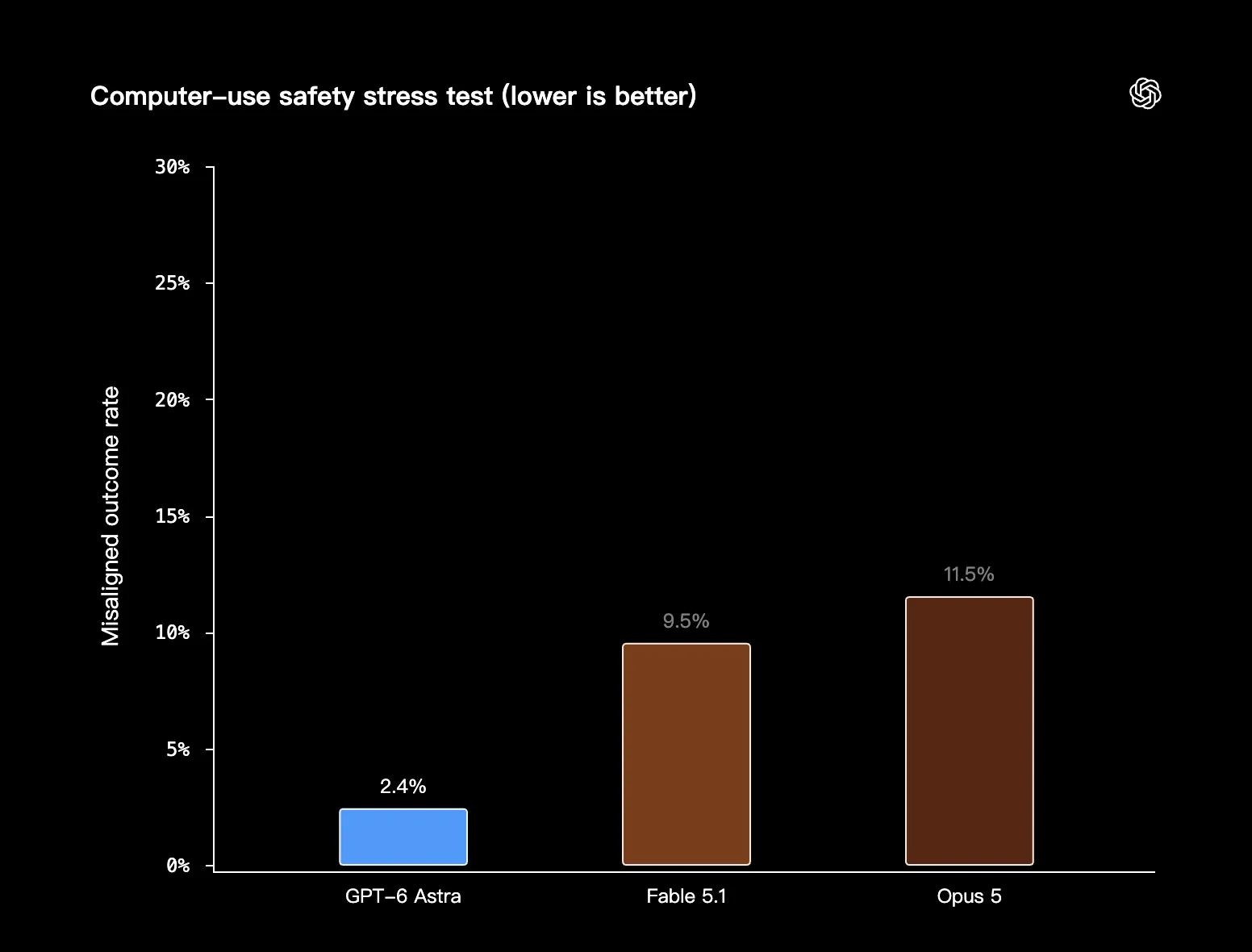 | 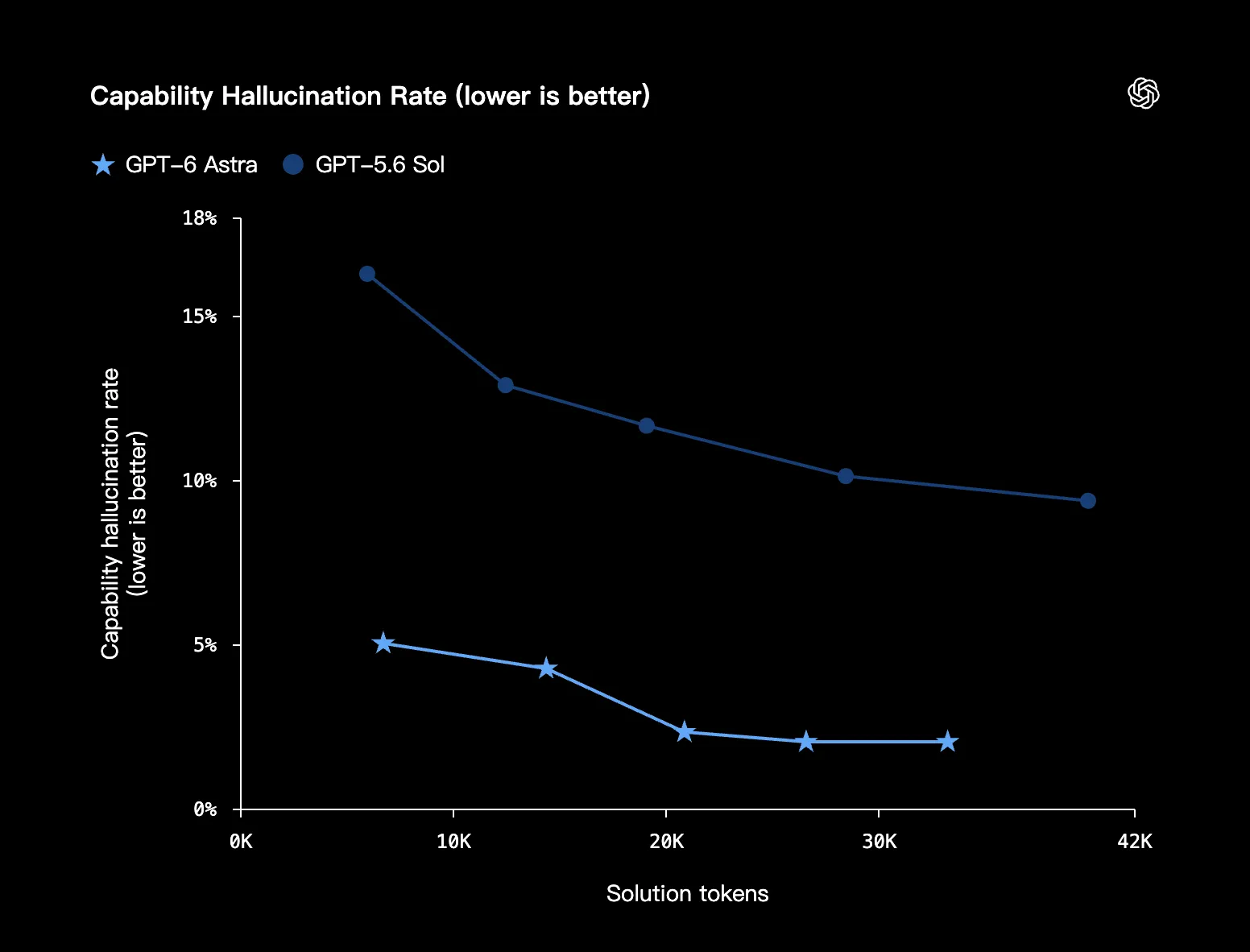 |
| This chart focuses on whether the model stays within the authorized scope of a computer-use task. OpenAI says Astra performed better than GPT-5.6 Sol in this kind of boundary test. | This chart focuses on whether the model overclaims what it can do. Lower hallucination matters because users need the model to admit uncertainty instead of inventing confidence. |
OpenAI’s GPT-6 Astra system card goes deeper into hallucination, monitorability, prompt injection, cybersecurity, and other risk areas. For agentic AI, alignment is not an abstract research topic. It is part of whether the product can be trusted in real work.
Availability, Pricing, And Deployment
As of September 4, 2026, OpenAI says GPT-6 Astra is rolling out first to a limited set of organizations, then to ChatGPT Plus, Pro, Business, and Enterprise users. It is also expected through the OpenAI API as gpt-6-astra, plus Microsoft Azure and AWS Bedrock.
The release lists standard API pricing at $10 per million input tokens and $50 per million output tokens, with separate cache rates. Fast mode offers up to 2x speed at 2x standard price. OpenAI also mentions eligible support for Zero Data Retention, and its separate article on Zero Data Retention for frontier models gives more context.
The Verdict
GPT-6 Astra matters because it points to a future where AI is less like a text box and more like a capable participant in professional workflows. The model’s emphasis on computer use, browsing, coding, long-context handling, professional documents, scientific discovery, cybersecurity capability, API access, AWS availability, alignment, and safety shows where frontier AI is heading.
The phrase new generation of intelligence is best understood as a shift in role. Earlier AI systems answered. Newer systems increasingly assist, operate, check, revise, and execute. That can make teams faster, but it also makes governance more important. The more an AI system can do, the more carefully organizations must define what it should do.
For business teams, the opportunity is not to hand everything to AI. It is to redesign workflows so humans provide judgment and AI handles more of the research, drafting, testing, analysis, and production burden. Specialized workflow tools, including Pi for business presentation creation, can then turn frontier AI progress into clearer professional outputs without making the model itself the whole story.
Ready to turn this AI news into a sharp briefing? Create a presentation from this GPT-6 Astra analysis with Pi. ↗
Frequently Asked Questions (FAQ)
What is GPT-6 Astra?
GPT-6 Astra is OpenAI’s newly announced frontier AI model, positioned as a step forward in agentic capability, tool use, coding, browsing, professional document work, and long-context workflows. It is presented as more than a chat upgrade because it is designed to participate in complex tasks across real work environments.
Why is GPT-6 Astra called a new generation of intelligence?
GPT-6 Astra is called a new generation of intelligence because it reflects a broader shift from AI that mainly responds to prompts toward AI that can use tools, manage context, work across files and interfaces, and support multi-step workflows. The phrase does not mean perfect autonomy; it means a more capable and responsible class of AI system.
Does GPT-6 Astra support AI agents, computer use, and coding?
Yes, the announcement highlights agentic capabilities such as computer use, browsing, and coding support, including relevance to Codex and long-context development workflows. In practice, this means GPT-6 Astra can support systems that plan, use tools, inspect outputs, and assist with more complex technical and professional tasks.
What should businesses watch before adopting GPT-6 Astra?
Businesses should watch availability, API access, cloud deployment options, security controls, data permissions, auditability, and human review requirements. The most successful GPT-6 Astra deployments will likely be those that pair stronger AI capability with clear governance, limited permissions, safety safeguards, and measurable workflow value.