how do the characteristics of mother and father
The question “how do the characteristics of mother and father” usually points to a bigger idea: how parents influence who a child becomes. The short answer is that children are shaped by both biology and environment. Some characteristics are inherited through genes, while others are learned through everyday life, family routines, emotional support, communication, culture, and the way parents respond to stress.
A child is not a copy of the mother or father. Development is more like a conversation between inherited traits and lived experiences.
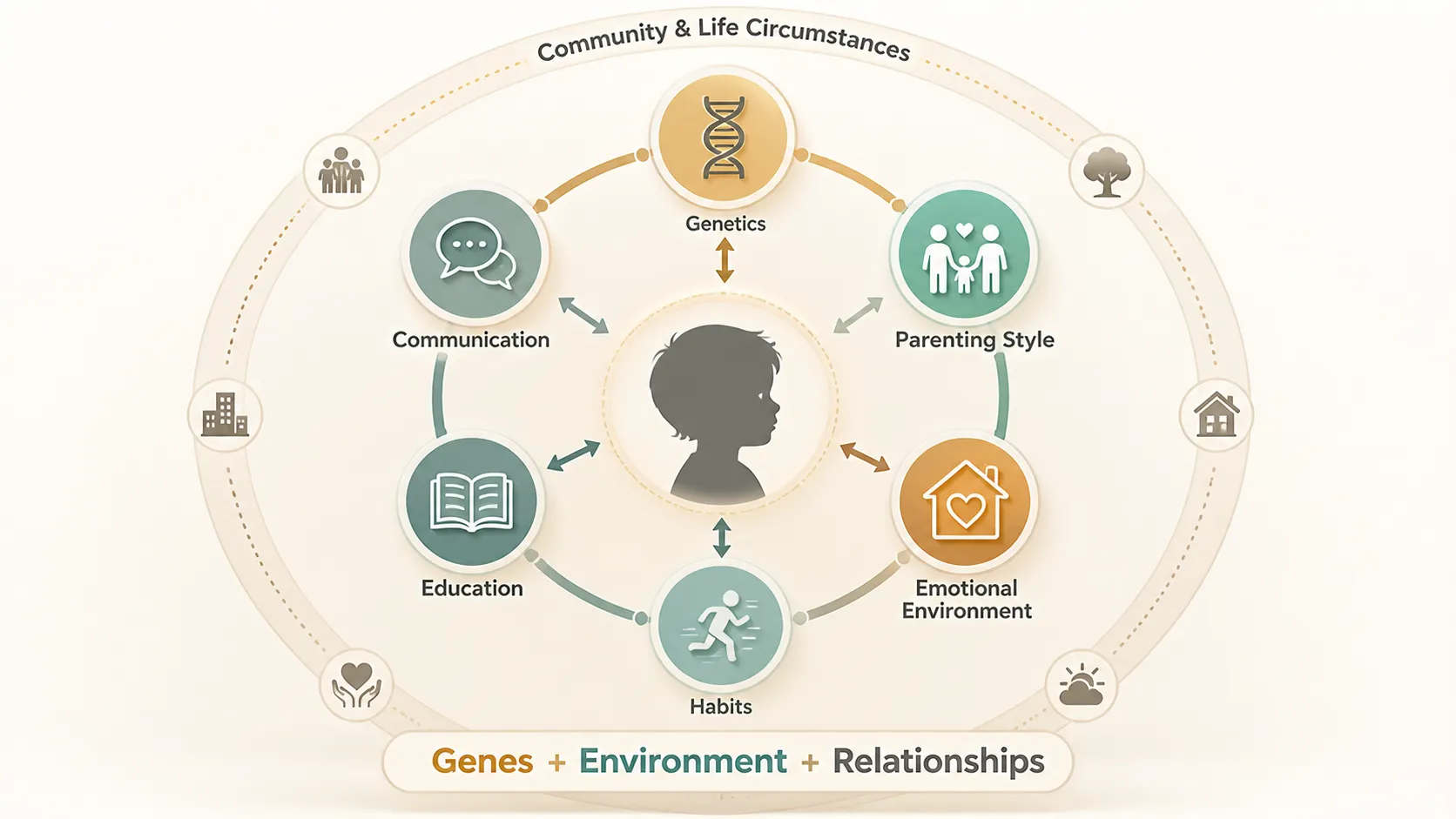
how do the characteristics of mother and father shape a child?
Mothers and fathers can influence a child in two broad ways: what they pass on biologically and what they model or provide through parenting.
MedlinePlus Genetics explains that genetics affects many human traits and health conditions. A child receives genetic material from both biological parents, which can influence appearance, body structure, certain health risks, temperament, and some natural tendencies.
But genes are not the whole story. The CDC’s child development guidance emphasizes that a safe, loving home, family time, reading, talking, sleep, nutrition, and healthy routines all support development. So a child’s future is shaped by both inherited traits and the environment built around them.
Genetics: What Children May Inherit
Children inherit genes from both biological parents. MedlinePlus explains heredity as the process of parents passing certain genes to their children. This can influence visible traits like eye color, hair color, skin tone, and height. It can also influence less visible characteristics, such as risk for certain medical conditions or aspects of temperament.
Some traits are controlled by one gene, but many important characteristics are much more complex. MedlinePlus on genes notes that traits such as height are often influenced by more than one gene. That means a child’s characteristics usually cannot be predicted by looking at only one parent.
Temperament is a good example. MedlinePlus Genetics explains that temperament includes patterns such as sociability, activity level, emotional reactivity, attention, and persistence. Genetics can play a role, but the family environment also matters.
Parenting Style And Emotional Climate
The way parents interact with children can strongly affect development. The APA Dictionary of Psychology describes parenting styles through factors like warmth and control. Some parents are highly responsive and structured. Others may be strict, permissive, inconsistent, or emotionally distant.
Warmth does not mean letting a child do anything. Structure does not mean harshness. Healthy parenting often combines affection, boundaries, guidance, and respect for the child’s growing independence.
For example, a father who calmly explains rules may teach self-control. A mother who listens when a child is upset may help the child build emotional language. Parents who apologize after mistakes can model accountability. These everyday behaviors become lessons children absorb over time.
Daily Habits Children Learn At Home
Children learn from what parents do, not only from what parents say. A parent’s habits around reading, food, money, conflict, technology, exercise, and responsibility can become part of the child’s normal world.
| Parent Characteristic | How It May Influence A Child | Example |
|---|---|---|
| Emotional warmth | Builds security and trust | Comforting a child after failure |
| Consistent routines | Supports self-control and stability | Regular bedtime and homework time |
| Communication style | Shapes how children express needs | Talking through conflict calmly |
| Curiosity and learning | Encourages exploration | Reading, asking questions, visiting museums |
| Stress response | Teaches coping patterns | Taking a walk instead of shouting |
| Health habits | Influences daily behavior | Cooking balanced meals or staying active |
This is why two parents with similar values may still shape a child differently. One may model patience. Another may model ambition. One may teach practical skills. Another may encourage imagination or risk-taking.
Relationships Build The Brain
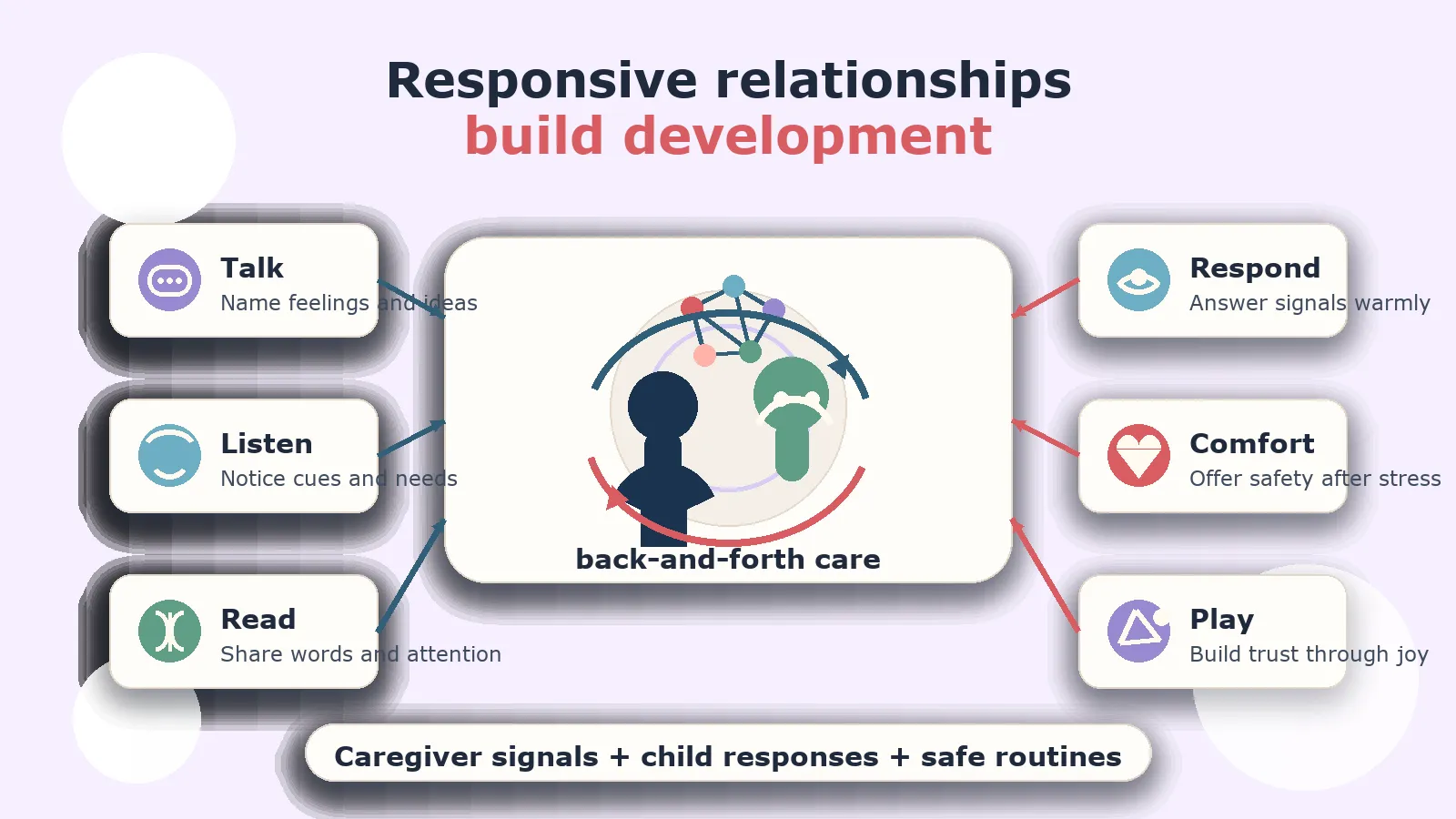
Early relationships matter deeply. Harvard’s Center on the Developing Child explains serve and return as the back-and-forth interaction between a child and a caring adult. When a baby babbles, points, cries, or smiles, and an adult responds with attention, words, or comfort, the child’s developing brain builds important connections.
This does not require perfect parenting. It requires repeated responsiveness. A mother naming what a toddler is seeing, a father responding to a child’s question, or both parents reading aloud can all support language, social skills, and emotional development.
The opposite is also important. Harvard’s guide to toxic stress explains that prolonged adversity without enough adult support can affect development. Stressful events do not automatically harm a child long-term, but stable, caring relationships help protect children when life is difficult.
Education, School, And Expectations
Parents also influence children through expectations and involvement. The CDC’s parent engagement guidance notes that strong relationships between families and schools are linked with better learning, behavior, and health outcomes.
This does not mean parents need to be perfect tutors. It can be as simple as asking about school, attending meetings when possible, helping with routines, showing interest in effort, and treating learning as valuable.
A child whose parents talk about books, problem-solving, or future goals may develop stronger motivation. A child whose parents model persistence may learn that struggle is part of learning, not proof of failure.
Environment And Life Circumstances
Parental characteristics do not act in isolation. Income, neighborhood, culture, school quality, safety, healthcare, discrimination, community support, and stress all shape family life.
The NIH Environmental influences on Child Health Outcomes program studies how environmental exposures affect child health and development, even before birth. The NICHD Child Development and Behavior Branch also supports research on how genetic and environmental influences affect children’s development.
So when asking how parents shape a child, it is important not to blame parents for everything. Parents matter, but they parent inside real conditions. Supportive communities, stable housing, healthcare, and good schools also matter.
Real-Life Examples
A child may inherit a parent’s musical sensitivity, but practice, encouragement, and access to lessons determine whether that ability grows. A child may have a naturally cautious temperament, but patient parenting can help them build confidence. A child may resemble a parent physically but develop a very different personality because of friends, teachers, culture, and personal experiences.
Likewise, a parent who struggles with anxiety does not automatically raise an anxious child. But if the child often sees fear, avoidance, or constant worry, they may learn those patterns. If the parent gets support and models coping skills, the child may learn resilience instead.
The Verdict
The characteristics of mother and father can influence a child through genetics, temperament, parenting style, emotional support, habits, education, and the home environment. Some traits are inherited. Others are learned through daily life.
But children are not fixed outcomes of their parents. Development is shaped by many forces: genes, family relationships, school, culture, community, health, and personal experience. The healthiest way to understand parental influence is not as destiny, but as one powerful part of a much larger developmental picture.
Click here to use Pi to turn this article into a presentation. ↗
Frequently Asked Questions (FAQ)
Q: How do the characteristics of mother and father affect a child?
They can affect a child through inherited genes, parenting style, emotional support, routines, communication, education, and the overall family environment.
Q: Are children always like their parents?
No. Children may share some traits with their parents, but they also develop through school, friendships, culture, life experiences, and their own choices.
Q: Which parent influences a child more?
There is no universal answer. Mothers, fathers, and other caregivers can all have strong influence depending on the child’s relationship, daily care, emotional support, and family situation.
Q: Are personality traits inherited or learned?
Both. Genetics can influence temperament and personality tendencies, but parenting, environment, experiences, and relationships also shape how those traits develop.