how to start a blog
Starting a blog is easy in the technical sense. You can create an account, choose a theme, and publish a first post in one afternoon. The harder part is building a blog that still feels worth writing three months later, when the early excitement has faded and you need a real system.
A good blog is not just a place to put articles. It is a small publishing project: a topic, a reader, a point of view, a repeatable writing habit, and a way for people to find you. If you get those pieces right, the technical setup becomes much less stressful.
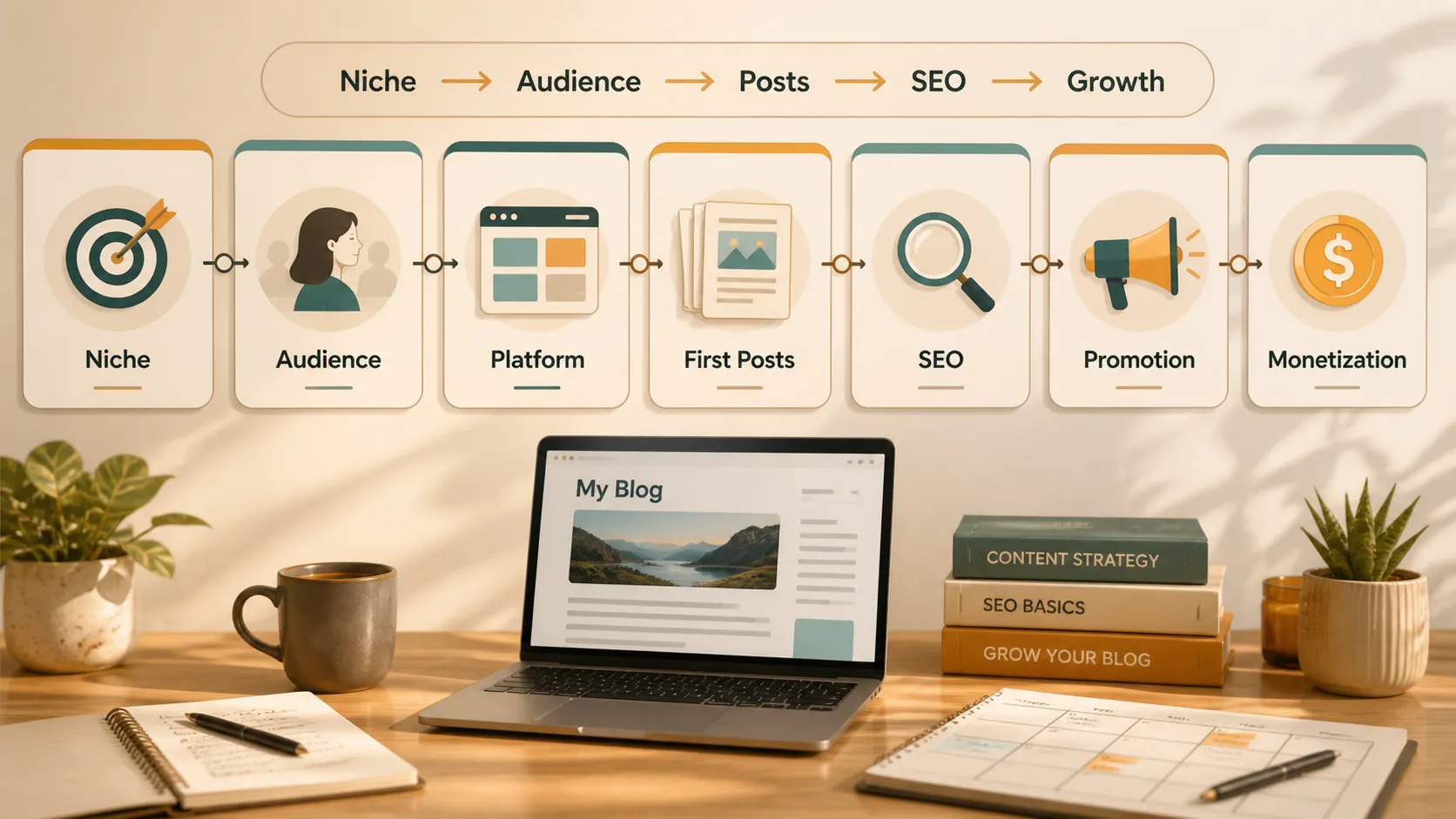
First, Decide What Your Blog Is Really For
Before buying a domain or choosing colors, answer one question: what will people come to this blog for?
“Travel” is too broad. “Weekend travel guides for people based in Chicago” is clearer. “Fitness” is huge. “Strength training for beginners over 40” gives the blog a sharper direction. You do not need a totally original topic, but you do need a specific angle.
A useful blog idea usually has three parts: something you can write about often, a reader you understand, and a problem you can solve repeatedly. If your blog is about budgeting, maybe your reader is a young professional trying to manage rent, debt, and savings. If your blog is about presentation design, maybe your reader is a founder who needs clearer pitch decks.
Your niche can change later. Most blogs become clearer through publishing. The first goal is simply to choose a direction strong enough to support your first 10 posts.
Choose A Platform, Domain, And Basic Setup
For many beginners, WordPress is a flexible choice because it can grow from a simple blog into a larger content site. The official WordPress getting started guide is a practical place to begin if you want control over themes, plugins, and publishing.
You will also need a domain name. Keep it short, easy to spell, and easy to say out loud. Avoid confusing punctuation or overly clever spellings unless they are central to your brand. If you want to understand what a domain actually does, ICANN explains how domain names work.
Your basic blog setup should include a clean homepage, an About page, a Contact page, and a few simple categories. Do not over-design the site at the beginning. Readability matters more than decoration. Use clear headings, short paragraphs, strong contrast, and a mobile-friendly layout. The W3C accessibility introduction is worth reading because accessible design usually makes a site better for everyone.
Plan Your First 10 Blog Posts
Many beginners write one welcome post and then get stuck. A better approach is to plan a small launch batch. Your first 10 posts should answer real beginner questions in your niche.
If your blog is about home coffee, your early posts might explain grind size, brewing methods, cheap equipment, and common mistakes. If your blog is about personal finance, you might write about monthly budgets, emergency funds, credit card debt, and saving habits.
| Post Type | Purpose | Example |
|---|---|---|
| Beginner guide | Helps new readers enter the topic | how to start meal planning |
| Step-by-step tutorial | Solves one specific task | how to create a monthly budget |
| Comparison | Helps readers choose between options | WordPress vs Squarespace |
| Checklist | Makes action easier | blog launch checklist |
| Personal lesson | Builds trust and voice | what I learned after 30 days of writing |
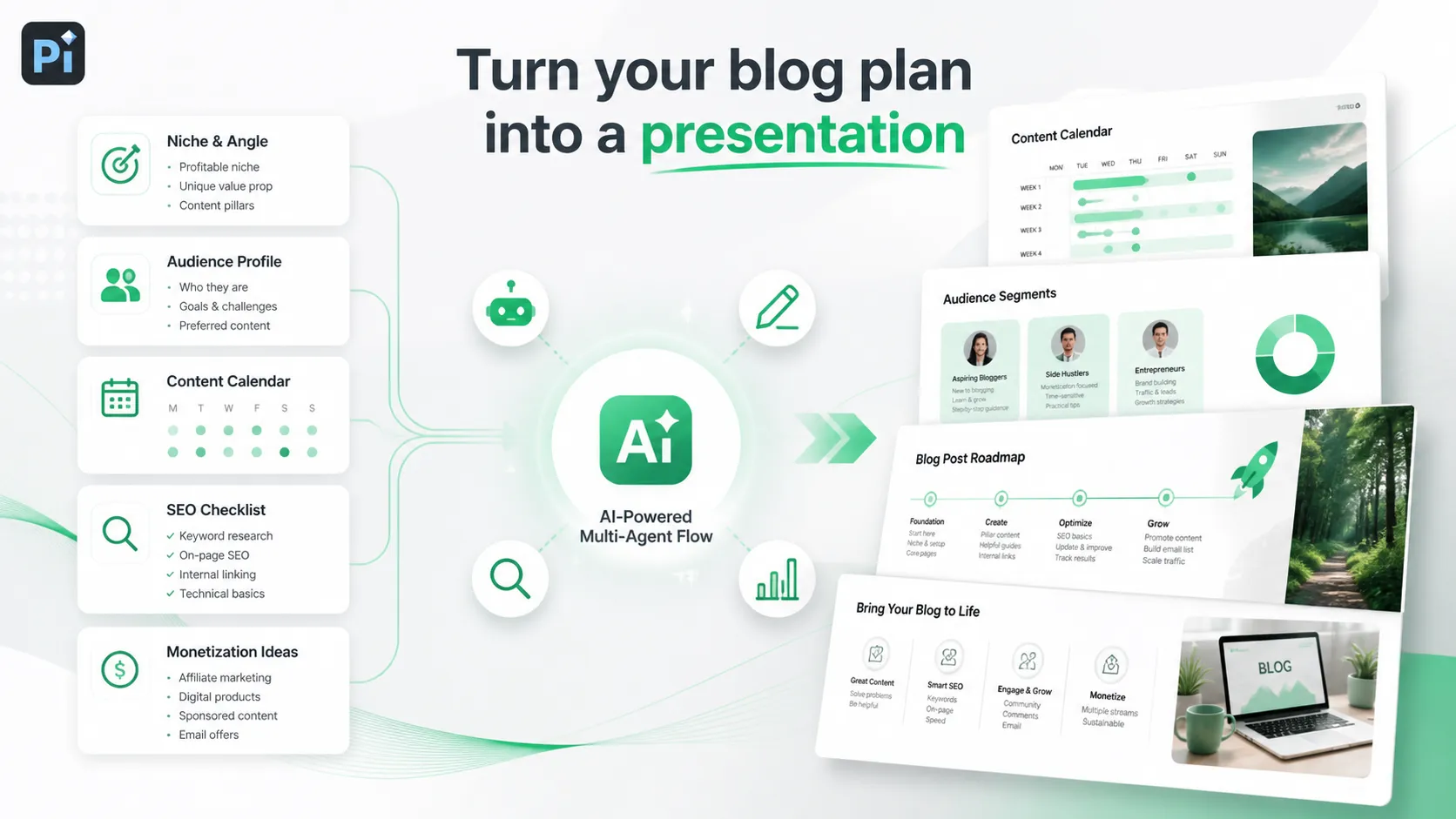
This is also where Pi can fit naturally if you are planning a blog for a team, a client, or a business. You can turn your niche, audience notes, content pillars, and publishing calendar into a presentation, then use layouts, charts, icons, colors, and AI-generated visuals to make the plan easier to review.
Write Posts That People Can Actually Use
A strong blog post starts with the reader’s problem, not with a long introduction about why the topic matters. Personal stories can help, but they should support the answer instead of delaying it.
A reliable structure is simple: name the problem, explain the concept, give steps, add examples, mention common mistakes, and end with a practical next step. That structure keeps the article useful even if the reader is skimming.
Google’s guidance on helpful, reliable, people-first content is a good standard to keep in mind. The main question is not “Can this rank?” but “Would someone bookmark this, share it, or feel relieved after reading it?”
Try to include something original in every post: your own example, screenshots, a template, a small case study, a better explanation, or a lesson from experience. A blog that only repeats what every other page says is hard to remember.
Learn Basic SEO Without Making Your Writing Robotic
SEO helps search engines understand your content and helps readers decide whether your page is worth clicking. You do not need to become an expert before publishing, but you should learn the basics early. Google’s SEO Starter Guide is one of the best places to start.
For a new blog, focus on simple habits. Use one clear topic per post. Put the main keyword in the title naturally. Use descriptive H2 headings. Add internal links to related articles. Write meta descriptions that explain the value of the post. Use descriptive alt text for images.
After publishing, connect your site to Google Search Console. It shows whether Google can find your pages, which search queries are bringing impressions, and whether indexing issues appear. You can also use Google Analytics to understand where readers come from and which posts keep people engaged.
Promote Your Blog Where Readers Already Spend Time
Publishing is only half the work. Promotion is how people discover you before search traffic grows.
Choose one or two channels that match your audience. A design blog might do well on LinkedIn, X, or niche communities. A food blog might work better on Pinterest and short-form video. A finance blog may grow through search, newsletters, and helpful answers in relevant communities.
The key is to participate before you promote. Answer questions, share useful thoughts, and become recognizable. Then your blog post can be the deeper resource, not a random link dropped into a conversation.
Monetize After Trust Starts Forming
There are many ways to make money from a blog: ads, affiliate links, sponsorships, paid templates, consulting, courses, digital products, or newsletters. But monetization works best after readers trust you.
If you use affiliate links or sponsored content, disclose that relationship clearly. The FTC’s guide to disclosures for influencers is written for social media, but the same basic idea applies to blogging: readers should know when you may earn money from a recommendation.
Be careful with images too. Do not take pictures from search results and assume they are free. Use your own visuals, paid stock, or clearly licensed resources. Creative Commons explains different license types and how reuse can work.
The Verdict
The best way to start a blog is to start smaller than your ambition. Pick a clear reader, choose a focused topic, set up a simple site, publish useful posts, and learn from what people actually read.
A blog grows through repeated usefulness. The design can improve later. The monetization can come later. What matters first is building a body of content that solves real problems and gives readers a reason to return.
Frequently Asked Questions (FAQ)
Q:It should be long enough to answer the question clearly.
A:Some topics need 800 words; others need 2,000. Do not add filler just to hit a word count.
Q:Can I start a blog without knowing SEO?
A:Yes. Start with clear topics, useful titles, readable headings, and helpful answers. Then use Search Console data to improve your posts over time.
Q:How soon can a blog make money?
A:Some blogs earn within months, but many take a year or more to build meaningful traffic and trust. Focus first on useful content, a clear audience, and consistent publishing.