生成AIアプリのトレンド:最新の消費者向けAIデータが明らかにすること
生成AIアプリのトレンドは、もはや1つのチャットボットだけで決まるものではありません。消費者は現在、情報の調査、画像や動画の作成、ソフトウェアの作成、学習、コンテンツの編集、日常的なタスクの完了にAIを利用しています。AI機能は既存製品の一部にもなっており、「AIアプリ」と通常のソフトウェアの境界線はますます引きにくくなっています。
Stanford AI Index 2026のレポートによると、生成AIは3年以内に53%の導入率に達し、パーソナルコンピュータやインターネットの初期導入よりも速いペースでした。また、生成AIツールが米国で生み出した年間の消費者余剰は、2026年初頭までに1,720億ドルに達したと推定されています。
市場がどのように現在に至ったのかを理解するため、本記事ではThe Top 100 Gen AI Consumer Appsを視覚的なケーススタディとして用います。Piで作成されたこのプレゼンテーションは、2025年初頭ごろの消費者向けAIの状況を捉え、主要なWeb製品とモバイルアプリを分けて、アシスタント、AI動画、コーディングツール、モバイル収益化における新たなシグナルを強調しています。
消費者向けAIは日常のユーティリティになりつつある
「AIアプリ」という言葉は、かつて主に会話型アシスタントを指していました。今日では、リサーチプラットフォーム、画像・動画生成ツール、コーディング環境、学習ツール、写真編集ツール、生産性向上製品、そして身近なソフトウェアに組み込まれたAI機能まで含まれます。
a16zのTop 100 Gen AI Consumer Apps第6版は、このより広範な市場を反映しています。2026年1月のランキングには、AIネイティブ製品に加え、Canva、CapCut、Notion、Grammarly、Picsart、Freepikといった、生成AIがユーザー体験の中心となっている既存ツールも含まれています。
人々は、専用のチャットボットを開かなくても生成AIを利用するようになっています。使い慣れたソフトウェアの中で、動画の背景を削除したり、文書を要約したり、プレゼンテーションを生成したり、写真を編集したり、小規模なWebサイトを構築したりできます。
したがって、市場は2つの方向に成長しています。専用AI製品はより高機能になり、既存製品はAIを活用して、馴染みのあるワークフローをより速く、より利用しやすいものにしています。
デフォルトAIの座をめぐる競争は拡大している
ChatGPTは依然として最大の消費者向けAI製品ですが、市場の競争は激しくなっています。a16zによると、2026年1月時点で、ChatGPTの月間WebトラフィックはGeminiの2.7倍、モバイルのアクティブユーザー数は2.5倍でした。GeminiとClaudeも購読者を増やし、特定のユースケースでより強い地位を築いていました。
Sensor TowerのState of AI 2026によると、ChatGPTは2026年5月にモバイル月間アクティブユーザー数10億人に到達しました。2026年第1四半期には、ChatGPT、Gemini、DeepSeekがAIアシスタントアプリで費やされた時間の約90%を占める一方、Claudeはプロフェッショナルユーザーや利用意欲の高いユーザーの間で急速に成長しました。
競争はモデルの新奇性を超えて進んでいます。ユーザーは、信頼性、保存されたコンテキスト、統合機能、マルチモーダル機能、そしてアシスタントが既存の仕事に適合するかどうかをますます重視しています。
次のデフォルトAIは、単にベンチマーク結果が最も優れたものではないかもしれません。日々繰り返されるタスクにおいて、最も役立つ出発点となる製品かもしれません。
WebとモバイルのAIランキングは異なる行動を示す
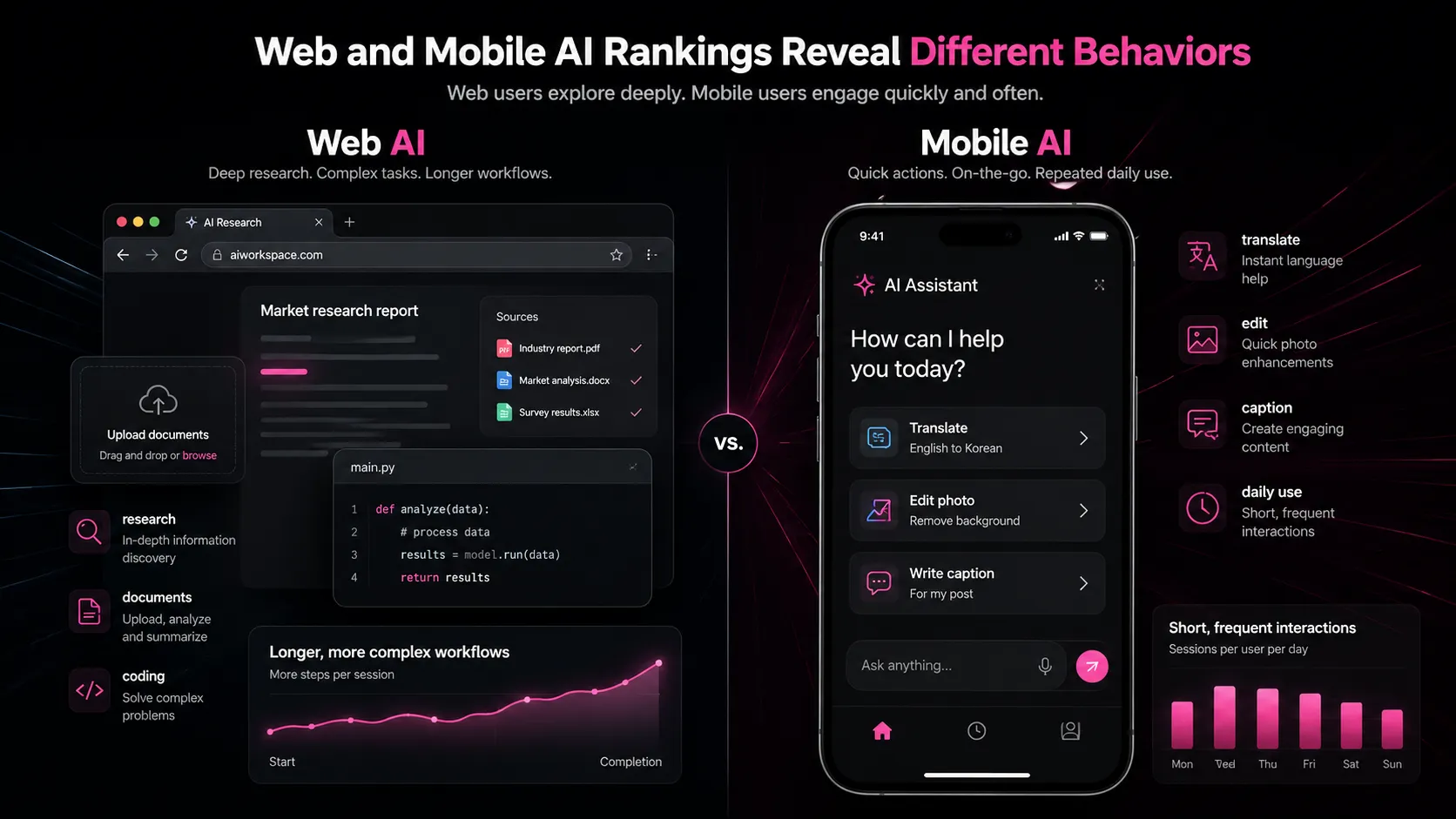
Piで作成されたレポートにおける最も明確な構造上の選択の1つは、Web製品とモバイルアプリケーションを分けていることです。Webリストは月間ユニークビジター数で、モバイルリストは月間アクティブユーザー数で順位付けされています。これらの指標は、異なる種類の消費者行動を表しています。
1. Web利用はリーチと複雑な作業を反映する
WebベースのAI製品は、より長時間を要するタスクをサポートすることがよくあります。ユーザーは文書をアップロードし、情報源を比較し、コードを書き、大量の出力を修正し、複数のブラウザタブをまたいで作業することがあります。
月間ユニークビジター数は製品へのアクセスの広がりを示せますが、必ずしも継続率、利用頻度、支払い意向を明らかにするものではありません。トラフィックの急増は、製品ローンチ、バイラルな結果、または一時的な関心を反映している可能性があります。
2. モバイル利用は習慣性と利便性を反映する
モバイルAIアプリケーションは、テキストの翻訳、写真の編集、会議の録音、キャプションの生成、コンピュータから離れた場所での質問など、より素早いインタラクションに使われることが多くあります。
Sensor Towerは、生成AIアプリに費やされる世界全体の時間が2026年上半期に360億時間へ達し、2025年の同期間の172億時間から増加すると予測しています。また、AIアプリのアプリ内課金収益は2026年上半期に40億ドルを超えると見込んでいます。
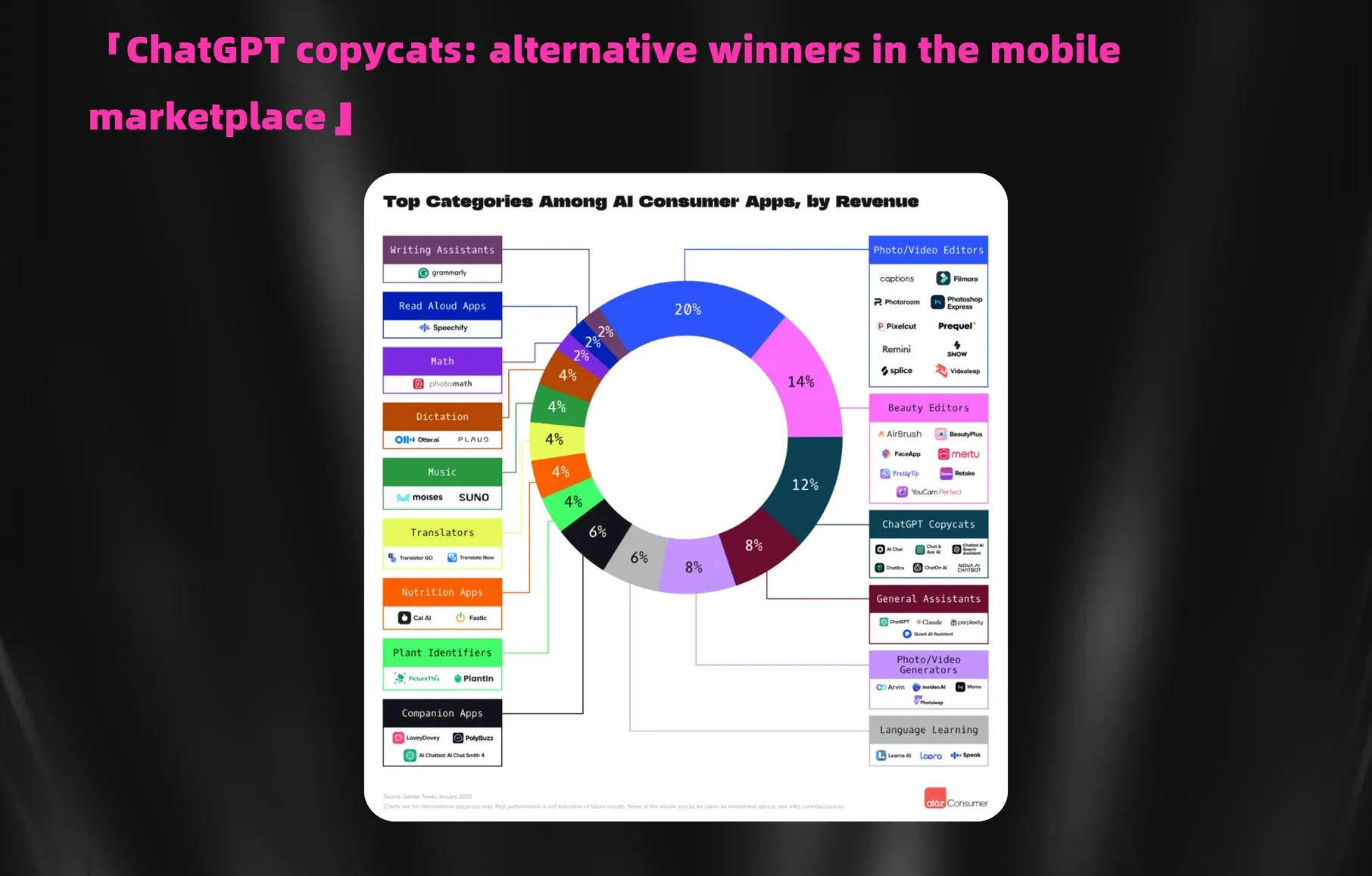
Webサイトへの訪問数とモバイルのアクティブユーザー数を1つのランキングに統合すれば、より単純に見えるかもしれませんが、分析は弱まります。リーチ、反復的な活動、エンゲージメント、収益化は区別したままにする必要があります。
クリエイティブAIは生成からワークフローへ移行している
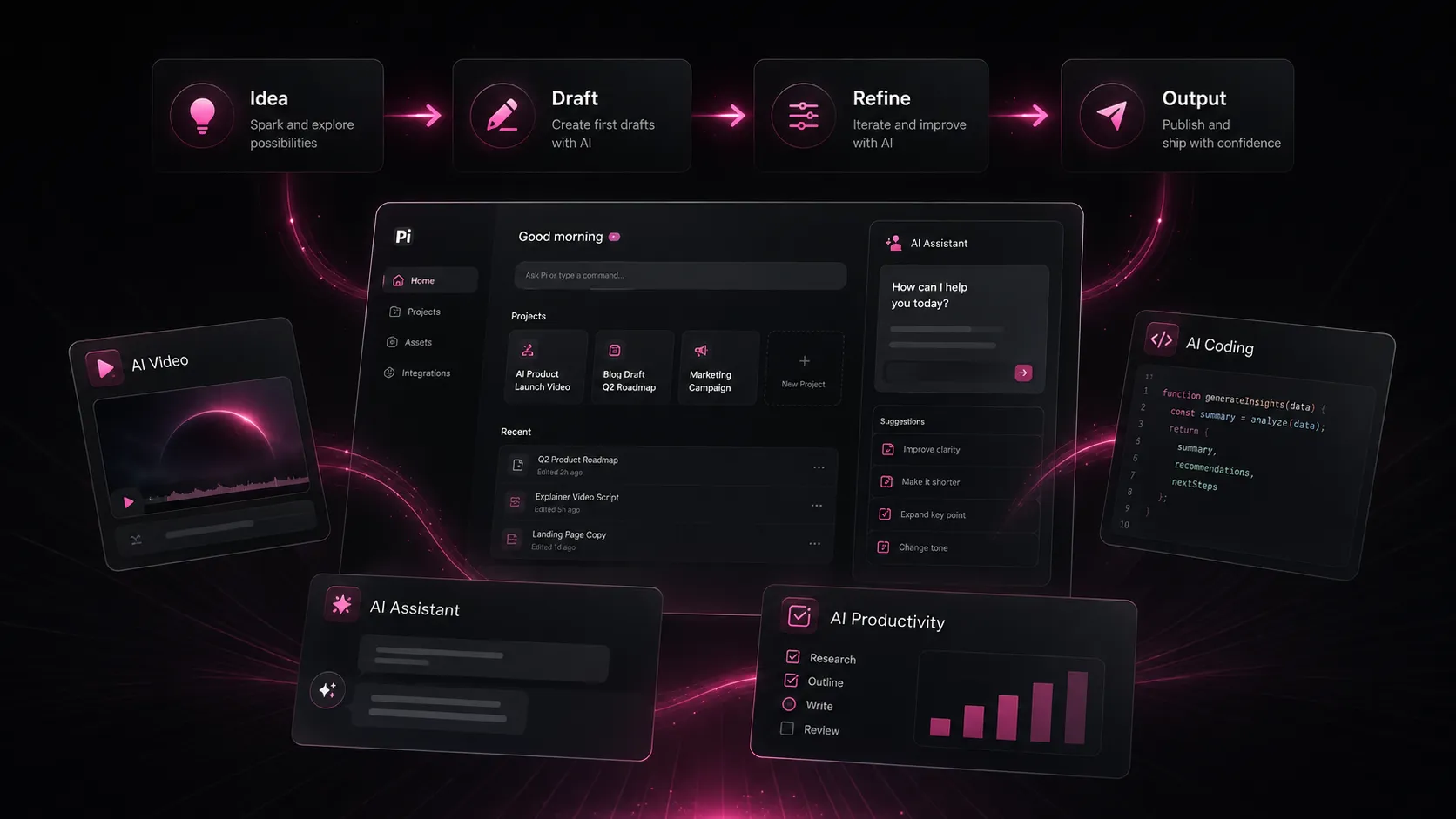
画像生成は、幅広い注目を集めた最初期のクリエイティブAIカテゴリーの1つでした。市場は現在、動画、音声、音楽、編集、そして完全なコンテンツ制作ワークフローへと拡大しています。
Piのプレゼンテーションでは、AI動画を主要な新興カテゴリーとして位置づけています。WebランキングにはHailuo AI、Kling AI、Sora、InVideo、Veed、Clipchampなどの製品が含まれ、分析では品質、制御性、信頼性の向上に焦点を当てています。
このシグナルは継続しています。a16zは、2026年の消費者向けランキングにおいて、動画生成を最も動きの大きいクリエイティブカテゴリーと説明しています。Kling AI、Hailuo、PixVerseは有意な勢いを築いており、動画、音楽、音声の製品は、かつてスタンドアロンの画像生成ツールが占めていた順位を占めるようになりました。
ユーザーが評価するのは、生成された1本のクリップの品質だけではなくなっています。キャラクターの一貫性、カメラ制御、音声、編集オプション、速度、反復的なクリエイティブ作業への対応も同様に重要になっています。
AIコーディングでも同様の移行が起きています。Piレポートでは、Cursorのようなインテリジェント開発環境と、BoltやLovableのようなテキストからアプリケーションを作成するツールを区別しています。前者は開発者によるソフトウェアの記述とデバッグを支援します。後者は、より幅広いユーザーが自然言語の指示を通じてプロトタイプ、Webサイト、シンプルなアプリケーションを作成できるようにします。
これらのカテゴリーは共に、より広範な移行を示しています。生成AIは、孤立した出力から、アイデア、初稿、修正、完成品をつなぐワークフローへと移行しています。
Piで作成された消費者向けAI市場レポート
The Top 100 Gen AI Consumer Appsは、混雑したテクノロジー市場を構造化された視覚的な物語に整理するために、Piで作成されました。
プレゼンテーションは、Web製品とモバイルアプリそれぞれのTop 50ランキングから始まります。その後、リストを超えて、ChatGPTの成長、DeepSeekの急速な台頭、AI動画の進歩、開発者ツールの台頭、モバイル利用とモバイル収益の違いなど、より大きなシグナルを検討します。
この構造には価値があります。ランキングだけでは、市場がどのように変化しているかを説明できることはほとんどないためです。有用なレポートでは、各リストの背後にある指標を特定し、直接比較すべきでないデータを分け、個別の製品を少数の意味あるテーマへとまとめる必要があります。
このプレゼンテーションは、常に最新のランキングではなく、より初期の市場段階のスナップショットとして理解すべきです。AIランキングは、新モデル、アプリのリリース、地域展開、プラットフォーム統合の後に急速に変わる可能性があります。その永続的な価値は、多数の製品と観察結果を読みやすい流れに変換する方法にあります。
Piで作成された完全版のTop 100 Gen AI Consumer Appsプレゼンテーションをご覧ください。
消費者向けAI市場のシグナルを比較する方法
どのAI製品が最も強力かは、単一の指標では決まりません。製品を比較する前に、調査の問いに適した種類の証拠を対応させましょう。
| 市場シグナル | 有用な指標 | 明らかにできること | 証明できないこと |
| Webでのリーチ | 月間ユニークビジター数 | 製品へのアクセスの広がり | ロイヤルティまたは継続利用 |
| モバイルでの導入 | 月間アクティブユーザー数 | アプリを定期的に利用する人数 | Webでの人気 |
| エンゲージメント | 利用時間またはセッション数 | ユーザーが製品にどれほど深く依存しているか | 収益または収益性 |
| 収益化 | サブスクリプションまたはアプリ内収益 | ユーザーが製品に対して支払う意思があるかどうか | 市場全体への影響力 |
ある製品は大規模なWebトラフィックを集めても、モバイル利用は限定的である場合があります。別の製品は、より小さなユーザー層にサービスを提供しながら、ユーザー当たりの収益が高い場合があります。Piレポート自体も、最も人気のあるモバイルAIアプリが必ずしも最も高収益とは限らず、利用ランキングと収益ランキングの重なりは一部にとどまると指摘しています。
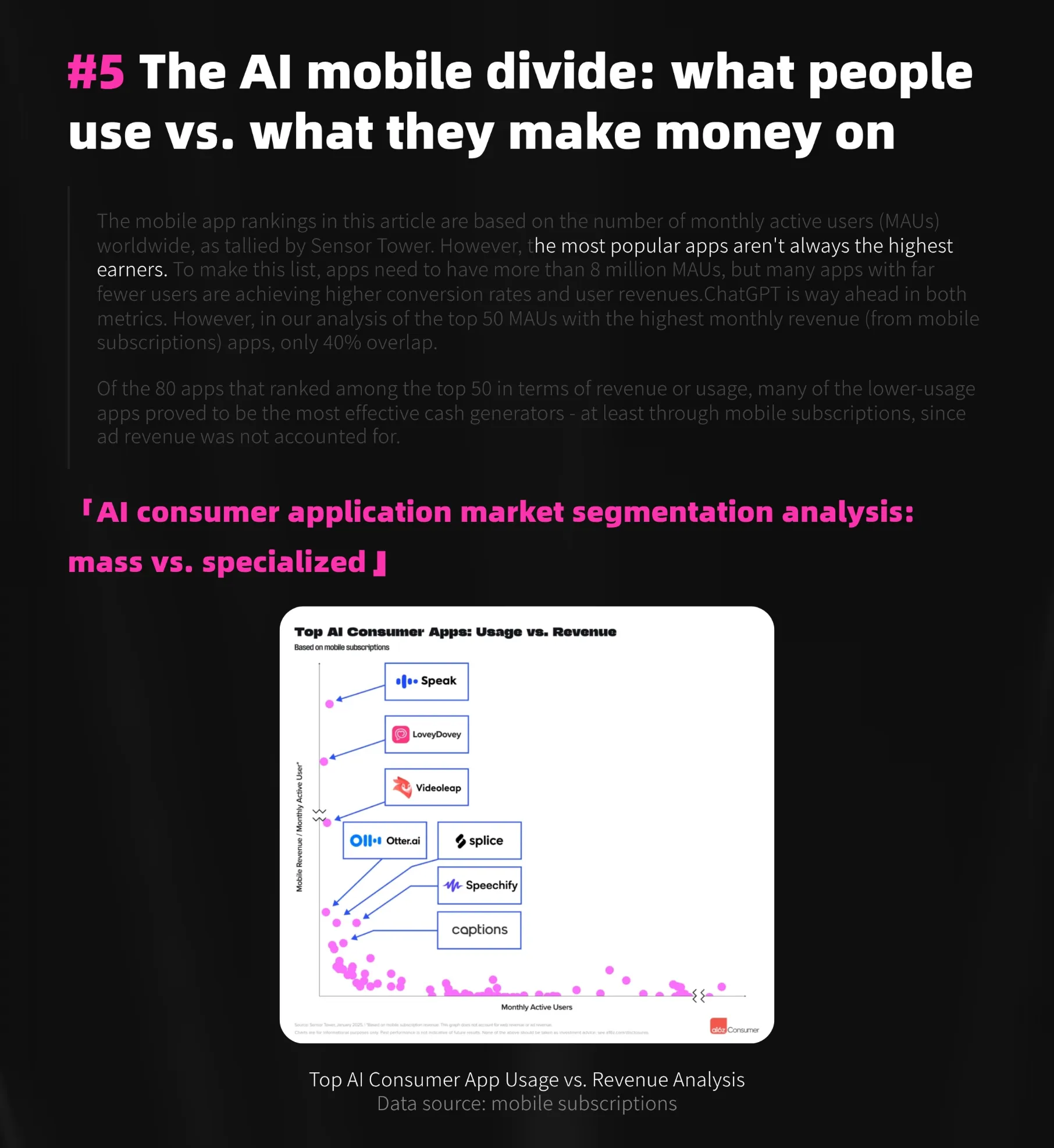
指標、製品カテゴリー、地域、データの日付を合わせて考慮すると、ランキングはより意味のあるものになります。
Piでプレゼンテーションを作成する
急速に変化するトピックは、製品、統計、競合する主張の迷路になり得ます。強力なプレゼンテーションには、明確な問い、比較可能な証拠、論理的な閲覧順序、そして何が重要かを聴衆が理解するのに役立つ結論が必要です。
Piは、リサーチ、メモ、ソース資料を構造化された視覚的プレゼンテーションに変えるのに役立ちます。テクノロジーの概観、競合分析、業界レポート、トレンドブリーフィングなど、デザインと同じくらい情報構造が重要なプロジェクトをサポートできます。
Piでプレゼンテーションを作成し、次のリサーチテーマを明確な視覚的ストーリーに変えましょう。
よくある質問(FAQ)
生成AIアプリの最大のトレンドは何ですか?
主なトレンドには、汎用AIアシスタント間の競争激化、モバイルでの急速な導入、AI動画とコーディングツールの成長、そして生成AIの既存のクリエイティブソフトウェアおよび生産性ソフトウェアへの統合が含まれます。
WebとモバイルのAIアプリはなぜ別々にランキングされているのですか?
Web製品は通常Webサイトのトラフィックで比較され、モバイルアプリケーションは月間アクティブユーザー数で測定されることがよくあります。これらの指標は異なる行動形態を表すため、直接同等のものとして扱うべきではありません。
The Top 100 Gen AI Consumer Appsはライブランキングですか?
いいえ。Piで作成されたプレゼンテーションは、2025年初頭ごろの消費者向けAI市場のスナップショットです。視覚的な市場概要およびプレゼンテーションのケーススタディとしては引き続き有用ですが、現在の製品順位は入手可能な最新データで確認する必要があります。