Top 5 AI & Tech Trends: July 2026 Monthly Ranking
July 2026 marks a structural turning point in how the technology industry organizes itself. The most defining July 2026 tech trends are no longer isolated product announcements or basic chatbot upgrades, but a fundamental transition toward open-source scale, massive compute buildouts, autonomous agents, and measurable workplace productivity. Modern teams are moving away from simple demo testing toward building reliable, scalable operational layers.
To help leaders and digital teams understand the fast-evolving landscape, this monthly ranking breaks down the major shifts defining the industry this July and explores how business leaders can effectively respond.
1. Open-Source AI Reaches New Heights: Kimi K3
Moonshot AI’s release of Kimi K3, a reported 2.8T-parameter open-weights model, is a major highlight of the month. It pushes open-source capabilities closer to top-tier proprietary systems, offering developers and global enterprises full deployment control, enhanced data privacy, and highly customizable reasoning mechanisms.
By offering high-level intelligence without relying on closed proprietary cloud APIs, Kimi K3 empowers enterprise software developers to build specialized vertical applications locally. This democratizes access to frontier-level AI capabilities and shifts the competitive dynamics across the software engineering landscape.
2. Mega-Infrastructure Deals: Nvidia and OpenAI
Artificial intelligence has evolved into a compute-intensive industrial buildout. Nvidia’s ongoing hardware ecosystem expansion and OpenAI’s massive data center initiatives demonstrate that long-term compute capacity is becoming the ultimate competitive moat. Secure compute access directly dictates how fast new capabilities reach business users.
As gigawatt-scale infrastructure projects continue to receive massive financial backstops, the focus shifts toward energy efficiency, specialized silicon, and localized data management. Organizations that secure reliable compute pipelines can build, train, and deploy next-generation models faster while keeping operational latency low.
3. Autonomous Agents Enter Workflows
AI agents are rapidly shifting from interactive chatbots into practical workflow operators. These autonomous systems can now execute multi-step tasks, search information, analyze complex codebases, and manage software integration under human supervision, enabling delegated processes across research, coding, and business operations.
However, moving toward full autonomy requires robust governance frameworks. Modern enterprises are establishing strict security boundaries, audit trails, and human-in-the-loop controls to manage access permissions while maximizing operational efficiency.
4. Chip Ecosystem Realignment
Enterprise focus is moving beyond purchasing GPUs toward reducing inference costs across high-volume workloads. Hardware realignment, custom silicon partnerships, and cloud accelerators are making long-context processing and continuous agent workflows financially viable for enterprise operations.
This shift enables a layered hardware ecosystem where frontier models handle complex strategic reasoning while specialized chipsets run daily micro-tasks, dramatically lowering the total cost of ownership for digital transformations.
5. From AI Experimentation to Enterprise Productivity
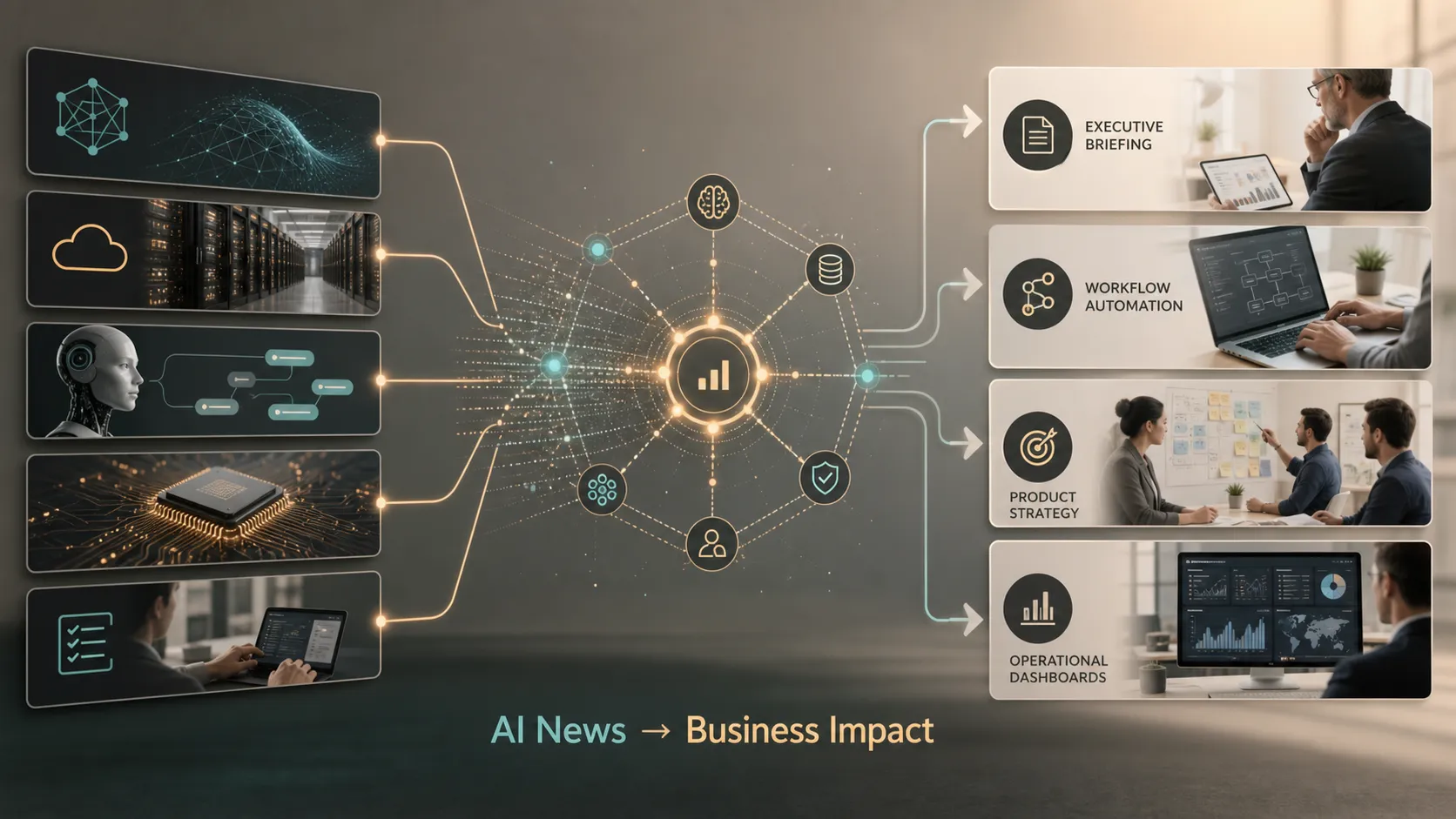
Organizations are prioritizing clear ROI over experimental hype. Modern AI adoption requires connecting model intelligence directly into everyday operational workflows, executive reporting, customer intelligence, and strategic decision-making.
Rather than running isolated tests, companies are establishing unified internal systems where team members can leverage technical breakthroughs to streamline daily business processes and align stakeholder goals seamlessly.
Key July 2026 Tech Trends Summary
| Ranking | July 2026 Tech Trends | Operational Impact on Teams |
|---|---|---|
| #1 | Kimi K3 Open Source | Democratizes 2.8T reasoning and deployment control |
| #2 | Nvidia & OpenAI Scale | Secures long-term compute for frontier models |
| #3 | Autonomous AI Agents | Automates multi-step workflows and complex tasks |
| #4 | Chip Ecosystem Realignment | Reduces inference costs across daily SaaS operations |
| #5 | Enterprise Productivity | Shifts focus from testing demos to measurable ROI |
Communicating AI Strategy with Pi
As these technical shifts accelerate, translating complex developments into executive updates becomes a key operational challenge. Product managers, CTOs, and strategy teams need to convert fast-moving market signals into structured business logic for stakeholders, board members, and clients.
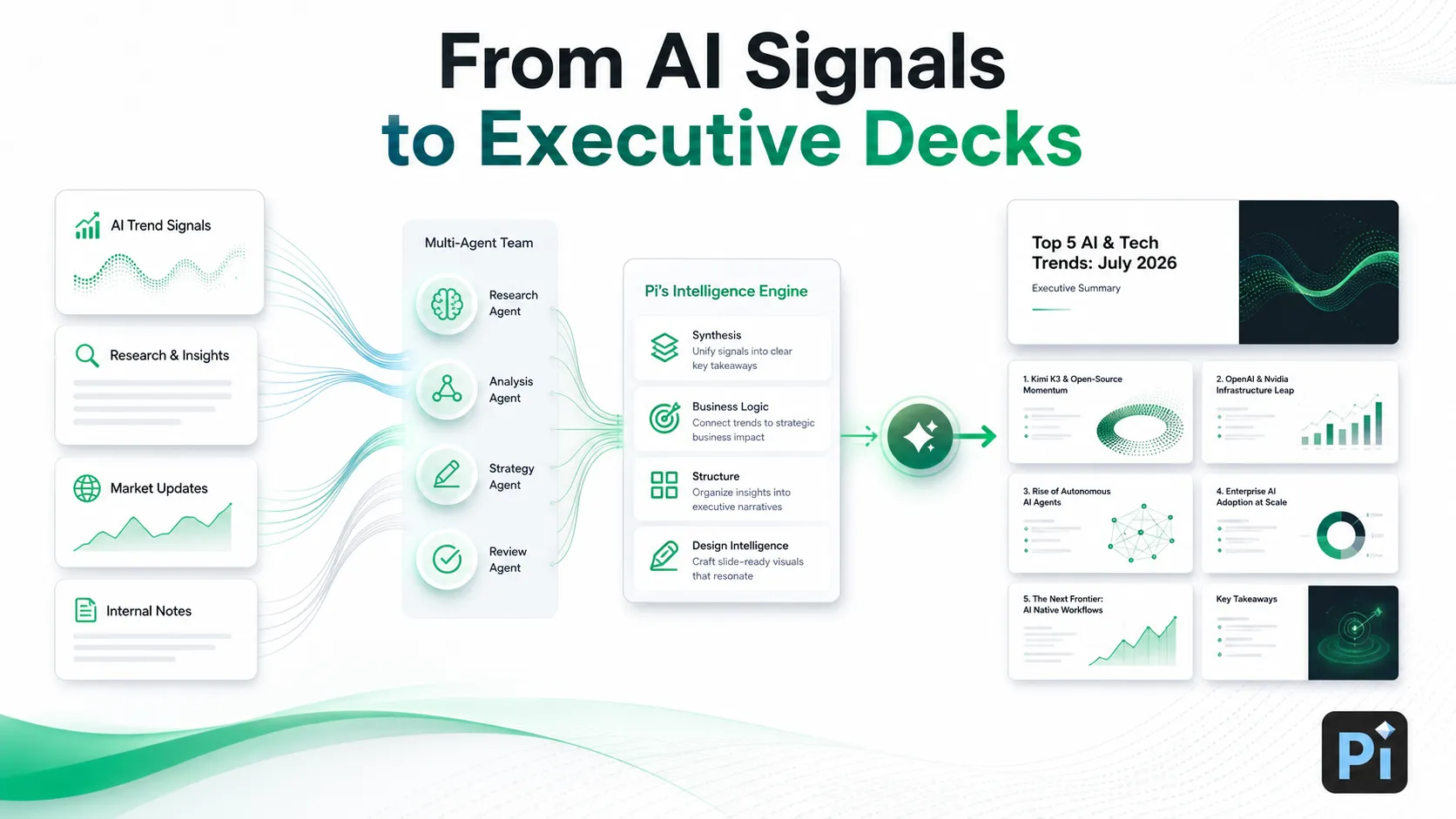
This is where Pi (Presentation Intelligence) provides immediate value as an advanced AI presentation generator. Designed specifically for professional business decks, Pi helps teams transform raw AI news, research summaries, and strategic roadmaps into clear executive briefings and presentation-ready slides in minutes.
Structured Business Logic
Pi prioritizes strategic narratives—context, implications, risks, and recommendations—ensuring stakeholders receive clear business value rather than overwhelming technical noise.
Multi-Agent Workflow Support
For intricate topics like infrastructure, agents, and open-source models, Pi’s multi-agent system assists with research framing, story alignment, and audience targeting.
Executive Visual Quality
Pi generates clean, high-impact decks without requiring dedicated graphic design resources, enabling teams to communicate complex strategies efficiently.
The Verdict
The main takeaway from this ranking is that technical capability must be matched by execution and strategic communication. Modern digital teams that leverage workflow and presentation tools like Pi will move faster by turning complex industry changes into clear business priorities.
Frequently Asked Questions (FAQ)
Q: What are the top July 2026 tech trends?
A: The top July 2026 tech trends include Kimi K3's open-source launch, massive Nvidia and OpenAI infrastructure expansions, practical autonomous AI agents, chip ecosystem realignment, and a strong enterprise shift toward measurable productivity.
Q: Why is Kimi K3 important for open-source AI?
A: Kimi K3 represents a major step forward for open-weights models, giving organizations greater control, custom fine-tuning abilities, and privacy options compared to closed commercial APIs.
Q: How do AI agents improve enterprise workflows?
A: AI agents automate multi-step processes, call software tools, and retrieve data independently, enabling teams to delegate complex administrative and analytical tasks.
Q: How does Pi assist teams with fast-moving tech developments?
A: Pi helps teams automatically convert complex technical updates and strategic research into executive-ready presentation decks, ensuring clear alignment across stakeholders.