work from home jobs
Work from home jobs are roles you can do mainly from home, usually with a laptop, internet connection, and clear communication with a team or clients. They can be full-time, part-time, freelance, entry-level, or senior roles.
The important thing is not just finding remote jobs. It is finding legitimate work from home jobs that match your skills, schedule, and income needs. Remote work ↗ can offer flexibility, but it still requires focus, reliability, and proof that you can deliver without being in an office every day.
Common Types of Work From Home Jobs
Some work from home jobs are fully remote. Others are hybrid, meaning you work from home some days and go to an office for meetings, training, or team work.
| Work from home jobs type | Good fit for | Typical tasks |
|---|---|---|
| Customer support | Strong communicators | Answer emails, chats, or calls |
| Virtual assistant | Organized beginners | Scheduling, inbox support, data entry |
| Content writing | Clear writers | Blog posts, product copy, newsletters |
| Online tutoring | Subject experts | Teach students through video calls |
| Sales development | Persuasive communicators | Outreach, lead follow-up, demos |
| Data entry | Detail-focused workers | Update records, check information |
| Design or marketing | Creative professionals | Campaigns, graphics, social content |
| Software or analytics | Technical workers | Build, test, analyze, report |
If you are comparing career paths, the U.S. Bureau of Labor Statistics’ Occupational Outlook Handbook is a useful place to check job duties, pay ranges, and expected growth by occupation.
Entry-Level Work From Home Jobs
Entry-level work from home jobs are usually easiest to find in support, admin, sales, data entry, tutoring, and content operations. These roles may not require years of experience, but they do require reliability.
Good beginner options include:
- Customer service representative
- Virtual assistant
- Online tutor
- Data entry assistant
- Social media assistant
- Appointment setter
- Transcription assistant
- Research assistant
The best entry-level remote jobs are usually specific. “Remote assistant for real estate agents” is clearer than “online assistant.” “Customer support for a software company” is clearer than “work from home job.”
Specific roles help you understand what skills to show on your resume.
Work From Home Jobs for Experienced Professionals
Experienced professionals can often move into remote jobs more easily because they already have proof of results. The challenge is showing that those results can transfer to a remote environment.
Strong work from home jobs for experienced candidates include:
1. Project manager
2. Product marketer
3. UX designer
4. Financial analyst
5. Software engineer
6. Account manager
7. HR specialist
8. Business operations manager
For these roles, employers usually care less about where you work and more about whether you can manage deadlines, communicate clearly, and solve problems with limited supervision.
How to Find Legitimate Work From Home Jobs
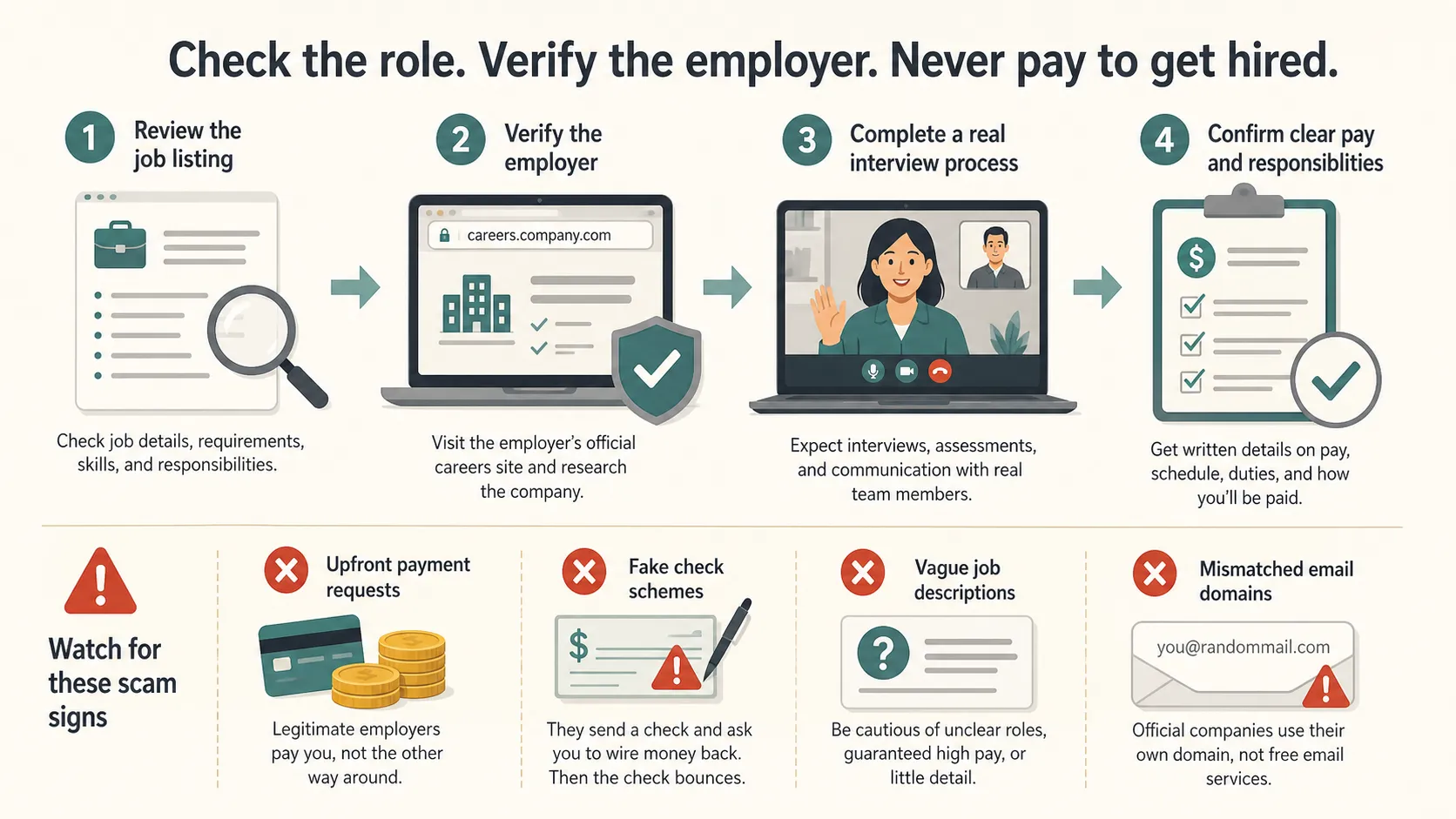
Start with trusted job boards, company career pages, and government-backed career resources. CareerOneStop, sponsored by the U.S. Department of Labor, offers practical job search guidance ↗ for finding and evaluating opportunities.
When reviewing a remote job posting, check five things:
- The company name is clear
- The job duties are specific
- The pay range is realistic
- The hiring process feels professional
- The company does not ask you to pay before you work
Be careful with vague postings that promise high income for little work. The FTC’s job scam guidance ↗ is a good reference when a listing feels too easy, too urgent, or too secretive.
Skills That Help You Get Remote Jobs
Remote employers look for more than technical ability. They want to know whether you can work independently without disappearing.
Useful remote work skills include:
- Written communication
- Time management
- Basic spreadsheet skills
- Video meeting etiquette
- File organization
- Clear status updates
- Self-discipline
- Problem-solving
For many work from home jobs, your resume should include examples of independent work. Instead of writing “good communicator,” show a result: “Handled 40+ customer support tickets per day with a 94% satisfaction rating.”
How to Stand Out When Applying
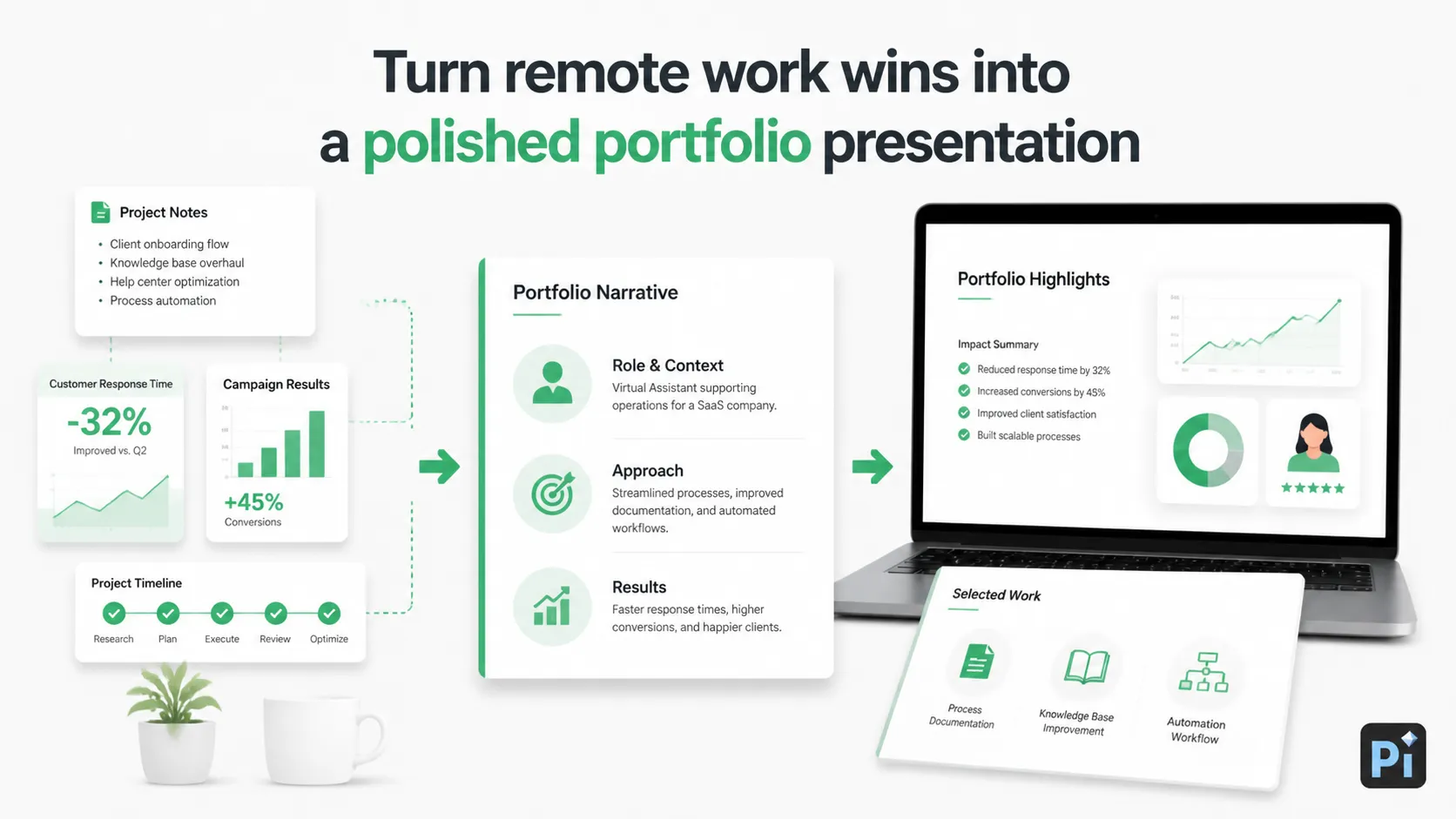
A strong remote job application should answer one question quickly: can this person do the job without constant supervision?
You can show that by including:
- A resume tailored to the remote role
- A short cover letter with relevant examples
- Links to writing samples, reports, designs, or projects
- Clear notes about tools you have used
- Results with numbers when possible
If you have remote work experience, mention it directly. If you do not, show adjacent experience: independent school projects, freelance work, volunteer coordination, or managing tasks across different locations.
For visual or client-facing roles, a short portfolio can help. If your proof is scattered across notes, screenshots, project summaries, or case studies, you can use Pi to turn your work examples into a simple portfolio deck ↗ before sending them to a recruiter or client. This fits best when the job involves communication, design, marketing, consulting, sales, or presentations.
Setting Up a Good Work From Home Routine
Getting a remote job is only the first step. Keeping it requires a routine.
A good work from home setup does not need to be expensive. It needs to be repeatable. Choose a consistent workspace, set working hours, and reduce distractions during focus blocks.
The Occupational Safety and Health Administration offers basic computer workstation guidance ↗ that can help with posture, screen height, keyboard position, and comfort.
Simple habits make a big difference:
- Start the day with a task list
- Keep meetings in one calendar
- Send progress updates before people ask
- Separate work files from personal files
- Take short breaks away from the screen
Remote work rewards clarity. The more predictable your workflow is, the easier it is for a team to trust you.
Tax and Policy Notes
If you work from home as an employee, your company may have its own rules for equipment, internet reimbursement, security, and time tracking. If you freelance or run a home-based business, tax treatment can be different.
For U.S. readers, the IRS explains home office details in Publication 587 ↗. This is worth reviewing before assuming your workspace, internet, or equipment is deductible.
Government employees and public-sector teams may also refer to OPM’s telework resources ↗ for policy language and remote work expectations.
Red Flags to Avoid
Not every work from home job is real. Some listings are designed to collect personal information, sell fake training, or pressure applicants into paying fees.
Be cautious if a job:
- Offers unusually high pay for very little work
- Requires payment before you start
- Uses a personal email instead of a company domain
- Avoids interviews
- Sends checks and asks you to return part of the money
- Asks for sensitive personal details too early
A legitimate employer should be able to explain the role, pay, schedule, hiring process, and expectations clearly.
The Verdict
Work from home jobs can be a strong option if you choose carefully. The best roles are not the ones with the flashiest promise. They are the ones where the job duties, company, pay, and expectations are clear.
Start with your real skills, look for specific roles, check the company carefully, and prepare proof that you can work independently. Flexibility is valuable, but trust is what gets you hired.
FAQ
What are the best work from home jobs for beginners?
The best work from home jobs for beginners usually include customer support, virtual assistant work, data entry, tutoring, appointment setting, and content support. These roles are easier to enter because they rely on communication, organization, and reliability more than advanced technical experience.
How can I tell if a work from home job is legitimate?
Check the company name, job duties, pay range, interview process, and contact information. Be careful if the employer asks for money, avoids clear details, or promises high income with almost no work. The FTC’s job scam guidance is a good reference when something feels suspicious.
Do work from home jobs require experience?
Some do, especially technical, management, marketing, and finance roles. But many entry-level remote jobs focus on communication, organization, customer support, and basic digital skills. If you lack direct experience, show proof through projects, volunteer work, freelance tasks, or a small portfolio.
How do I make my remote job application stronger?
Tailor your resume to the role, mention remote-friendly skills, include measurable results, and show examples of your work when possible. For presentation-heavy or client-facing roles, a short portfolio deck can make your experience easier to understand.