udience-Centric Presentations: Building Empathy and Human Connection in Your Pitch
People rarely respond to slides alone. They respond to whether the presenter understands their world, their pressure, and the decision they are being asked to make. A polished deck can still fall flat if it feels like a company-centered monologue rather than a conversation designed for the listener.
An audience-centric presentation starts with a different question: not “What do we want to say?” but “What does this audience need to understand, believe, and feel confident doing next?” That shift is the foundation of audience empathy presentation strategy. It helps you connect with audience priorities while keeping the pitch professional, structured, and business-focused.
In high-stakes settings such as sales decks, pitch decks, executive presentations, consulting reports, and brand proposals, empathy is not softness. It is precision. It turns information into relevance, features into outcomes, and slides into a trust-building moment.
Why Audience Empathy Matters in Business Presentations
Audience empathy matters because business decisions are rarely made from information alone. Decision-makers evaluate credibility, risk, urgency, effort, and fit. They are asking: Do you understand the problem? Can I trust your approach? Will this make my work easier, safer, faster, or more successful?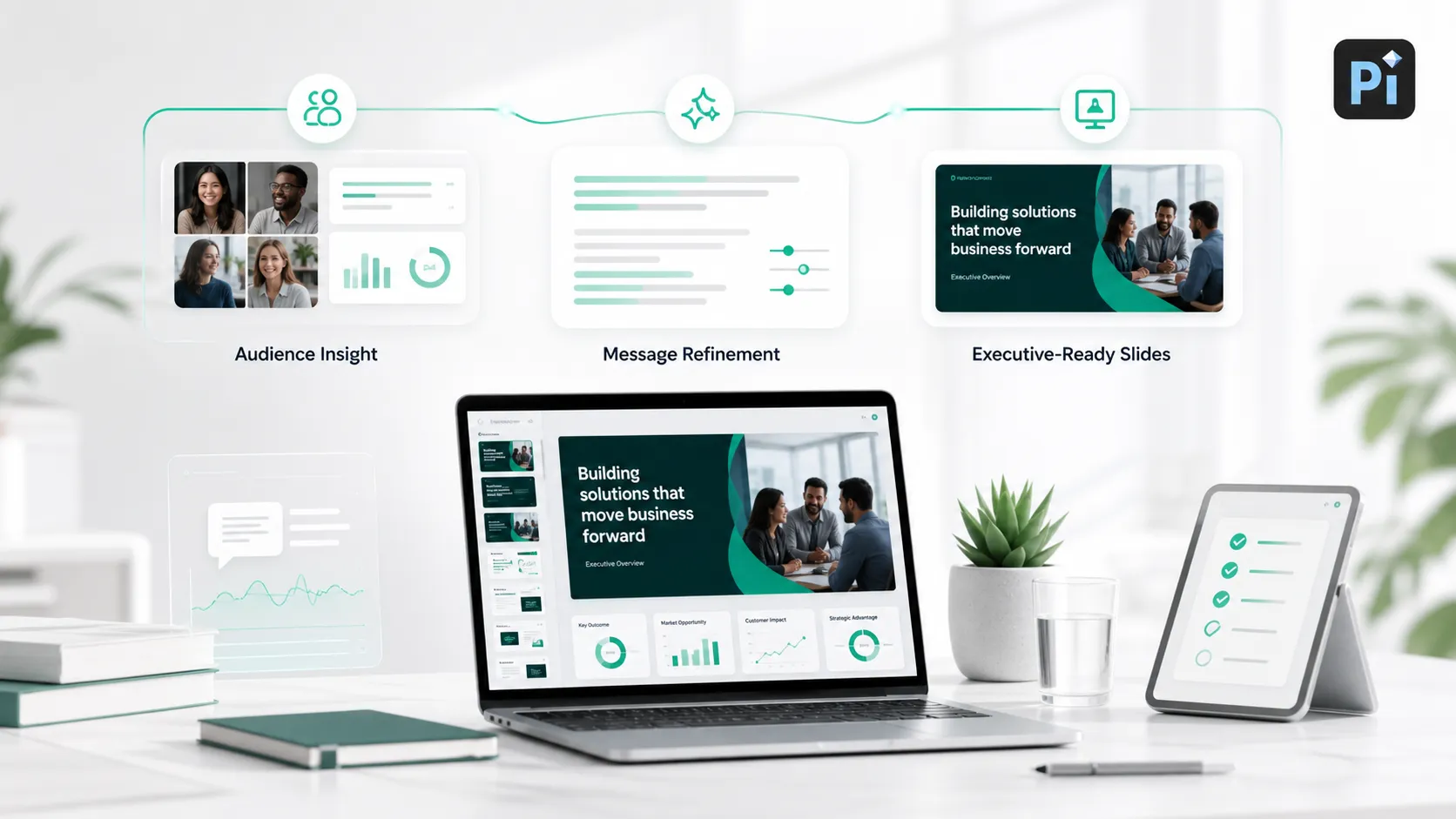
A strong audience empathy presentation https://hbr.org/2013/06/how-to-give-a-killer-presentation anticipates those questions before they are spoken. It explains the problem in language the audience recognizes. It connects recommendations to practical consequences. It uses proof where uncertainty is highest. It respects the listener’s time by removing unnecessary detail.
This does not mean making the presentation emotional, casual, or vague. In fact, empathy often makes a business pitch more analytical. It forces the presenter to separate internal enthusiasm from audience value. It also helps teams decide what to include, what to simplify, and what to leave out.
The Problem with Company-Centered Pitches
Many presentations are accurate but misaligned. They begin with the company’s history, product architecture, internal terminology, or long lists of capabilities. The presenter may be proud of the content, but the audience is still waiting for a reason to care.
Common company-centered pitch problems include:
- Leading with “who we are” before explaining the audience’s problem.
- Using internal language that sounds precise to the company but unclear to buyers.
- Listing features without translating them into business outcomes.
- Presenting data without connecting it to a decision, risk, or opportunity.
- Overloading slides because every team wants its contribution included.
The issue is not that company information is irrelevant. Credibility, experience, and product depth all matter. The problem begins when the deck is organized around the presenter’s perspective instead of the audience’s decision journey.
How to Understand What Your Audience Actually Needs
Before building the deck, define the audience more specifically than “investors,” “clients,” or “executives.” A CFO, a product leader, a procurement team, and a regional sales director may all attend the same meeting, but they evaluate the pitch differently.
Start with role and context. What responsibility does this audience carry? What pressure are they under? What problem has become too expensive, slow, risky, or visible to ignore? Then define the desired outcome. Do they need to approve a budget, choose a vendor, align leadership, support a launch, or change a current process?
Next, identify objections. A skeptical audience may not doubt your product; they may doubt implementation time, cost, internal adoption, data quality, compliance, or whether leadership will support the change. Empathy means addressing these concerns directly, not avoiding them.
Finally, consider emotional state. A team that feels overwhelmed needs clarity. A cautious executive needs risk reduction. A visionary founder needs momentum. A technical buyer needs evidence. User-centric communication works because it matches the message to the listener’s real context.
Turn Features into Human Outcomes
To humanize business pitch content, translate capabilities into outcomes the audience can feel and evaluate. A feature describes what your solution does. A human outcome explains why that capability matters in the audience’s daily reality.
For example, “automated reporting” is a feature. “Your leadership team gets consistent weekly visibility without asking analysts to rebuild the same deck every Friday” is an outcome. “Advanced integrations” is a feature. “Your teams can keep their existing workflow while reducing manual handoffs” is an outcome.
This shift does not reduce professionalism. It improves relevance. Business audiences still need facts, but they also need to understand the practical impact of those facts. Reduced risk, saved time, stronger confidence, easier execution, faster alignment, fewer surprises, and clearer accountability are all human outcomes that matter in professional decisions.
Use Clear Language Without Losing Professional Authority
Clear language is not simplistic language. It is disciplined language. A presentation sounds more credible when complex ideas are easy to process, especially for mixed audiences with different levels of technical knowledge.
Replace abstract claims with direct statements. Instead of saying, “We enable optimized cross-functional operational transformation,” say, “We help regional teams coordinate launches with fewer delays and clearer ownership.” The second version is more human, but also more concrete.
Jargon can be useful when it is shared by the audience. It becomes a problem when it protects weak thinking or forces listeners to translate every slide. If a phrase would not be used naturally in a decision meeting, it probably does not belong in the headline of a slide.
Professional authority comes from clarity, evidence, and judgment. The goal is not to sound less sophisticated. The goal is to make the audience spend less energy decoding the message and more energy evaluating the opportunity.
Build a Presentation Flow Around the Audience Journey
An empathetic pitch should follow the audience’s mental path. Start by naming the problem in terms the audience recognizes. Then clarify why it matters now: cost, risk, missed opportunity, competitive pressure, customer impact, or internal inefficiency.
After that, introduce the solution as a response to the problem, not as a standalone product tour. Show proof where confidence is needed most. This may include customer evidence, market logic, financial impact, implementation examples, or expert reasoning.
Then reduce perceived risk. Explain what happens next, what support is included, what assumptions matter, and how success will be measured. A clear next step should feel like a natural continuation of the argument, not a sales push added at the end.
| Presentation Element | Company-Centered Approach | Audience-Centric Approach |
|---|---|---|
| Opening | Company background | Audience problem and stakes |
| Core Message | What we offer | What changes for the listener |
| Evidence | General achievements | Proof tied to audience concerns |
| Language | Internal terminology | Shared, decision-ready language |
| Ending | Product recap | Clear next action and confidence |
Where Pi Helps Create Audience-Centric Presentations
Pi, short for Presentation Intelligence, is an AI presentation maker built for professional business presentations where structure, logic, and visual quality all matter. It can help teams move from audience insight to a polished deck without reducing the presentation to generic AI-generated slides.
1. Business Logic Comes Before Slide Styling
Pi helps shape the flow of the presentation around the business argument: audience problem, stakes, solution, proof, risk reduction, and next step. This is especially useful for pitch decks, sales decks, consulting reports, and executive presentations where the order of ideas affects trust.
Instead of only generating slides quickly, Pi supports a more strategic workflow. The aim is to make the deck feel designed for the decision the audience needs to make.
2. Multi-Agent AI Supports Message Refinement
Pi’s Multi-Agent AI approach helps teams think through structure, content, and presentation quality from multiple angles. That matters when a deck needs to balance clarity, persuasion, business logic, and executive-level polish.
For audience-centric work, this can help identify where a slide is too company-focused, where jargon weakens clarity, or where benefits need to be connected more directly to audience outcomes.
3. Premium Visual Quality Reinforces Trust
Human connection is not only about words. Visual quality also influences whether a presentation feels credible and prepared. Pi helps create business-grade aesthetics that support the message without overwhelming it.
For high-stakes presentations, premium visual quality can make the difference between a deck that looks like an internal draft and one that feels ready for clients, investors, or leadership.
A Simple Audience-Centric Presentation Checklist
Before presenting, review the deck from the audience’s point of view. Ask whether the opening proves you understand their situation. Check whether every major section connects to a concern, goal, or decision criterion they actually have.
Look for plain-language headlines that state the point clearly. Make sure features are translated into benefits and outcomes. Confirm that proof appears before the audience is asked to trust a claim. Review the emotional tone: does the presentation feel respectful, confident, and useful, or does it feel self-focused?
Finally, make the next action clear. A human-centered pitch does not leave the audience guessing. It guides them toward a practical decision with enough confidence to continue.
The Better Pitch Is the One That Feels Designed for the Listener
The most persuasive business presentations do not simply deliver information. They create recognition. The audience feels that the presenter understands the problem, respects the complexity of the decision, and has organized the message around what matters most.
That is the real value of audience empathy presentation strategy. It helps you connect with audience needs without losing rigor. It helps you humanize business pitch content without becoming informal. It makes user-centric communication a practical advantage in rooms where trust, clarity, and relevance decide what happens next.
Frequently Asked Questions (FAQ)
Q: What is an audience empathy presentation? A: An audience empathy presentation is a business presentation designed around the listener’s goals, concerns, objections, and decision context. It still uses evidence and structure, but it frames the message around what the audience needs to understand and trust.
Q: How can I connect with audience members in a business pitch? A: Start by naming their problem clearly, use language they recognize, connect your solution to practical outcomes, and address risk directly. Connection comes from relevance, not from adding unnecessary emotion or personal storytelling.
Q: How do I humanize business pitch content without sounding less professional? A: Translate features into human outcomes such as saved time, reduced risk, easier execution, stronger alignment, or better confidence. Use clear language, specific examples, and credible proof while keeping the tone concise and business-ready.
Q: Can AI tools like Pi help create audience-centric presentations? A: Yes. Pi can help structure a deck around business logic, refine audience-focused messaging, reduce jargon, and create polished slides for professional use cases. The best results still come from combining AI support with clear audience insight and strategic judgment.