how to make a budget
A budget is not a punishment for spending money. It is a simple plan for deciding where your money should go before the month gets away from you. A good budget helps you pay bills on time, reduce stress, save for goals, and notice small money leaks before they become expensive habits.
The basic idea is simple: compare what comes in with what goes out. Consumer.gov explains that a budget shows how much money you make and how you spend it, and its guide to making a budget is a good beginner-friendly starting point.
Start With Your Monthly Income
The first step is to know how much money you actually have to work with. Use your net income, not your gross salary. Net income is the money that reaches your bank account after taxes, insurance, retirement contributions, and other deductions.
If your income changes every month, use a conservative estimate. For example, if you freelance, work hourly shifts, or earn commissions, look at the last 6 to 12 months and build your budget around a lower average. It is easier to add extra money later than to build a plan around income that may not arrive.
You can include paychecks, freelance income, side income, regular family support, benefits, and reliable investment income.
List Your Fixed Expenses
Fixed expenses are bills that usually stay the same or close to the same each month. These may include rent or mortgage, insurance, phone bill, internet, subscriptions, car payment, student loans, childcare, and minimum debt payments.
Write each one down with the due date. Timing matters. If rent is due on the 1st and your paycheck arrives on the 5th, your budget needs to account for that gap.
The federal financial education site MyMoney.gov recommends tracking spending habits and building a plan for short-term and long-term goals. That is the heart of budgeting: seeing your money clearly before making decisions.
Track Variable Expenses
Variable expenses change from month to month. They are also where many budgets quietly fall apart.
Examples include groceries, gas, restaurants, entertainment, clothing, gifts, home supplies, pet care, rideshares, and personal spending. These categories are not bad. They just need limits.
For one month, track every purchase. You can use a spreadsheet, budgeting app, bank export, or notebook. Do not judge the numbers at first. Just collect them. The goal is to see reality clearly.
Consumer.gov also offers your money resources, including budget worksheets and videos, which can help if you want a simple template.
Build A Simple Budget Table
Once you know your income and expenses, turn them into a monthly plan.
| Category | Example amount | Notes |
|---|---|---|
| Monthly net income | $4,000 | Money after taxes and deductions |
| Housing | $1,300 | Rent or mortgage |
| Utilities and phone | $300 | Electricity, water, internet, mobile |
| Food | $550 | Groceries and basic meals |
| Transportation | $350 | Gas, transit, insurance, parking |
| Debt payments | $400 | Credit cards, student loans, personal loans |
| Savings | $400 | Emergency fund, short-term goals |
| Personal spending | $300 | Dining out, shopping, entertainment |
| Remaining buffer | $400 | Extra cushion or goal money |
This table is only an example. Your numbers will look different. The point is to give every dollar a job.
Choose A Budgeting Method
There is no single perfect budget. The best budget is the one you can actually use.
The Consumer Financial Protection Bureau explains the 50/30/20 budgeting rule, which divides after-tax income into needs, wants, and savings or debt repayment.
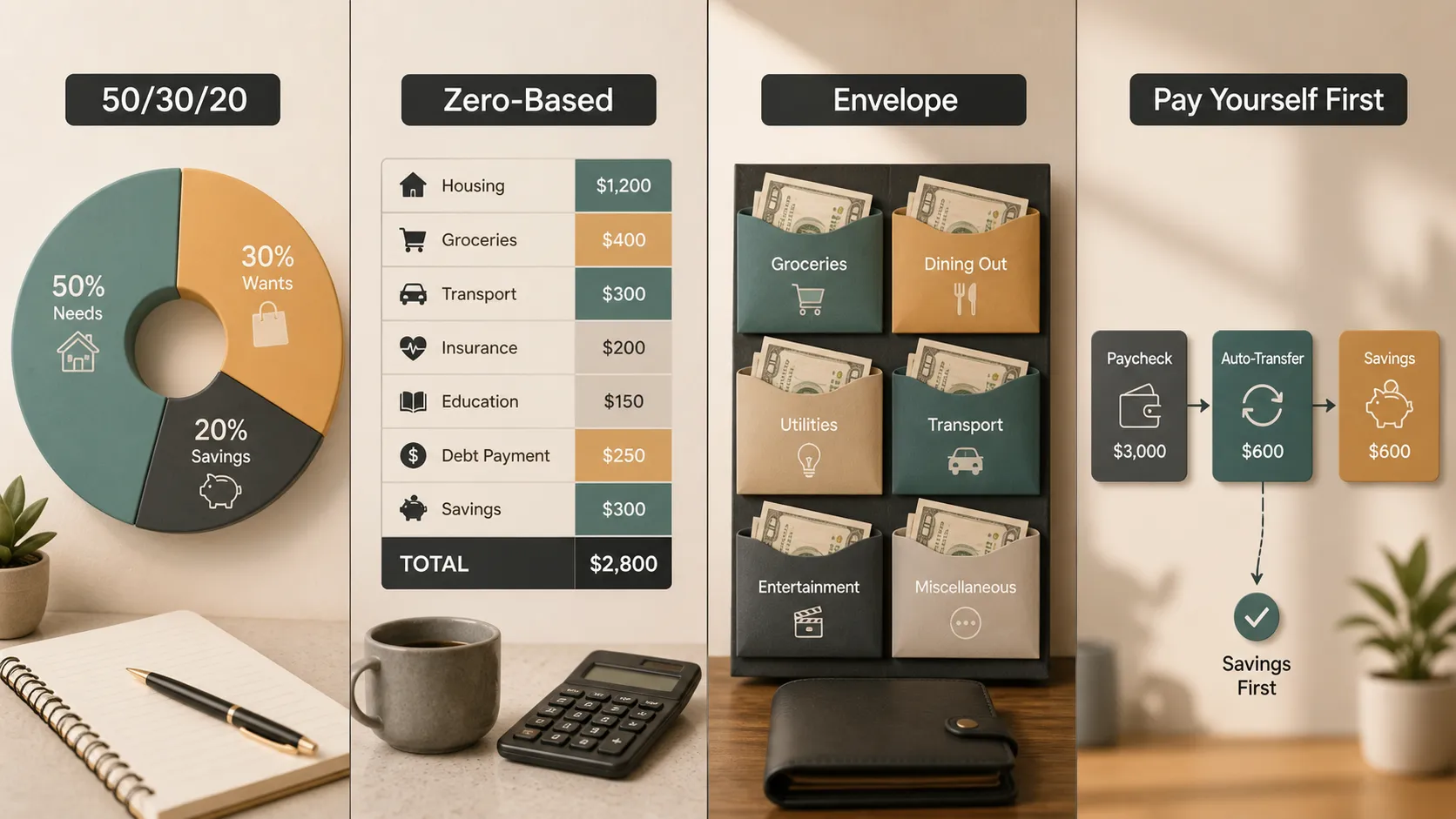
If you are new to budgeting, start simple. A rough budget you actually check is better than a perfect budget you abandon.
Treat Savings Like A Bill
Many people budget for bills first and hope savings happen later. That usually does not work. Savings should be treated like a real monthly expense.
Investor.gov recommends defining financial goals, figuring out your finances, paying down high-interest debt, and saving for a rainy day in its guide to saving and investing.
Start with an emergency fund. Even a small cushion can stop a car repair, medical bill, or missed work shift from becoming credit card debt. After that, you can budget for goals such as travel, education, a home, retirement, or starting a business.
The FDIC’s Money Smart resources are also useful for building basic financial confidence around saving, spending, borrowing, and protecting your money.
Deal With Debt Honestly
Debt payments need a clear place in your budget. Start with minimum payments so you avoid late fees and credit damage. Then decide whether extra money should go toward high-interest debt.
High-interest credit card debt is especially expensive. If your budget has room for extra payments, paying down that debt can be one of the strongest financial moves you make.
The FTC’s guide on how to get out of debt recommends starting with a budget, contacting creditors early if you are behind, and being careful with paid debt-relief services. If debt collectors are involved, the CFPB’s debt collection resources explain consumer rights and practical next steps.
Review The Budget Every Month
A budget is not something you write once and forget. It is something you adjust.
At the end of each month, compare your plan with what actually happened. Did groceries cost more than expected? Did subscriptions add up? Did a medical bill or car repair change the plan? Use that information to adjust the next month.
MyMoney.gov’s MyMoney Five tools are helpful because they frame money management around earning, saving, spending, borrowing, and protecting. A budget touches all five.
Turn Your Budget Into A Clear Presentation
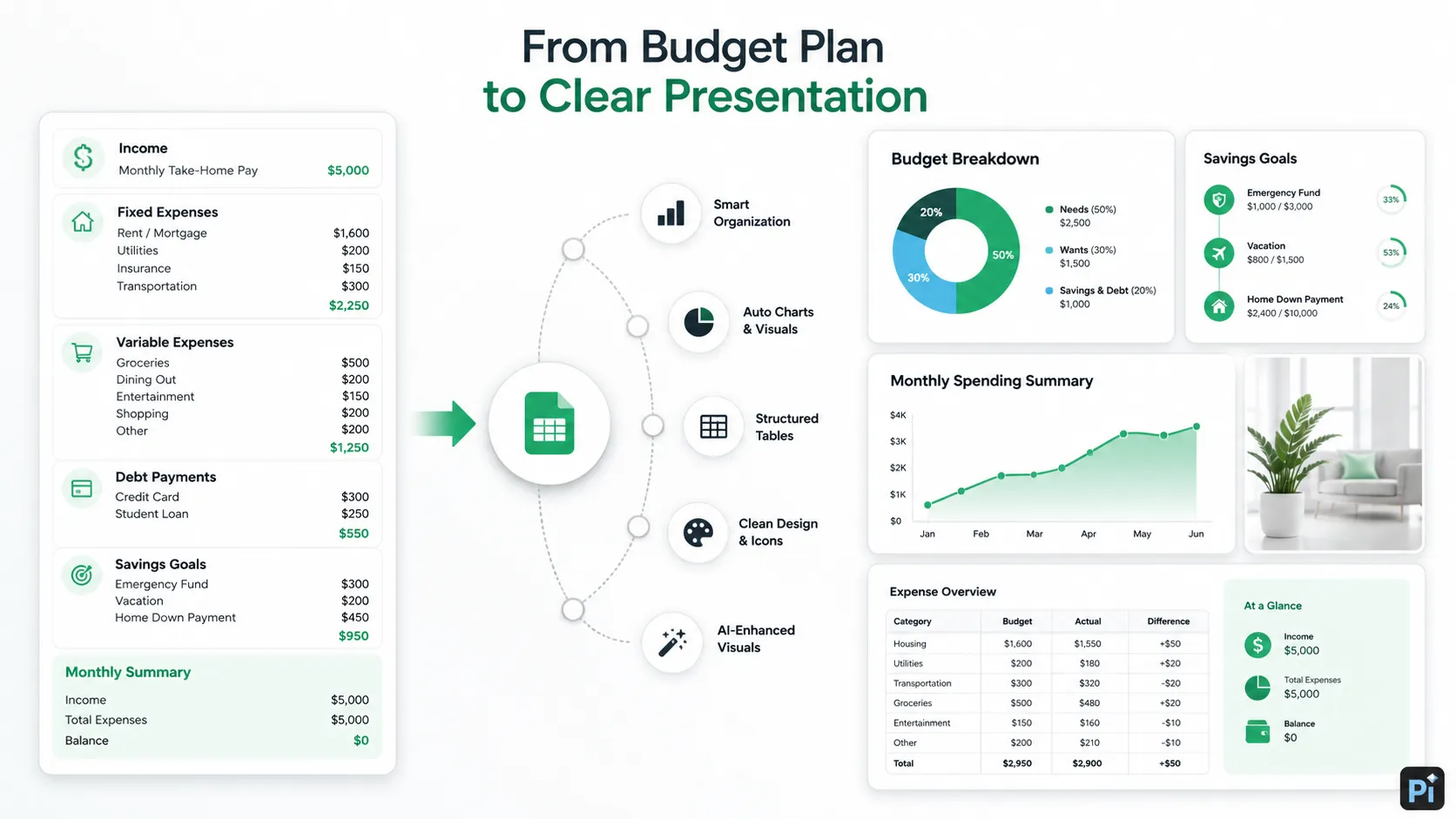
If you are budgeting for a household, small business, class project, nonprofit, or team, you may need to explain the plan to other people. That is where Pi can fit naturally.
You can turn a budget plan, monthly spending summary, or savings goal into a clean presentation with charts, tables, icons, automatic layout, and AI-generated visuals. A household budget can become an expense breakdown. A small business budget can become a cash-flow presentation. A savings goal can become a visual timeline.
Pi is not a budgeting app and it does not replace financial judgment. It helps communicate the budget clearly, which matters when more than one person needs to understand the plan.
The Verdict
Making a budget starts with a few practical steps: know your income, list fixed expenses, track variable spending, set savings goals, plan debt payments, and review the numbers every month.
The best budget is realistic. It should leave room for needs, some wants, savings, and unexpected costs. If the budget only works on paper, it will not work in real life.
A budget is not about controlling every tiny purchase forever. It is about giving yourself a clear picture of your money so you can make better decisions before the money is gone.
Frequently Asked Questions (FAQ)
Q: What is the easiest way to make a budget?
A: Start with monthly net income, list fixed bills, track variable spending, set a savings amount, and compare total expenses with income.
Q: What is the 50/30/20 budget rule?
A: It is a simple method that divides after-tax income into needs, wants, and savings or debt repayment. It is useful as a starting point, not a strict law.
Q: How often should I review my budget?
A: Review it at least once a month. If your income is irregular or money is tight, check it weekly.
Q: Can Pi help with budgeting?
A: Pi can help turn a budget plan or spending summary into a clear presentation with charts, tables, icons, layouts, and visuals, but it does not replace financial planning.