Pitching Premium Value: How to Communicate High-End Brand Aesthetics and Vision
Pitching premium brands is difficult because premium value is not fully visible on a feature list. A high-end chair, fragrance, hotel concept, fashion line, or wellness product may have functional benefits, but the real argument lives in taste, identity, discipline, and long-term vision. The audience must feel the brand’s aspiration while also understanding why that aspiration can become a sustainable business.
That balance is where many premium pitches fail. Some become too abstract, relying on mood words such as “timeless,” “elevated,” or “exclusive” without proving anything. Others become too product-focused, listing materials, SKUs, or pricing details without explaining why the brand deserves a premium position. A strong lifestyle brand presentation does both: it creates desire and makes the commercial logic credible.
Why Premium Brand Pitches Are Hard to Get Right
Premium brands sell more than utility. They sell a way of seeing the world. The customer is not only buying a product; they are buying a signal of taste, belief, confidence, belonging, or aspiration. That makes luxury brand communication more complex than ordinary product messaging.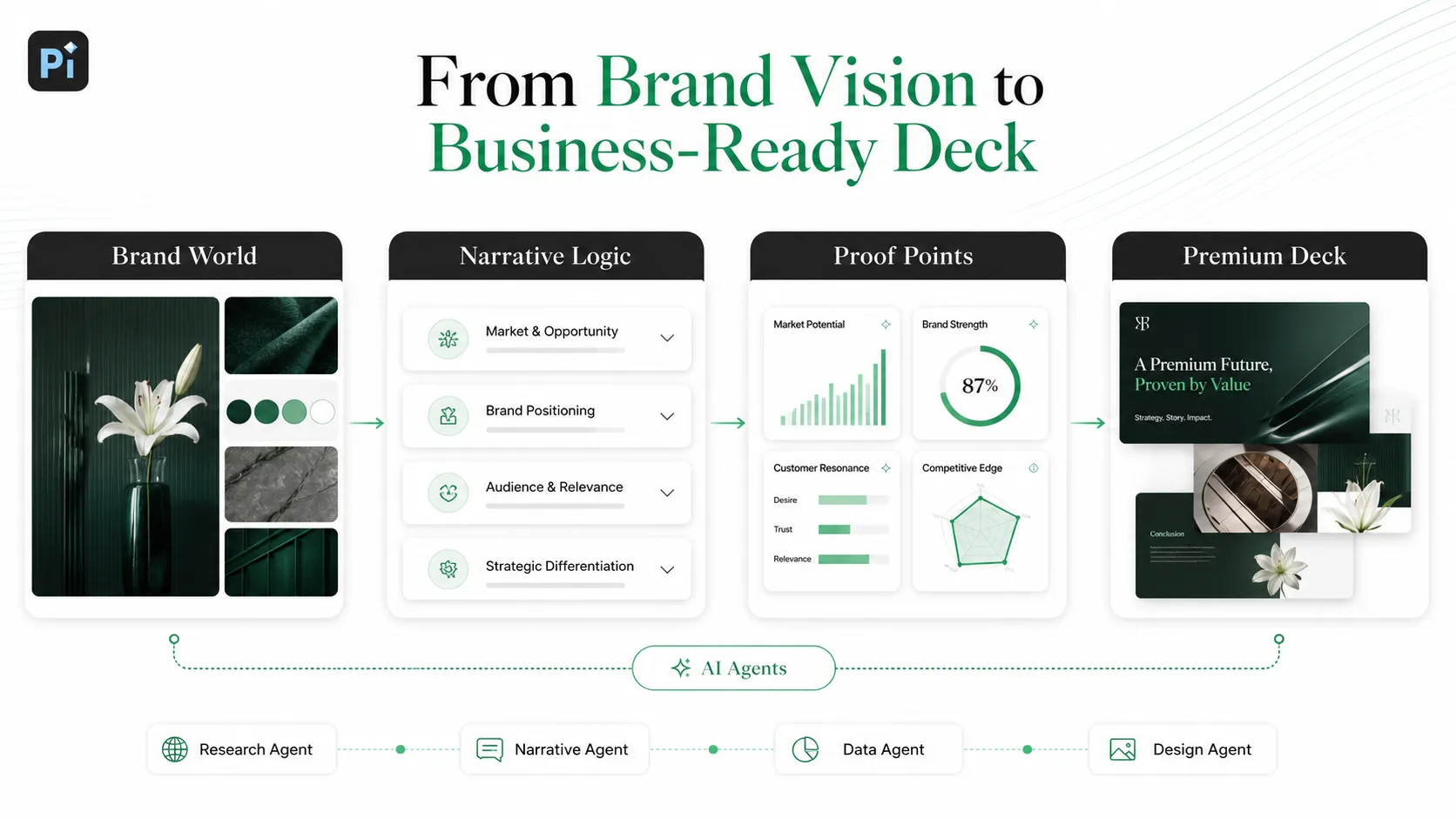
The challenge is that premium value can sound vague if it is not anchored in proof. An audience may appreciate beautiful photography, refined packaging, or an elegant retail concept, but they still need to understand the business rationale behind those choices.
Common problems include:
- Describing aesthetics as decoration instead of positioning
- Using emotional language without customer or market context
- Explaining quality only through expensive materials
- Treating exclusivity as the entire high-end value proposition
- Presenting a vision without showing how it can scale responsibly
A premium pitch must avoid both extremes: it cannot be a purely artistic manifesto, and it cannot be a standard sales deck with better visuals. It needs a structured argument for why the brand matters, who it is for, and why its value can endure.
Start With the Brand World, Not the Product List
The first move in pitching premium brands is to define the world the brand belongs to. Before discussing product specifications, show the audience the lifestyle context, cultural references, emotional territory, and customer transformation.
For example, a premium homeware brand is not simply selling ceramic bowls. It may be selling a slower domestic ritual, a more intentional dining experience, or a visual language for modern hospitality. A high-end travel brand is not only selling rooms or itineraries. It may be selling privacy, access, restoration, and a point of view on how time should feel.
This is why a lifestyle brand presentation should begin with the customer’s desired identity. Who do they want to become, or what do they want their environment to say about them? What tension are they trying to resolve: overstimulation, sameness, mass production, lack of trust, or poor service? Once the audience understands that context, the product becomes evidence of the brand world rather than an isolated object.
Translate Aesthetics Into Strategic Meaning
Premium aesthetics are not just visual choices https://www.nngroup.com/articles/visual-hierarchy-ux-definition/ . They are strategic signals. The materials, typography, photography, color palette, packaging, retail environment, website UI, and service tone should all communicate the same positioning.
Instead of saying, “Our packaging is minimal and elegant,” explain what the minimalism proves. Does it signal restraint in a category crowded with noise? Does it support a more mature audience? Does it make the product feel collectible, architectural, or ritualistic? The stronger phrasing connects visual decisions to brand meaning.
The same applies to photography. A campaign shot in natural light with quiet composition may communicate intimacy, craft, and calm. A darker, high-contrast visual system may communicate intensity, performance, or nightlife culture. Neither is inherently more premium. The premium quality comes from consistency, intention, and fit with the audience.
In luxury brand communication, aesthetics should answer a strategic question: what does this brand want the customer to feel, believe, and remember?
Build a High-End Value Proposition Around Proof
A high-end value proposition becomes persuasive when it is supported by credible proof. Premium does not mean simply charging more. It means the audience can understand why the offer deserves higher consideration, higher trust, or higher willingness to pay. https://hbr.org/2016/09/the-elements-of-value
Proof can come from craftsmanship, category insight, founder expertise, customer behavior, limited production, service quality, brand consistency, or distribution discipline. The right proof depends on the business model. A premium skincare brand may rely on formulation expertise and clinical discipline. A luxury hospitality concept may rely on service design, location strategy, and guest retention. A high-end fashion label may rely on craft, silhouette ownership, cultural relevance, and controlled distribution.
Weak phrasing: “Our product is premium because we use the finest materials.”
Stronger phrasing: “We use full-grain leather from a controlled supplier network, produce in small batches, and offer repair support to reinforce the brand’s promise of longevity.”
Weak phrasing: “Our brand is exclusive.”
Stronger phrasing: “We limit wholesale expansion to protect the customer experience, maintain pricing integrity, and ensure each retail environment reflects the brand’s service standard.”
The stronger versions do not remove emotion. They make emotion believable.
Balance Emotion With Commercial Logic
Different audiences need different forms of confidence. Investors want to understand market opportunity, margins, growth path, and defensibility. Retail buyers want to know whether the product fits their customer, price architecture, merchandising strategy, and sell-through expectations. Executives want to see brand coherence, operational feasibility, and risk control. Creative partners want to understand the vision clearly enough to protect it.
A strong premium pitch brings these needs together. It should show emotional desirability, but also market relevance. It should explain pricing, but not reduce the brand to price. It should present scarcity, but also clarify how the business can grow without diluting its meaning.
The best premium presentations make the audience think: “I understand why this feels different, and I understand why that difference can create commercial value.”
How Pi Helps Turn Premium Brand Strategy Into a Business-Ready Presentation
Pi, short for Presentation Intelligence, is an AI presentation maker designed for professional business presentations. For teams building brand proposals, pitch decks, sales decks, product launch decks, or executive presentations, Pi helps turn premium strategy into a clearer, more structured, and more visually refined deck.
It is not a shortcut for inventing a luxury brand. The brand still needs insight, taste, and strategic discipline. Pi supports the presentation workflow by helping teams organize the argument, clarify the high-end value proposition, and express the brand with business-grade aesthetics.
1. Business Logic Comes Before Slide Styling
Premium presentations often start with moodboards, but the final deck needs logic. Pi helps teams shape the sequence: brand world, audience insight, positioning, product proof, business model, distribution, and growth plan. This makes the pitch easier to follow for decision-makers who need more than visual inspiration.
2. Multi-Agent AI Supports Deeper Narrative Development
Pi’s Multi-Agent AI can support different parts of the presentation workflow, from narrative structure to content refinement and visual direction. For a premium brand pitch, that matters because the deck must connect emotional storytelling with commercial evidence. The goal is not to create more slides, but to create a stronger argument.
3. Premium Visual Quality Matches High-Stakes Use Cases
A deck about high-end value must look controlled, polished, and intentional. Pi helps professional teams create premium business-grade visuals that support the brand’s tone without turning the presentation into a decorative portfolio. This is useful when the deck needs to be shown to investors, buyers, executives, or strategic partners.
Premium Brand Pitch Elements: What to Communicate
| Pitch Element | What It Must Prove | Common Mistake |
|---|---|---|
| Brand world | The lifestyle and belief system behind the offer | Starting with products only |
| Aesthetic system | Why visual choices support positioning | Treating design as decoration |
| Value proposition | Why the brand deserves premium consideration | Equating premium with high price |
| Proof points | Evidence of quality, demand, or discipline | Relying on vague luxury language |
| Commercial path | How the vision becomes a sustainable business | Presenting aspiration without execution |
A Practical Verdict for Premium Brand Communicators
A premium pitch works when the audience can see the world of the brand, understand the value behind the aesthetics, and believe the vision can become a sustainable business. It should not ask people to accept “premium” as a label. It should demonstrate premium value through coherent choices: the audience, the product, the service, the visual system, the pricing, and the growth strategy.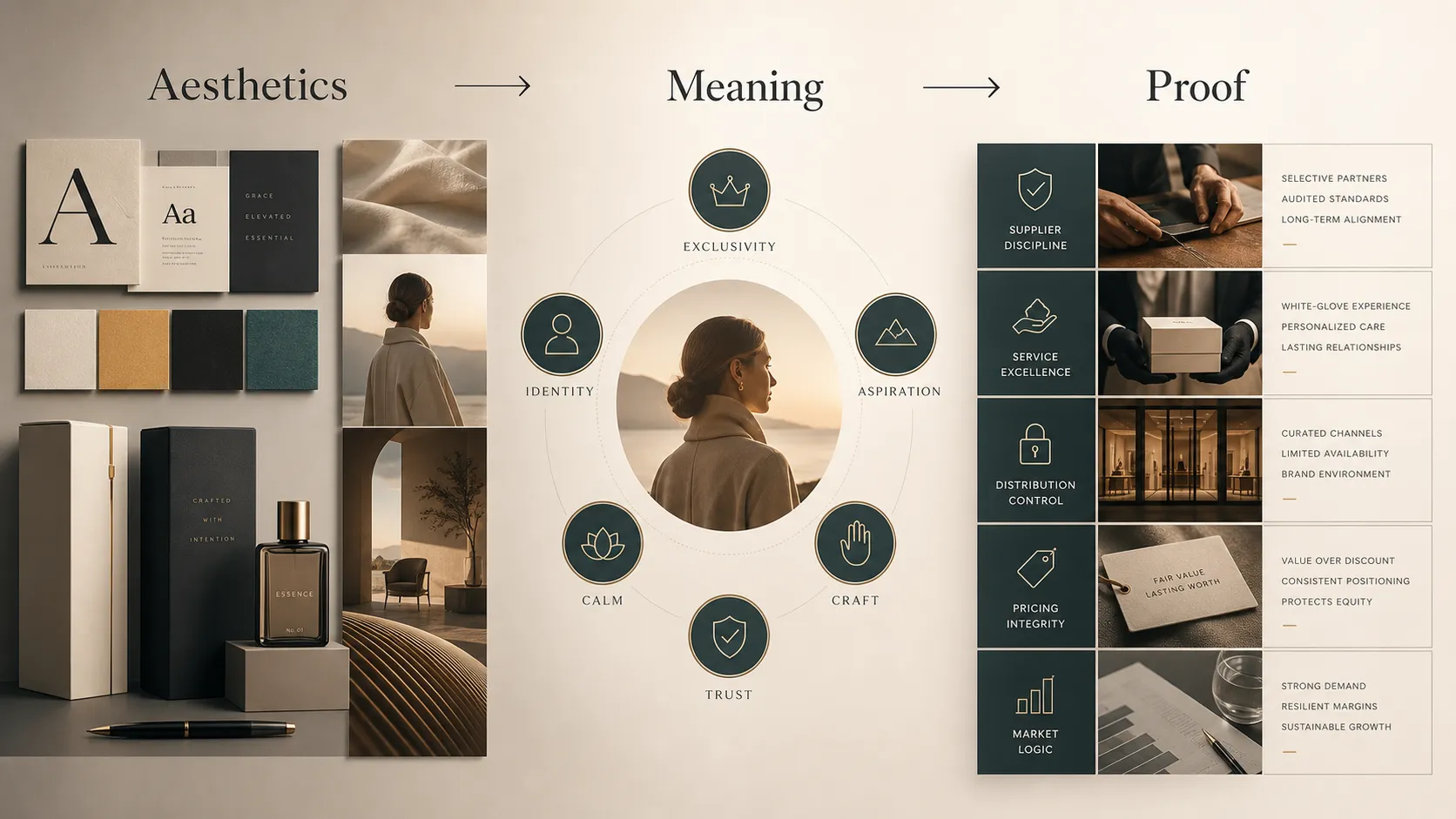
For founders, marketers, agencies, and business development teams, the goal is not to make the deck feel expensive. The goal is to make the brand’s difference feel intentional, defensible, and commercially meaningful. When emotion and logic work together, premium value becomes easier to believe.
Frequently Asked Questions (FAQ)
Q: How do you pitch a premium brand? A: Start by defining the brand world, audience aspiration, and emotional territory. Then connect the product, aesthetics, service, pricing, and distribution strategy to a clear high-end value proposition supported by proof.
Q: What makes luxury brand communication different? A: Luxury brand communication must express identity, taste, quality, and belief, not just functional benefits. It needs to create desire while also proving that the brand’s premium position is intentional and credible.
Q: How do you explain a high-end value proposition? A: Explain what makes the offer worth premium consideration, then support it with evidence such as craftsmanship, expertise, customer insight, scarcity, service quality, consistency, or market opportunity.
Q: Can Pi help create a lifestyle brand presentation? A: Yes. Pi can help teams structure a lifestyle brand presentation, clarify the narrative, refine the value proposition, and create premium business-grade slides for brand proposals, pitch decks, sales decks, and executive presentations.